Category: Spotlights

These are games that are very good and I think your family and friends will enjoy. I will always include a little bit about the game and where you can get it and for how much.

  • Orléans: A Mixed Bag

    There are many games on the market right now that will advertise themselves as Deck Builders. “A deckbuiding game of combat and exploration” etc. The deckbuilding genre is one that is extremely popular due to the amount of flexibility that can be created with new cards, the low cost of production, and the possibility for tweaking and creativity.

    There is another type of building mechanic out there that I find very interesting that not as many games have taken advantage of, and that is “Bag Building”. There are a few games out that can say that they have a “Bag Building” element to them, which is similar to deck building but with some slight differences. Today’s feature review is one of those games. The game that I’m referring to is Orléans, a worker placement, action selection, victory point salad romp that will absolutely keep you coming to the table again and again. I’m a fan of the way Orléans implements the bag mechanic and think that it creates a very interesting element of luck and planning. So how is this game played and what’s it about? Let’s take a look.

    Each player will start off by selecting a color and taking the corresponding player board, starting workers, player meeple, track cubes and buildings. You will then need to set up the board and I will say right off the bat, if this game has a downside it’s setup. There are a lot of resource tokens and worker tokens and they need to be set up in a particular way. That being said I will also say that the game would lose some of its appeal to me if it wasn’t set up the way it was. It’s absolutely gorgeous and once the board is out with the resources and workers I get really into the experience and want to dig into the game play. Just know that the first time or two that you play it may slow you down a bit. After the setup you’re ready to turn over the hourglass tile for the round and begin action selection!
    OLYMPUS DIGITAL CAMERA

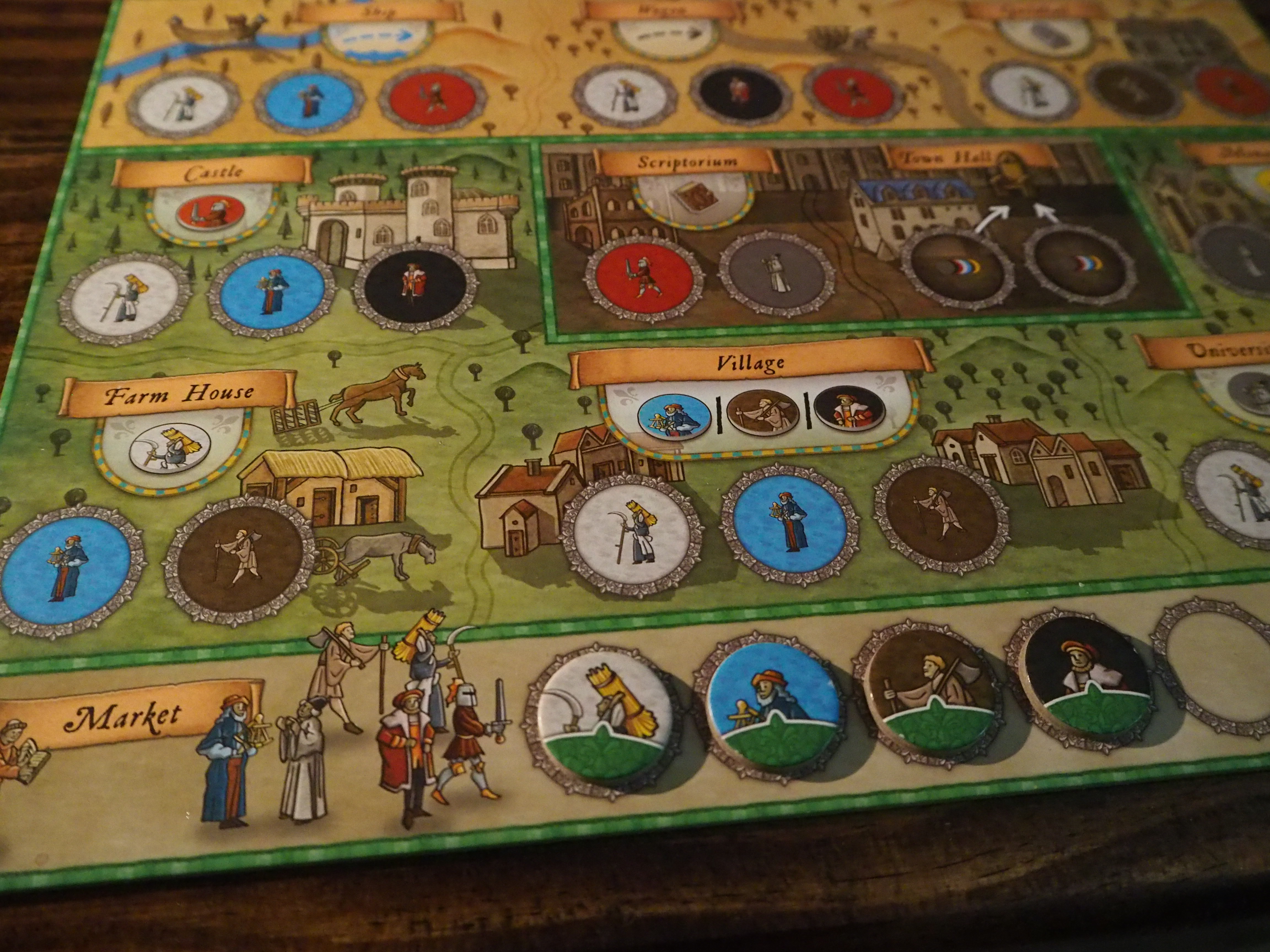
    The above picture is a close view of the player board. This game can look a bit complicated but in reality the mechanics are very straightforward. On the player board above you will see empty spaces with spots for certain workers to be placed. To take these actions you simply fill in the empty spaces with workers that you draw from your bag and once everyone can no longer take actions the round is over and you begin the whole process again after resolving the hourglass tile for the round (this tile can be good for all players or potentially bad which creates some variability round by round).
    OLYMPUS DIGITAL CAMERA

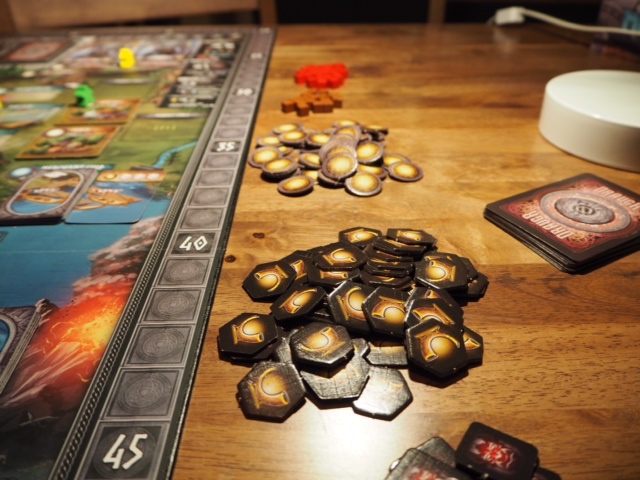
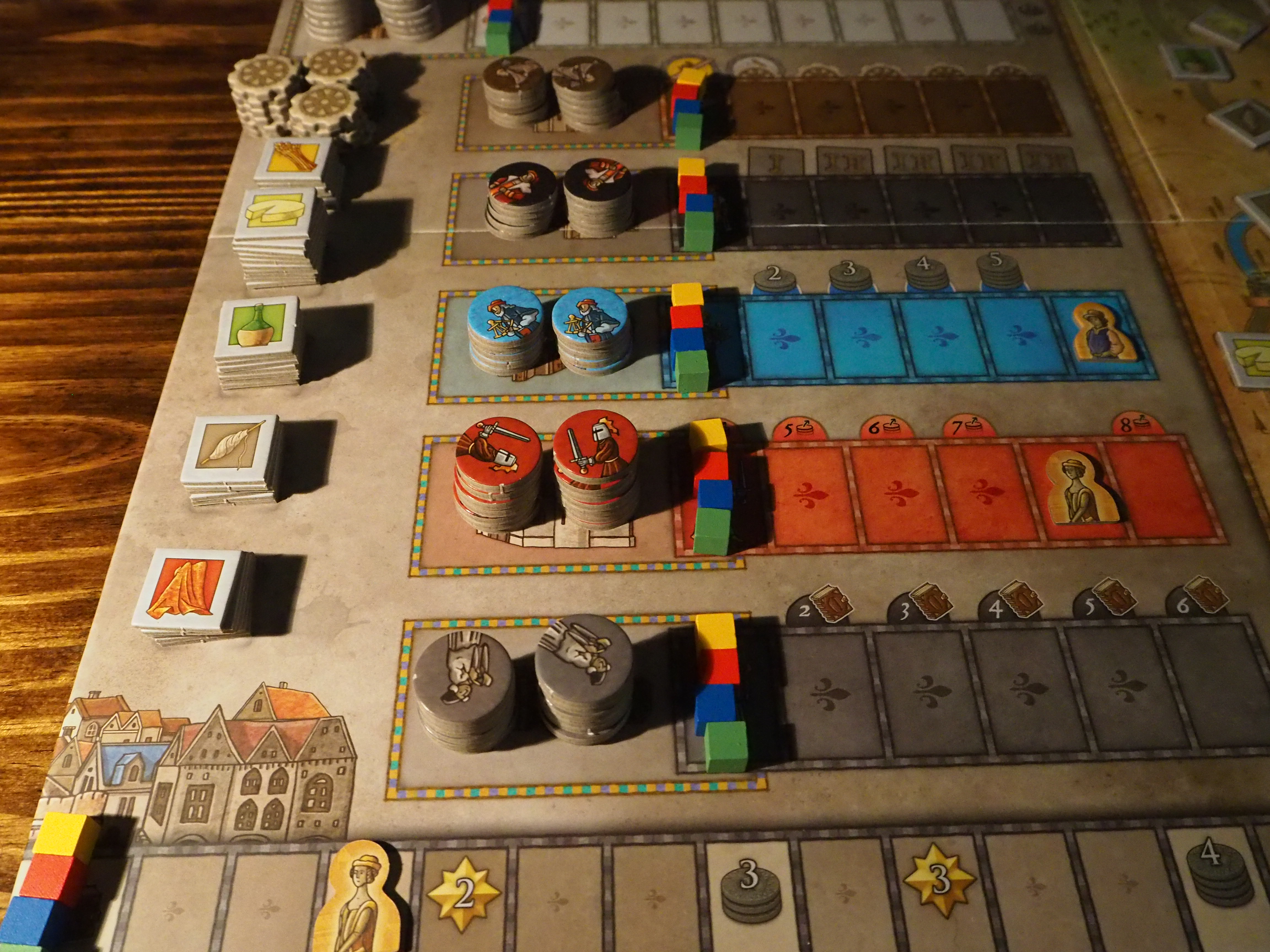
    Each action that you might select in this game will either allow you to gain a new worker, money, knowledge, a new building, or a movement on the right side of the board. This is where the “Bag Building” element comes into play. When you look at the board above you will see cubes and available workers next to certain colors. Some of the actions that you select will allow you to take one of the available workers, move along that worker’s track and gain bonuses based on what type of action or worker you pick. For instance if you select the red knight, you will move up on the track that allows you to draw more worker tiles from your bag at the start of the round. This gives you more options and allows you to take more actions later in the round. If you select the Black Trader tile you can draw a building tile to expand your player board that will give you bonus abilities and more options to select. This will allow you to pursue a different strategy or follow a strategy more diligently. This is a large portion of the game and this section alone creates so many choices the player has to make and so many viable strategy that could lead to victory that it makes you want to try the game 10 different times just to experiment on worker recruitment strategies.

    OLYMPUS DIGITAL CAMERA

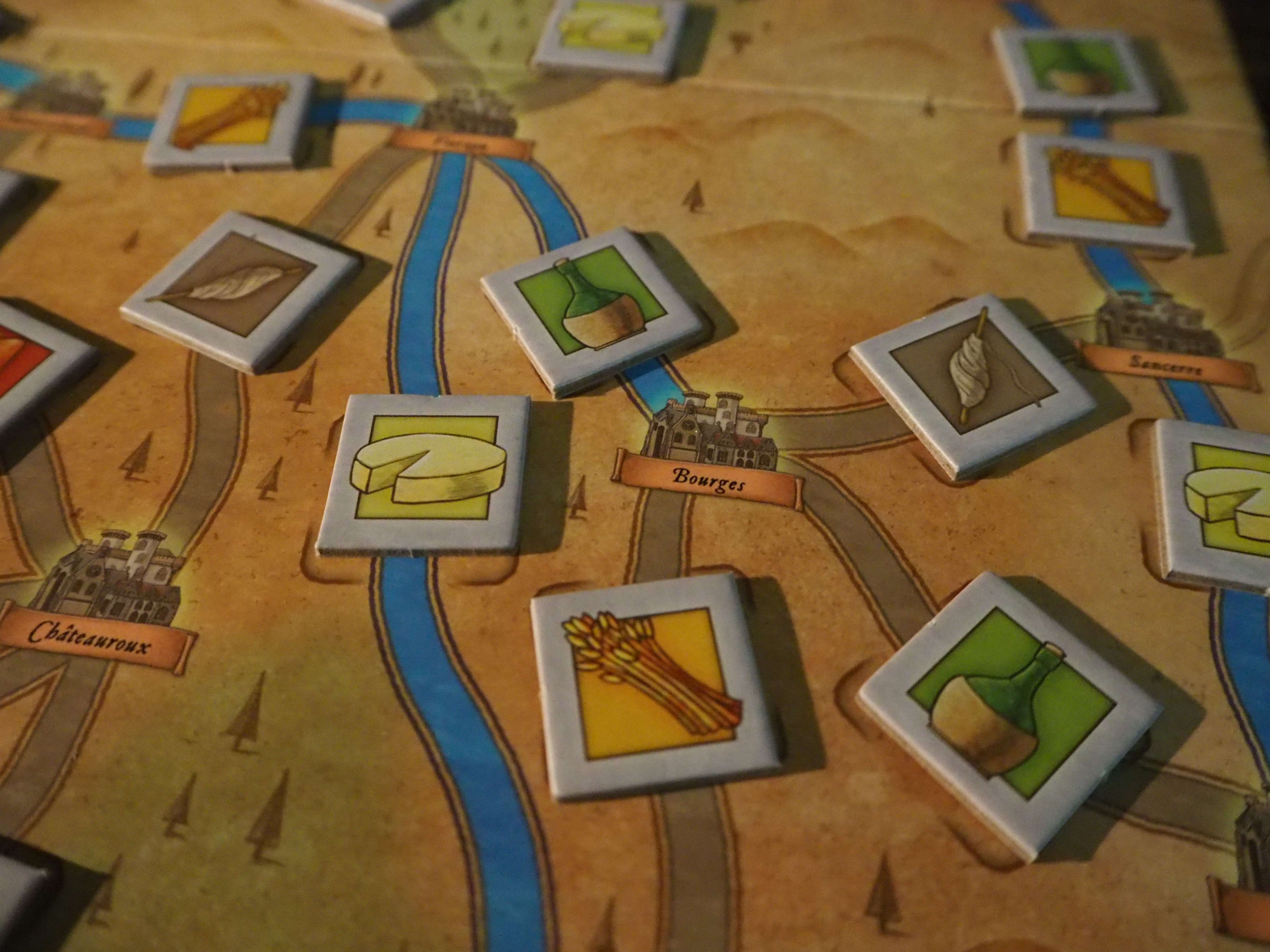
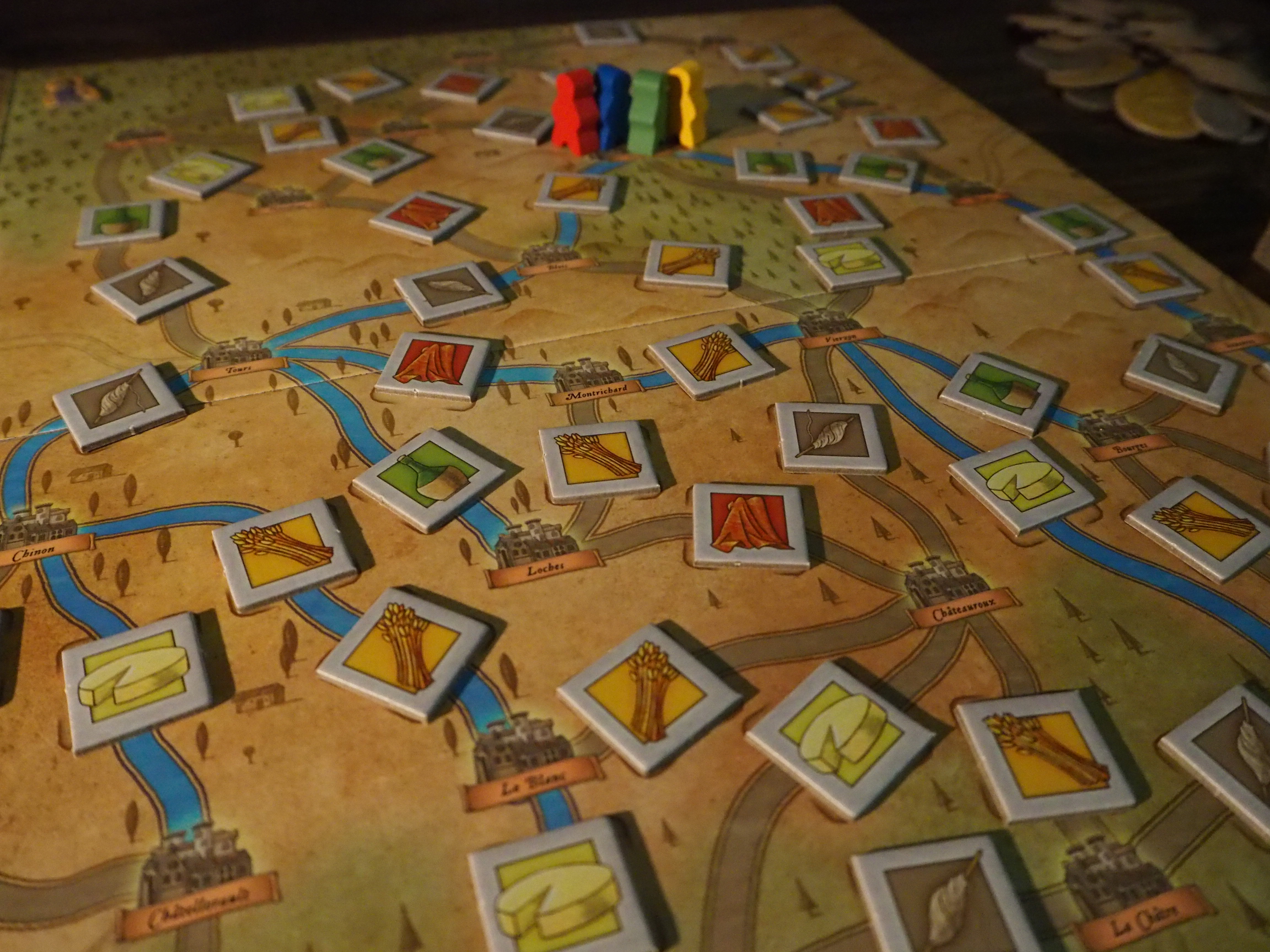
    You also have character meeples on the right side of the board in the starting city of Orléans that incorporate another significant aspect of the game. On the right half of the board is a map with roadways, waterways, and cities. Three of the actions on your starting player board will allow you to move along these roadways and waterways, and build “Guildhalls” in the cities. (Provided no one already did that). When you pass goods on the road while traveling between cities you get to keep that good. The items you collect will be worth victory points at the end of the game and the buildings you construct will also be worth points.
    OLYMPUS DIGITAL CAMERA

    OLYMPUS DIGITAL CAMERA

    This side of the board also provides a viable potential strategy that my wife and mother in law often use to beat me.

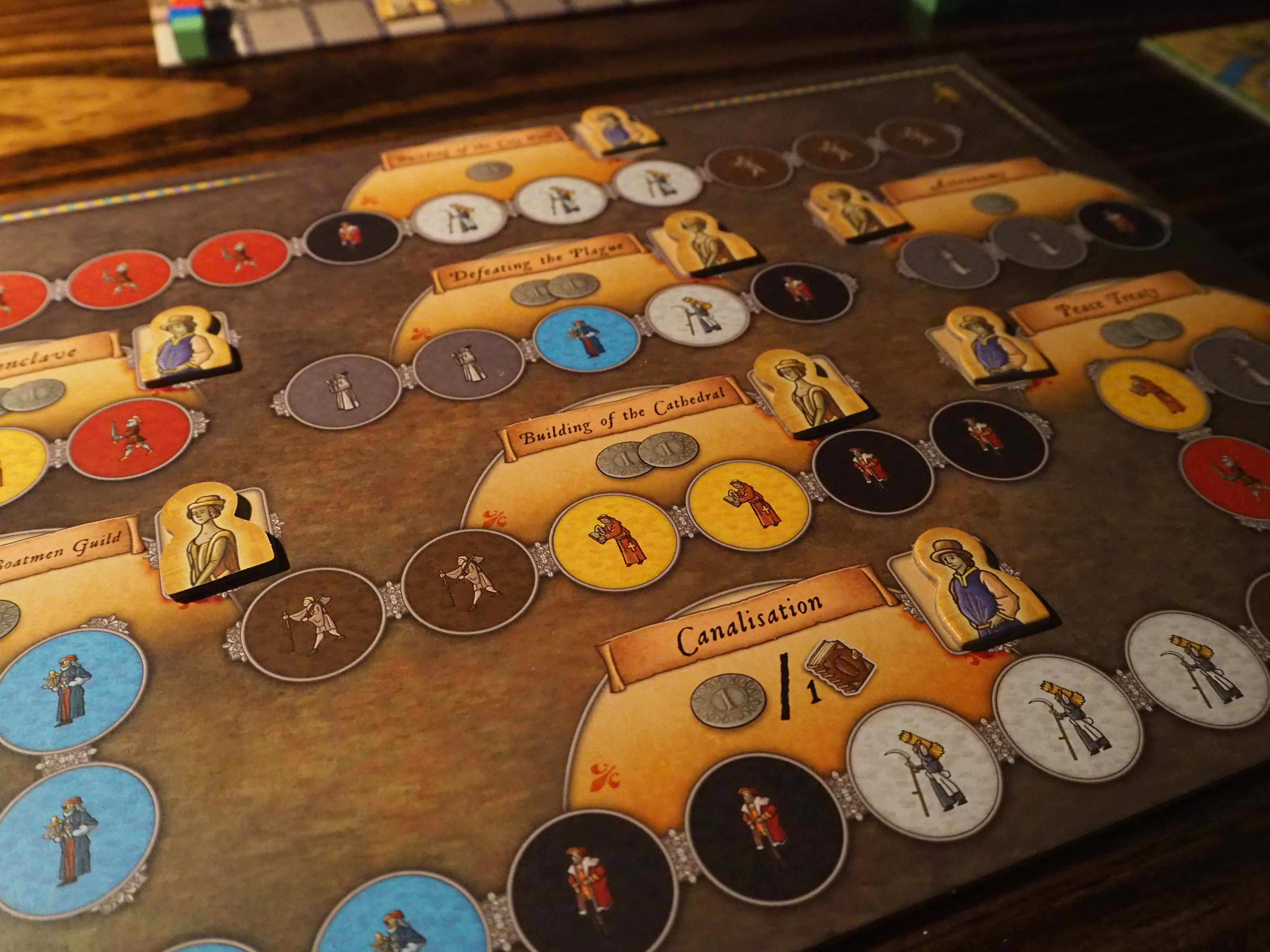
    The last board to talk about is the “Beneficial Deeds” board. There is another board that you can send workers to that will give you bonuses in the form of knowledge or money and allow you to collect Citizen tiles that will be worth points at the end of the game as well.
    OLYMPUS DIGITAL CAMERA

    Above is a picture of the “Beneficial Deeds” board. This action can be completed by going to the “Town Hall” action space on your player board. The last person to put a worker in the empty space on this board gains the citizen token and the end game points. You have to be careful though because the workers placed here are lost for the remainder of the game.

    Are you beginning to see a pattern? There are a lot of ways to win this game. On the flip side of that coin there are a lot of ways to lose this game (as I can personally attest to). One thing I will say is that no matter whether you win or lose you will want to play again. The design of Orléans is fantastic and creates an atmosphere of tension and strategy that I have seen with few others. The more I play it the more I am loving the experience. From the first moment this game hit the table I knew I loved the art and the theme. As you can see from the pictures the renaissance style is so pleasing and well done. The gameplay is engaging and the strategies are practically endless. I ranked this game as an 8.5 on boardgamegeek and it has crawled its way onto my top 10 of all time. I’m fairly new to the hobby but of the games I have played this is very high on the list. There is a ton of depth and a good bit of complexity with this title so know going in there will be a learning curve. Absolutely pick this game up though. If you have the chance buy it and play it I don’t think you’ll be sorry. This is Orléans by Tasty Minstrel Games. I’ve posted a how to play video below just in case you don’t want to slog through a rule book. If you have any questions please email me at thediceyreview@gmail.com. You can also follow me on twitter at thediceyreview1. I hope you enjoy the video and until next time I’ll see you at the table!


  • Splendor: Finding The Tipping Point

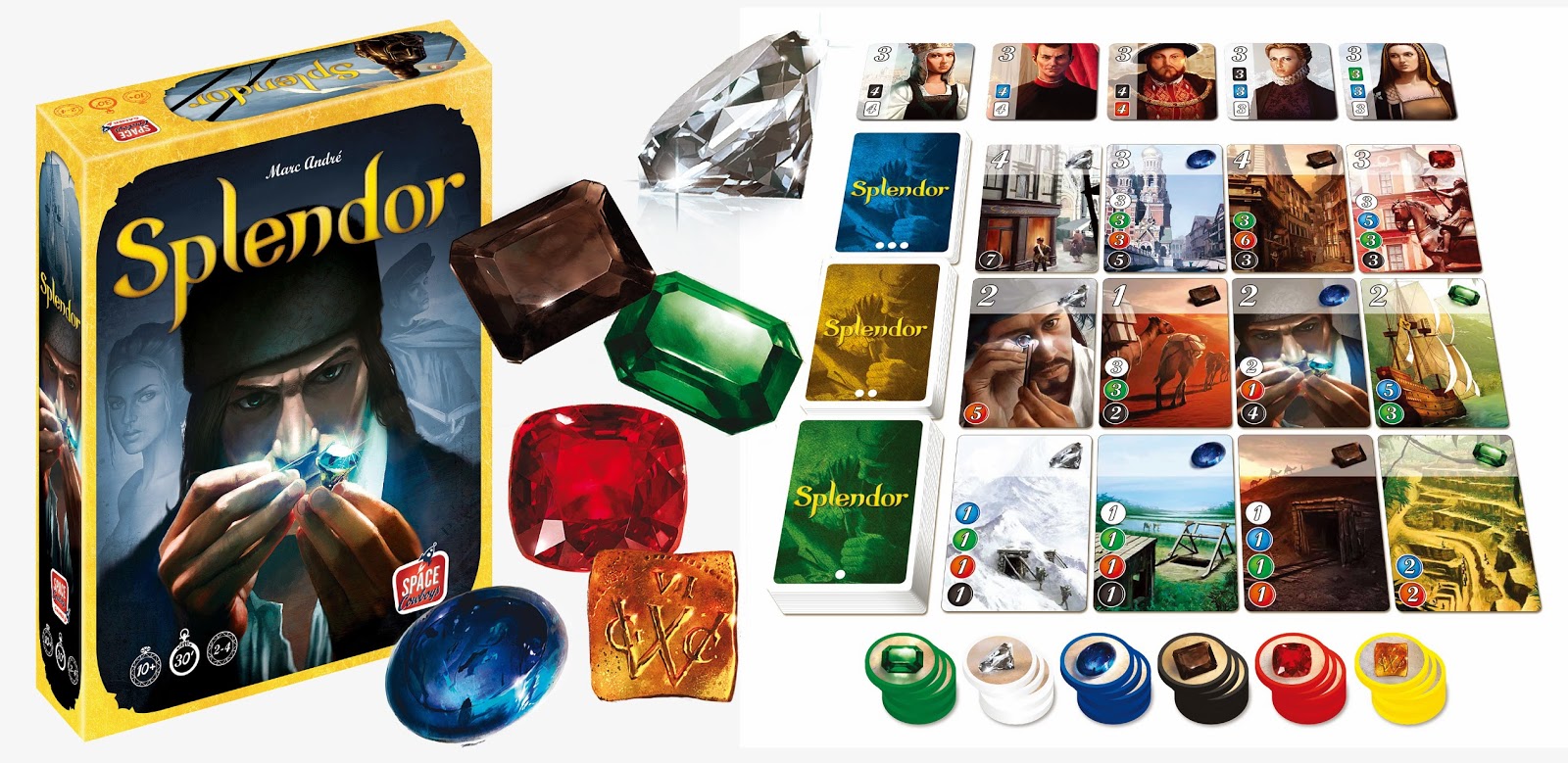
    You know those moments, when you finish a game, and you are still running the little things you could have done differently through your head, and all you want to do is reset right away and try again because you were just loving it? That was Splendor. All three times I’ve had the chance to play so far have been the same. I have lost three times, and loved every minute of it, thinking that I was just one or two little missteps away from winning. It is quick, easy to learn, and the components are nice. But most of all it is deceptively simple, with some real strategy. Or at least it feels like real strategy, so much so that it may not matter just how deep it is, because it is fun and compelling. Let’s talk about Splendor.

    Splendor Home Screen

    Splendor is a card-drafting, resource collecting game designed by Marc Andre and published by Space Cowboys. It plays with 2-4 players and is suggested for 10 and up, although I think 7-8 year old kids could play and enjoy, but the strategy would suffer a tiny bit. In Splendor you are a merchant of the Renaissance trying to build your gem-selling empire.

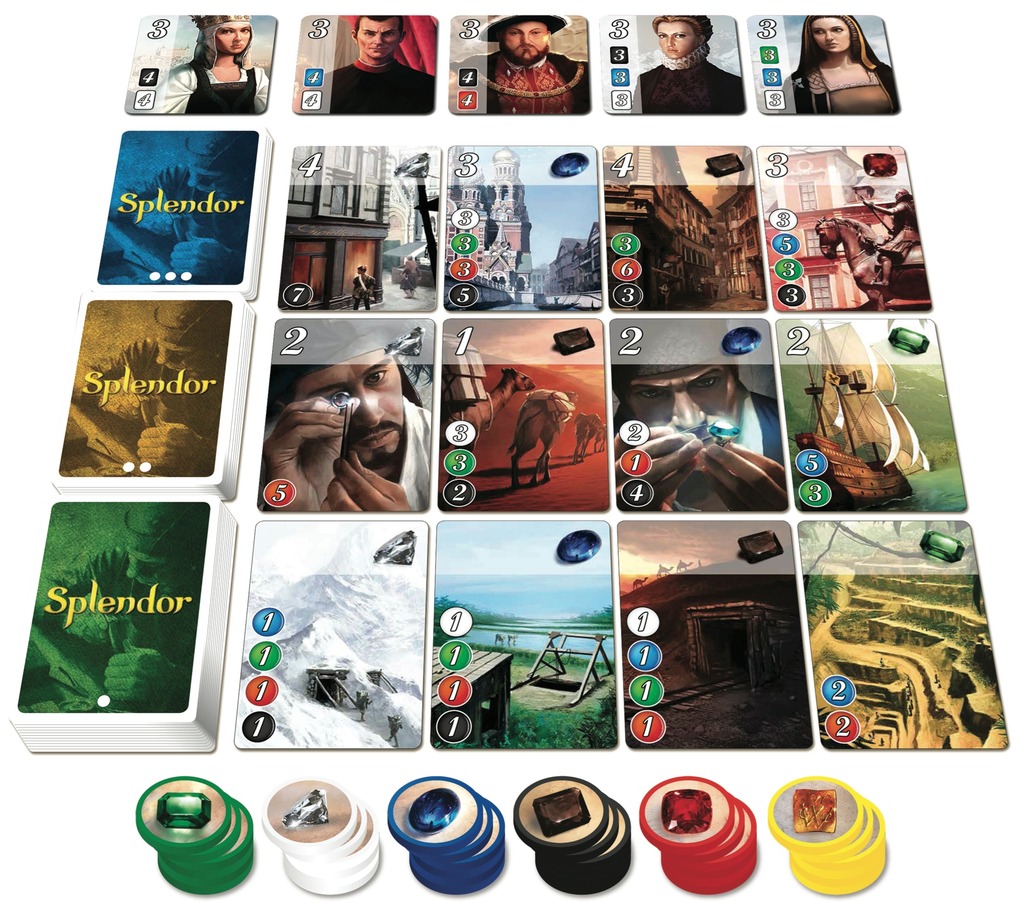
    There are six currencies represented by fantastic, hefty poker chip-type markers with their respective currency beautifully illustrated on them. There are rubies, sapphires, diamonds, onyx, emeralds, and gold which is used as a wild card. Gold can only be acquired by reserving a card, but more on that later.

    Gems

    There are three decks of cards that represent merchants, mines, caravans and the like that can be bought to give you prestige points, but also add to your resources to purchase more cards. Tier one cards are relatively inexpensive, but are usually worth zero prestige points, but occasionally they are worth one point. They are all a currency type that is added to your pool. Tier two cards are more expensive, and will likely require having a few tier one cards to afford them, but they will earn you a few prestige points as well as giving you another resource to use for purchasing other resources. The third tier of cards are expensive, you won’t be getting these bad boys without having a good number of other cards purchased, but they are worth a lot of prestige points.

    splendor2

    Once your little empire is impressive enough, one of the nobles might pay you a visit. There are noble tiles on the table that have a resource requirement. Once you have the cards to meet their requirement, that noble comes to visit you, and they give you prestige points. Once a player gets 15 prestige points, that starts the final round. When play comes back around to that player, the game is over and points are tallied.

    Noble

    On your turn you choose from one of three actions. You can take chips, purchase a card, or reserve a card. Taking chips means you can take one each of three of the five gemstones, or two of any one type of gemstone. You can only take two of a kind if there are four or more of that gemstone available. Keep in mind that the number of gems is limited based on the number of players, so grabbing resources gets to be very strategic as supplies start to dwindle. It bears to mention that players can only have ten total chips at a time.

    To purchase a card, you may choose a card that they possess enough resources to purchase and place that card face up in front of them. You now have the resource depicted on that card permanently in your resource pool, and you get any prestige points printed on the card. The resources used to buy that card return to the bank. You’re building up that little empire, keep at it!

    To reserve a card, a you may choose any face up card and put it face down in front of you for later purchase. When you reserve a card you also take one gold piece from the bank that you may use as any type of gemstone. You might want to do this if there is a card you know you might need later for a strategy to get a certain noble to visit you or to be able to afford a certain third tier card. You might also choose to do this just to be tricky and keep one of your opponents from getting a card you know they need. Every time a card is removed it is replaced with another card from its deck.

    That is it. That is the whole game. It is very simple to understand, and the mechanic is straight-forward. So why do I love this game so much? What is it about this simple little card-drafting, resource management game that is so compelling? Is it really all that good?

    Splendor-Board-Game-Components

    In a word, yes. It certainly is, and how. There are elements of pushing your luck, and there is a sublime tipping point in this game that makes it seem like you are always just about to break away and make it to your win strategy. Then one of your opponents comes along and buys the card you needed, or woos the noble you had your eye on and you have to scramble and come up with another plan. But that is okay! Because there is another strategy right in front of you, and you just shift to that one. You never feel out of the game, and you are always getting new shiny things!

    This game is light, but it is somehow deceptively so. Because about 15 minutes into this light little filler, you’ll find yourself analyzing every possibility for the next three or four possible moves. And then the board changes and you do it all over. It is still light, but it feels hefty in the moment. The theme is almost irrelevant. The artwork is really nice, and the gemstones are cool, but the paintings don’t even have to be on the cards, and the gemstones could have easily been different types of produce, or coins, or raw resources, or anything. But gemstones work, and like I said, it doesn’t even matter. It doesn’t take away from the charm of the game.

    But that tipping point. You want to buy new resources every round, but you have to decide how many of the cheap ones you should buy before saving up for the expensive cards that give you points. At the end of the day, this is a pretty simple little math game with amazing components, and great balance that feels like it is on the tip of a pin. That is the key to winning, finding the tipping point. But let’s say you misjudge. No biggie, just wipe the board and reset. You’ll want to anyway. And besides, it only takes 30 minutes. So grab Splendor and play a round or 10. You won’t be sorry.

  • Imperial Settlers: A Supreme Design

    Do you have a go to game? A game that you can play with anyone at any time that you will always enjoy and want to bring out again and again? My favorite game of all time is Imperial Settlers and it continues to grow in my estimation. For me this game takes me back to the type of game I used to play growing up on the PC. Sid Meier’s Civilization, Age of Empires and other games like it were such a draw for me and continued to draw me in for years of game play. Imperial Settlers has the feel of this epic civilization building game transferred to the tabletop.

    photo 1 (2)

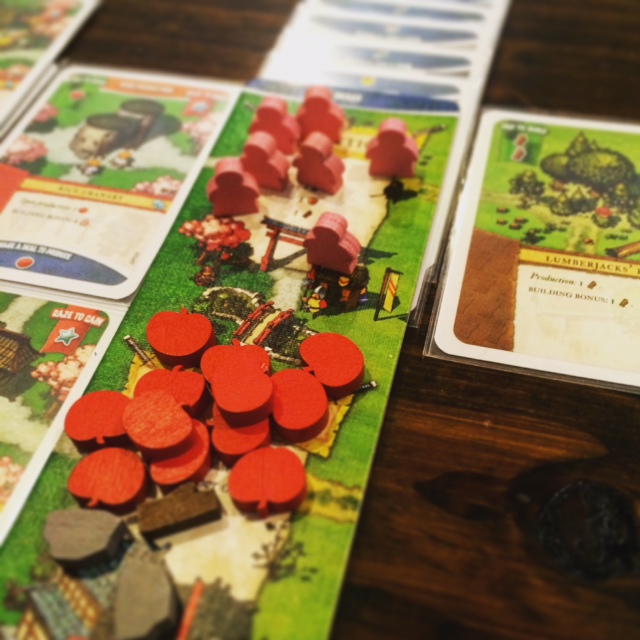
    The goal of Imperial Settlers is to build the largest civilization and obtain the most victory points. You will do this by taking a number of available actions in turn with up to 3 other players. On your turn you can build locations, make deals, raze opponents locations or your own hand of cards, send workers to gain resources and activate action locations. The depth and complexity of this game is figuring out the most efficient way to continue to grow your empire and gain points while making your resources last and work for you. There truly is genius in this design. You will pick one of four factions (or civilizations) to play.

    OLYMPUS DIGITAL CAMERA

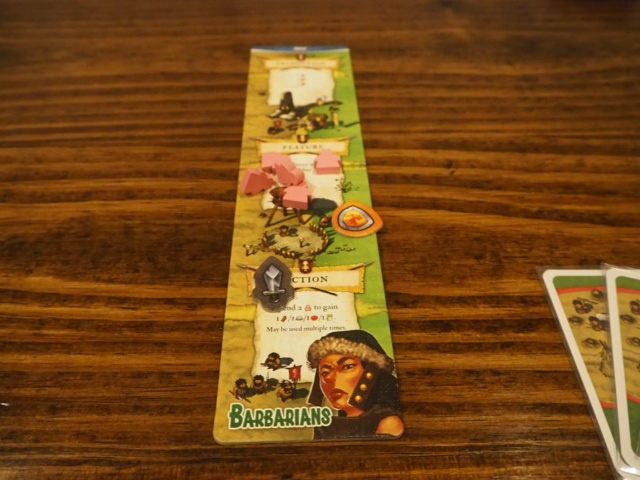
    You can choose to play the Barbarians, Romans, Egyptians, or Japanese civilizations (if you want to buy the expansion you can also play as the Atlanteans) Each civilization has a special ability to carry certain resources over from round to round. This can be very powerful depending on what strategy you are using. You will play for 5 rounds in total and the rounds get more and more intense because of the engines that people have built and the resources that people have at their disposal to attack you and grow their own interests.

    photo 2 (2)

    All of the above set aside this game just hits a sweet spot for me. I love civilization building, this has it. I love resource management, this has it. I love card drafting, this has it. The theme is perfect for me and the artwork and graphic design make me so happy every time I pick up the box. The feel is lighthearted but the depth of the game will keep you coming back for more. Each civilization that you play will feel different and require you to make different decisions. There is a deck building aspect as well that creates tons of variability and replay value.

    OLYMPUS DIGITAL CAMERA

    Imperial Settlers also has the best solo variant of any tabletop game I have ever played. The solo mode keeps the same feel of the game play and allows you to perfect the strategies of each civilization without having to round up a group to play. There is an “AI” deck so to speak included with the game and separate rules for the incredible solo version of the game. There is also a wonderful free campaign mode released online by this game’s incredible designer Ignacy Trzewiczek that you can download and print to create even more depth and replay value to the solo mode. This game is a masterpiece in my opinion and one that I will never get rid of. I believe in this game and I believe in this company. Portal games makes quality products and because they are not a major corporation with hundreds of employees they take personal care and attention to the details of their games and the passion shows. So if you have a chance, go out and buy Imperial Settlers. I don’t think you will regret it. If you can’t find Imperial Settlers, then buy any other Portal game you can find, they’re all good! I’ve rated this game as a 10 on board game geek and I wouldn’t change that rating for anything, this game deserves it. Below I have included a link to my how to play video for the game. It should be enough to get you started and if you have any questions please feel free to email me at thediceyreview@gmail.com. Until next time I’ll see you at the table!
  • Patchwork by Uwe Rosenberg

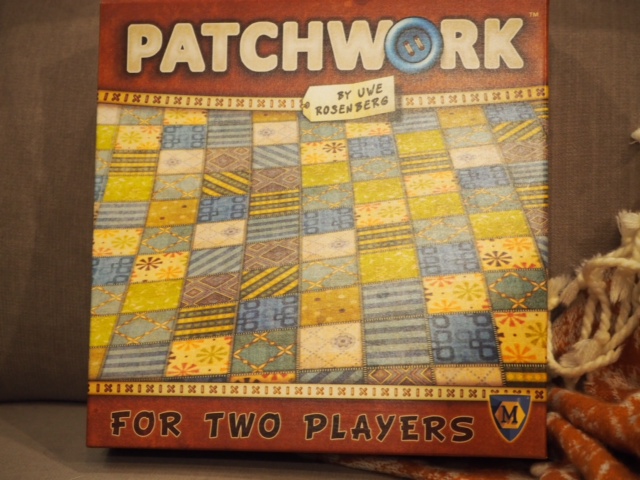
    Recently while talking to many of my couple friends I have been asked the question, “what’s a good game for 2 players?”. This isn’t always an easy question to answer. When telling people a good game to get them into the hobby I will usually go with Catan or Machi Koro; something light that takes a bit of strategy to master. What I’ve realized however is that many people are looking for a fun game to share with their significant other or kids that can be taken to a coffee shop or a restaurant and enjoyed in the midst of a busy lifestyle. The game that I’m featuring today hits on all cylinders for a couple’s game on the go. Patchwork by Uwe Rosenberg is one of Mayfair game’s two player line that is extremely simple to teach, straightforward to learn but very difficult to master. You are essentially playing a version of tabletop Tetris but the object of this game is to find the right quilt patch to fill up a player board and get the most buttons. If this game sounds like the cutest, most lighthearted experience you can imagine you would be absolutely right. This game feels like the tabletop equivalent of Little Big Planet for video games. At first whenever I saw the cover I found myself thinking “I’m going to have a hard time enjoying a game about quilting”…I couldn’t have been more wrong. This is my favorite two player tabletop game right now and the more I play it the more I’m liking the strategy and interaction.

    OLYMPUS DIGITAL CAMERA
    The Cover

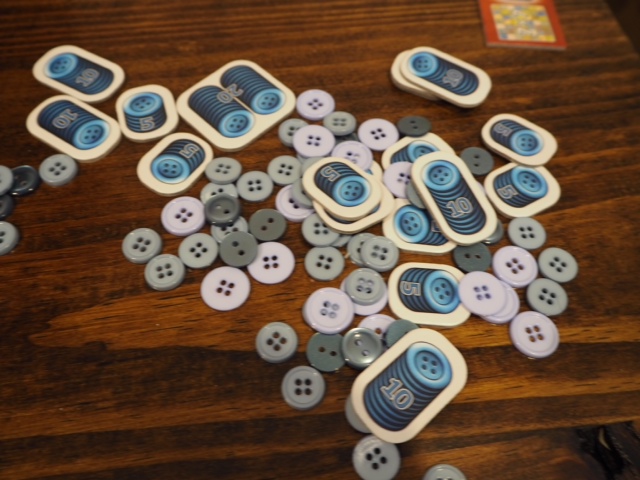
    To start the game each player will take a player board, a player marker (either yellow or green but who are we kidding, you’re going to want to take green) and five buttons. Besides making this game the most adorable thing you’ve ever played in your life buttons are used as the currency in the game. Whoever has the most wins.

    OLYMPUS DIGITAL CAMERA
    Sweet, sweet button cash…

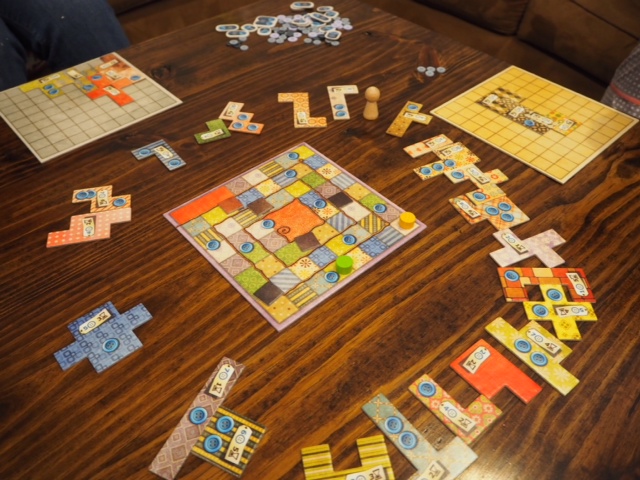
    After taking your starting buttons the player who most recently handled a needle and thread will go first. The patch board in the middle will be surrounded by quilt patches that can be purchased with buttons that the players will be looking to buy.

    OLYMPUS DIGITAL CAMERA
    The Patch Board with patches surrounding it.
    OLYMPUS DIGITAL CAMERA
    A closer look at some of the patches available to buy…

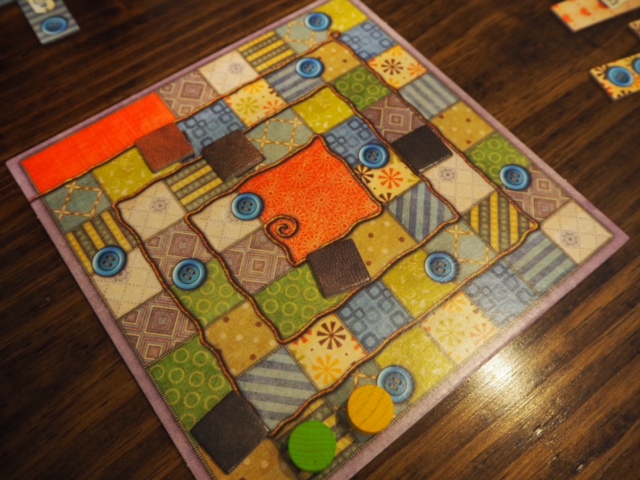
    The players will take turns buying patches and filling up their player boards until both players reach the end of the Patch Board Track and then players will count up their scores. First players will need to subtract 2 points for every empty space on their player boards at the end of the game, and then whoever has the most buttons wins…hooray!

    OLYMPUS DIGITAL CAMERA
    A closer look at the patch board in the middle of the table…
    OLYMPUS DIGITAL CAMERA
    A look at how ones player board might develop throughout the game…

    Patchwork takes about 5 minutes to setup and about 20 minutes to play. This is a game that you will want to play again and again and one that will stay in your collection permanently if you are anything like me. Uwe Rosenberg has typically designed much heavier more in depth games in the past. To see Mr. Rosenberg design such a lighthearted, quick playing game for 2 players is a refreshing break from some of what he is best known for. I love his heavier designs as well but this is an approachable game that could very well be used as a gateway game for those looking to get into the hobby for the first time, and that is a beautiful thing. This game is about 22 to 25 dollars online and at your friendly local game store and is worth every penny. I rated this game an 8.5 on Board Game Geek and almost rated it higher than that. The game is that good, and for two players only I’m not sure that there are many out that are better. The reason that this game is so approachable is that it will include a large audience appeal whereas other popular two player titles like Magic The Gathering and Dice Masters will not necessarily appeal to everyone in the family like Patchwork will. This game is one that I would feel comfortable playing with my Grandma and Grandpa. It might be a bit tougher to get some of my family excited about piloting a Goblin Aggro deck from Magic The Gathering to victory. There is beauty in the simplicity of this game but there is also such strategic depth that it will draw in new gamers and seasoned tabletop players alike. I’ve posted a how to play video below and I hope you enjoy the video and if you get the chance pick this game up you won’t regret it! I hope you enjoy the article and the video and until next time I’ll see you at the table!


  • Mysterium: Abstract Deduction

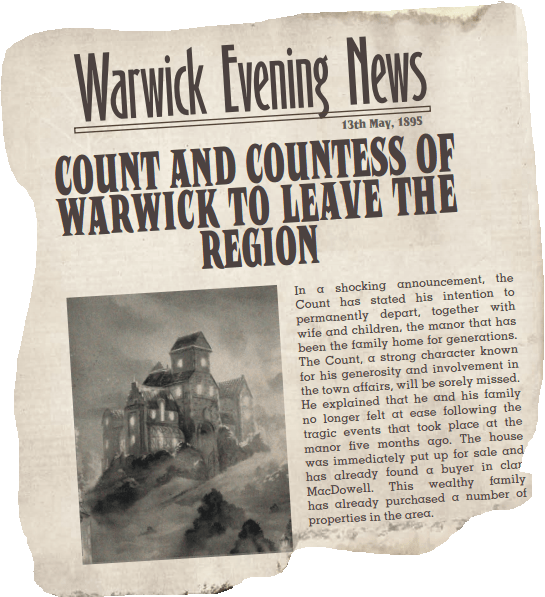
    In the year 1894 in Warwick Manor a man died unexpectedly under cover of night. The case was shrouded in mystery and month after month passed with no clear direction or suspect to apprehend. No witness would come forward and no one would provide evidence of any kind leading police to search for clues without any leads or direction. The death was eventually ruled an accident and police wrapped up investigations. As months dragged by the Count of Warwick manor felt a growing sense of unease at the events that had taken place that fateful night. The Count announced that he was leaving the mansion and moving his family elsewhere to the dismay of residents in the surrounding areas. 

    Warwick

    After The Count left the mansion the Clan MacDowell purchased the residence and it passed to Conrad MacDowell; a wealthy nobleman from the family who began to notice strange happenings within the house that lead him to believe that the spirit of the deceased servant was not at rest. There was also evidence that this case was hastily closed and loose ends were left in the investigation. Conrad noticed early on that he had a gift of paranormal communication and has sent a call out to his friends of the trade to come to the house for a seance on All Hallow’s Eve to communicate with the spirit to see if any foul play was afoot and lay the spirit to rest.

    This is the story of Mysterium, a social deduction game where 2-7 players can gather around a table to try and solve the murder of an innocent man-servant. This is a cooperative game meaning that all of the players will be working together to solve the mystery. The tricky bit with this game is that one player has to play the “ghost” who cannot talk, gesture, or hint at any suspect. The ghost is simply able to hand the “Psychic” players vision cards that suggest certain suspects, places and items using the abstract art on the card. This game is so thematic and so innovative that I truly think it will be in my collection permanently and will be my go to Halloween play. This game is a fantastic thematic experience because it is spooky but still family friendly. I put this game on my “Games to Start Your Collection” list and have listed it as an 8.1 on Board Game Geek because of its accessibility to new players, and its deep thematic game play. The player that plays the “ghost” will need to have some gaming experience and preferably some experience with Mysterium, but the “psychics” that surround the table can be new to the game and new to gaming in general with little to no issue. I’ve linked a how to play video at the end of this article. With any questions please email thediceyreview@gmail.com and until next time I’ll see you at the table.


    For a link to the full background music track follow this link:

    https://www.dropbox.com/s/ac7ofaphnd9sopi/Mysterium%20Background%20Long.m4a?dl=0

  • Champions of Midgard

    You may not know it, or you may not care; but right now we are in a golden age of tabletop gaming. The year 2015 as a whole was so fantastic for board games that on boardgamegeek.com there was a new “best game of all time” crowned. Yes there are people that rank these things and there has been no change in the top game of all time for years. That is until 2015 came along and produced such quality that the entire tabletop community had to stop and take notice of the fact that this has been a banner year.

    For me personally 2015 has seemed to be the year of worker placement. I discovered and fell in love with Lords of Waterdeep, Stone Age, Orleans, Roll For The Galaxy, Discoveries and many other great worker placement and action selection games. One of the games that stood out among the crowd of quality games this year however is a game called Champions of Midgard.

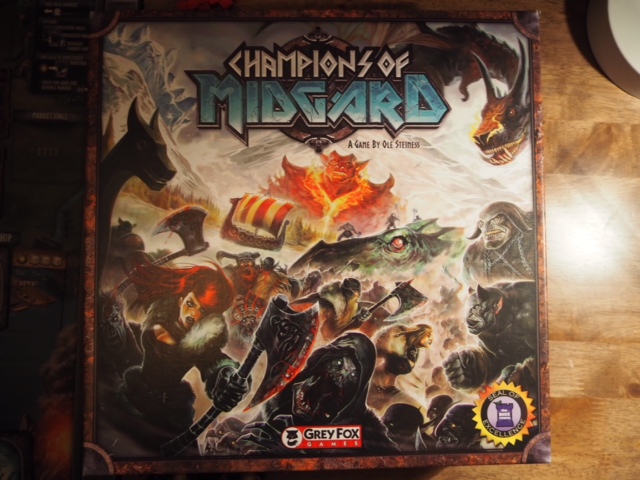
    OLYMPUS DIGITAL CAMERA
    The Cover

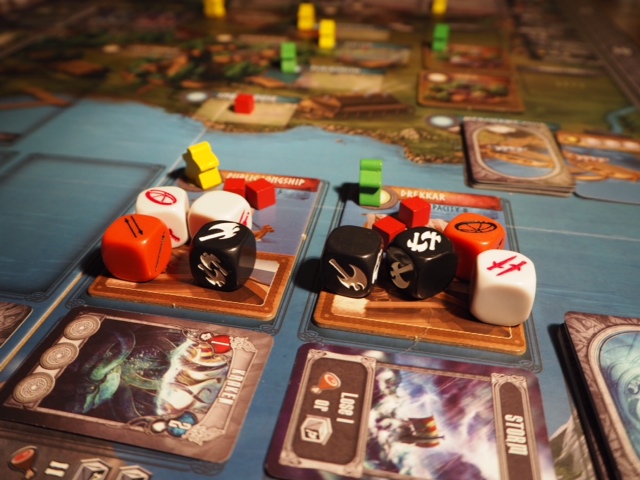
    Champions of Midgard is a worker placement game (similar to many of the games listed above) that pits you as a Viking lord trying to win the respect of a local village and earn the title of Jarl. On your turn you place a meeple around the board to activate certain actions or collect certain goods like wood, food and gold. You can also place workers to collect warrior dice that you can then use to fight monsters that may be attacking the village or neighboring villages.

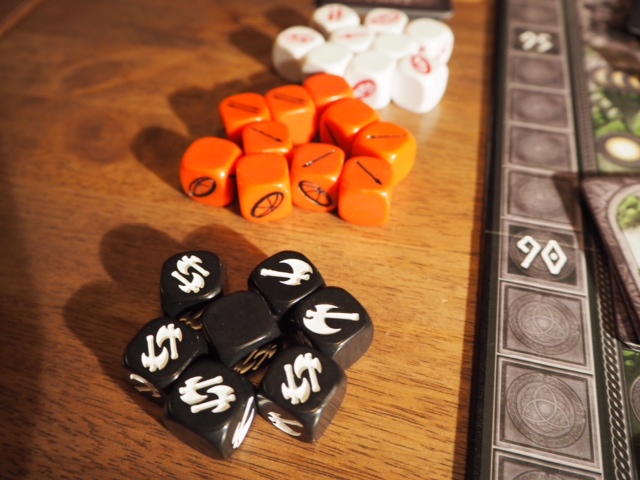
    OLYMPUS DIGITAL CAMERA
    The “Warriors” you can collect. Up top are swordsmen, in the middle you will see spearmen, and at the bottom are axemen.

    Some monsters are terrorizing distant shores across a choppy sea so as part of the game you will have the opportunity to load up a longship with warriors and food and brave the ocean deep in search of adventure and glory. Taking a journey across the ocean can be rewarding but can also be very dangerous as you will encounter various storms and creatures along the way. If you can make it across the ocean and feed your warriors you can fight the mythical creatures of Norse legend to earn glory, gold, victory points and prestige.

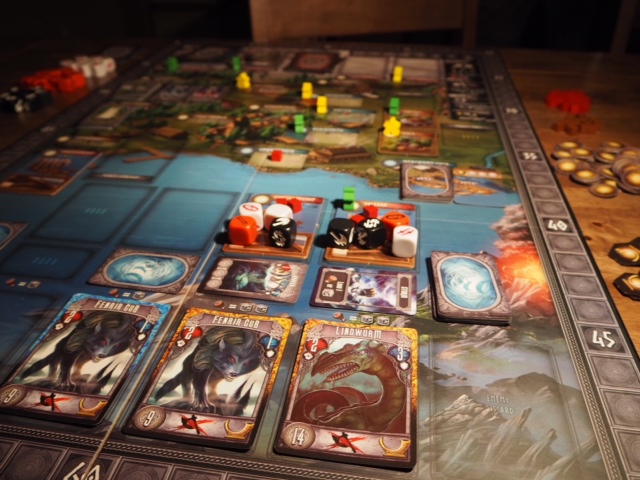
    OLYMPUS DIGITAL CAMERA
    Two ships loaded with warriors and food. One ship is attempting to battle the Lindwurm, the other will attack a Fenrir Cub.
    OLYMPUS DIGITAL CAMERA
    A better look at the two ships mid journey. One ship will have to defeat a Kraken on its way, the other ship will lose a food or a warrior due to a storm.

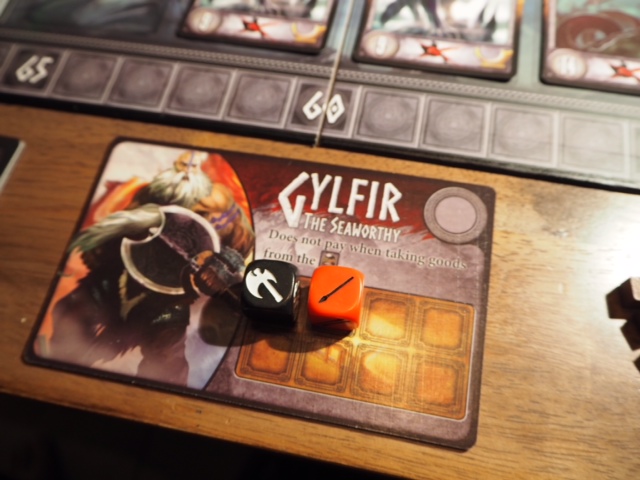
    One interesting aspect of this game is that you will play using different characters that each have certain abilities that make the game more interesting. The character below is Gylfir the Seaworthy, a Viking warrior of great renown who is respected among the merchants and mercenaries that haunt the coast.

    OLYMPUS DIGITAL CAMERA
    Gylfir the Seaworthy, one of the characters available to play. Gylfir can visit the ship merchant for free whereas normally players would have to pay 1 gold.

    After defeating monsters, earning gold and glory, hunting for food and braving the seas you will count up cards and monster sets along with some of your destiny cards, gold and tokens and whoever has the most victory points wins and becomes the Jarl of the village.

    This game is a blast to play and really hooks you with an interesting Viking flavor. This year many have listed Champions of Midgard as a “Lords of Waterdeep replacement” or a “Lords of Waterdeep killer”. While this game is compared to Lords of Waterdeep regularly I think that the comparisons are largely inaccurate as a strategic replacement. Champions of Midgard is a fun dice throwing romp that really brings a fun theme home. It’s an enjoyable experience to play as a Viking lord and fight Trolls and Fenrir Cubs and hold off Draugr. The theme shines in this game and it makes it a much more enjoyable experience. The prominent strategy and most direct way to assure victory in Champions of Midgard is by fighting monsters; everything that you do in this game leads to that end. That isn’t meant as a negative statement or meant to say that this game isn’t an absolute blast to play, but it’s because of this strategy that this game hasn’t replaced Lords of Waterdeep for me. The experience by and large feels different and for that reason this game hasn’t knocked Lords of Waterdeep off of my top 10 of all time, especially with the expansion to provide more depth.

    Champions of Midgard is a great play and one of my top 10 games of 2015, but Lords of Waterdeep for me is a deeper strategic experience as it stands.  This game is new and exciting however and has much better theming than Lords of Waterdeep so for many Champions of Midgard will probably be more fun. You would not regret buying this game and would more than likely keep it in your collection for years to come. This is a refreshing take on the worker placement mechanic and one that I think will be imitated and possibly even improved upon (hopefully by Ole Steiness and Grey Fox Games). I’m excited to see what the future holds for this game and its possible expansions, and other games that expand on the idea of a worker placement combat game.

    This is an absolute buy for me and has me looking at other titles releasing from Grey Fox Games with excitement. I give this game an 8/10 and said as much on board game geek. I will post a how to play video of Champions of Midgard later this week for those interested in seeing gameplay. Until then I’ll see you at the table!

    OLYMPUS DIGITAL CAMERA

  • Roll For The Galaxy: Space Exploration With a Little Bit of Luck

    As a gamer one of the greatest forms of entertainment for me is any game that allows me to become a bold, brave space adventurer and explore new worlds that hold untold secrets and resources. There are a slew of video games that allow you to explore the galaxies but for us tabletop players the options seem to be fairly slim. There are a few types of tabletop space games that I have played. Some of the space games out there have epic themes and can be very enjoyable to look at and play but take massive amounts of time to teach, set up, and play. Some space games are little more than some cards thrown onto the table with very little tactile feel or interesting mechanics thrown into the mix making the game feel dull and uninspired. The challenge is to find a game that has enough meat, that you feel like you’re actually having an experience; while also finding a game that doesn’t require so much set up and learning that you have to take off work. I find that right now for me, Roll For The Galaxy is fitting in that niche.

    Roll For The Galaxy is a very solid dice rolling, action selection, civilization game with a bit of worker placement that is just the right fit for families or tabletop gaming fans that have gotten bored with some of the classics (Catan, Carcassonne, Ticket to Ride) and are looking for a new experience with plenty of meat and replay value. I think that if you’re a fan of managing resources and exploring the galaxy then this game is for you.

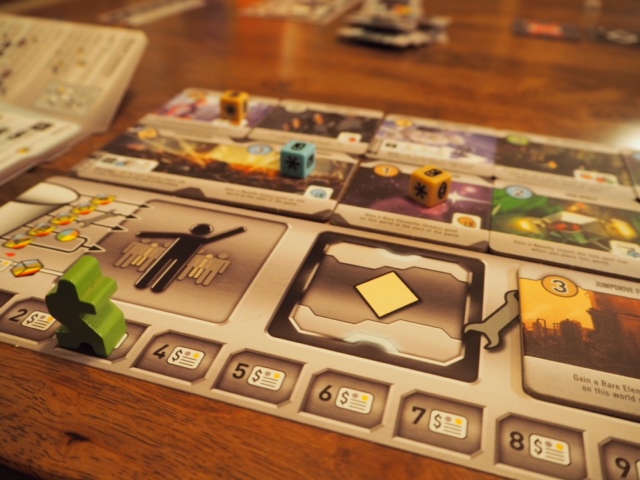
    You start off with your own tableau and player board that contains a home world, alien race and starting technology that will give you your own special abilities.

    OLYMPUS DIGITAL CAMERA

    This particular set up gives you extra money to start the game and makes it easier to complete two of the actions in the game later which can give you a significant foot up on the competition. As an added bonus, this player’s starting world (the tile in the top right) gives this player two bonus dice (workers) to start the game with. After you have been given your starting worlds and have gotten any bonus dice you will take your available dice and put them into your cup and roll away.

    OLYMPUS DIGITAL CAMERA
    The dice that you will roll on your turn

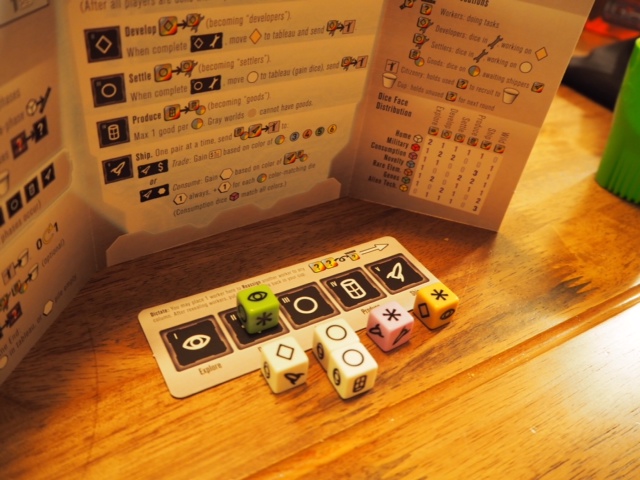
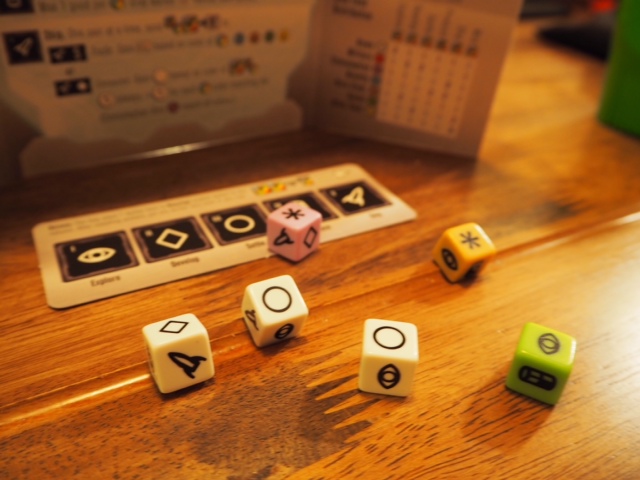
    Once your dice are rolled they can give you a number of actions that you can then complete based on what you need to do. Do you want to settle some new worlds? You may have some workers that will allow you to do that. Want to research a new alien technology? That’s an option as well. the nice thing about this game is that it allows you to negate the randomness of dice rolling in a fairly significant way and that allows strategy to take over. You can essentially pick one die per turn to be wild, even if it was rolled as something you don’t want or need, and you can also sacrifice other dice to change the faces of certain dice that you want to change. If you roll what you want you can leave things the same. Once your dice are rolled you will assign them behind a screen to keep other players guessing.

    OLYMPUS DIGITAL CAMERA
    How your action selection may look
    OLYMPUS DIGITAL CAMERA
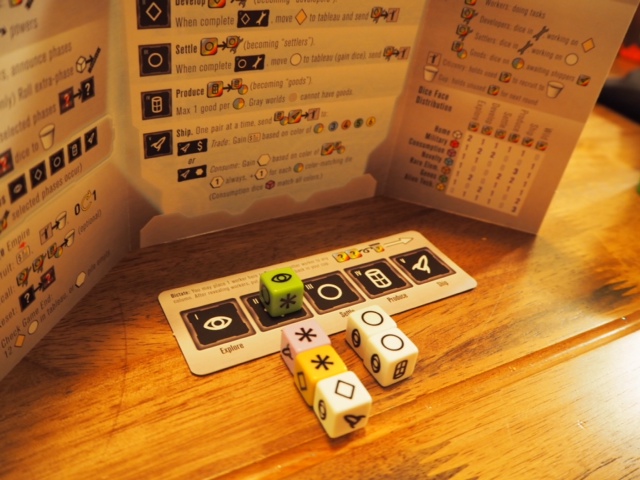
    Another example of how action selection may look

    There are five actions to pick from; you can either: Explore (draw new tiles and explore new worlds), Develop (research new alien technologies), Settle (colonize new worlds that will many times give you new dice to use), Produce (send one of your workers to become a good on your world), or Ship (send someone to trade or consume a good you have sent to a world for points or money). In this way your civilization will grow and thrive until you become the winner. The first person to twelve tiles in their tableau wins the game and this happens fairly quickly. The game comes with fantastic components and is a blast to play.

    OLYMPUS DIGITAL CAMERA
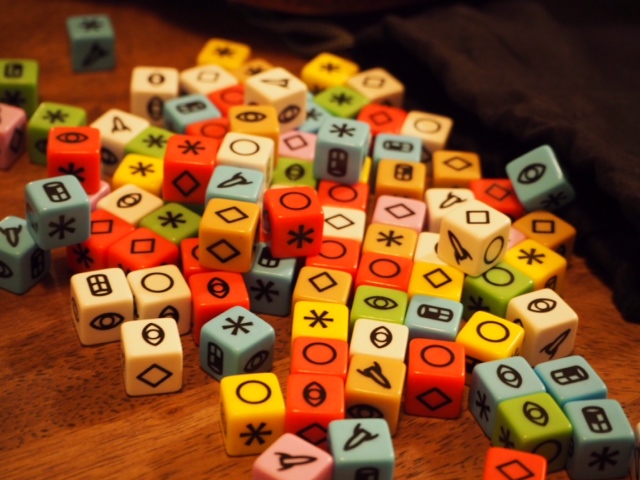
    Some of the fantastic dice included with the game
    OLYMPUS DIGITAL CAMERA
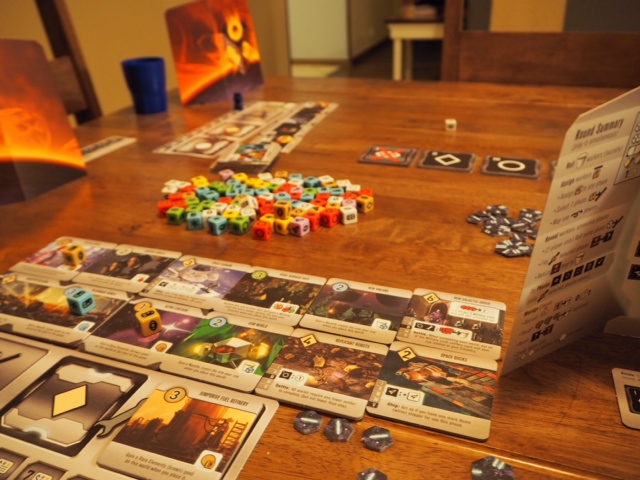
    How your tableau will begin to look as your empire grows
    OLYMPUS DIGITAL CAMERA
    Your dice after being rolled behind your screen

    I will be recording a how to play and final thoughts video on Roll For The Galaxy soon and will post either on this page as an attachment or I will post a link so you can actually see how game play works. This is a very solid game and one that many people can enjoy, and if you have a chance I think you should check it out. I rate this game as an 8/10 and have said as much on board game geek. You can get this game for $42.60 on Amazon, and 39.40 on coolstuffinc.com. Have fun and I’ll see you at the table.

    Paul


  • Games To Start Your Collection

    1 – Ticket to Ride / Ticket to Ride Europe (Card Drafting, Set Collection)

    This is a great intro game for a lot of different crowds that can be taught in about 3 or 4 minutes and provides quite a bit of strategy. It works well for 2 players and is fairly simple. You’re trying to collect sets of train cards in various colors so that you can turn them in to claim routes across America (or Europe). You have destination tickets that will give you a bonus if you can complete “San Fransisco to New Orleans” etc. There’s some risk though, because if you can’t complete the destination tickets you choose, at the end of the game the points for that ticket are deducted instead of added. It’s a lot of fun.

    (Side note the company Days of Wonder that makes this game is a safe bet for any board game. They have made a smaller amount than most companies their size but the games they have made are all fantastic)

    These are around $40 on Amazon right now, Target sells them as well.

    2 – Machi Koro (Dice Rolling, Civilization Building)

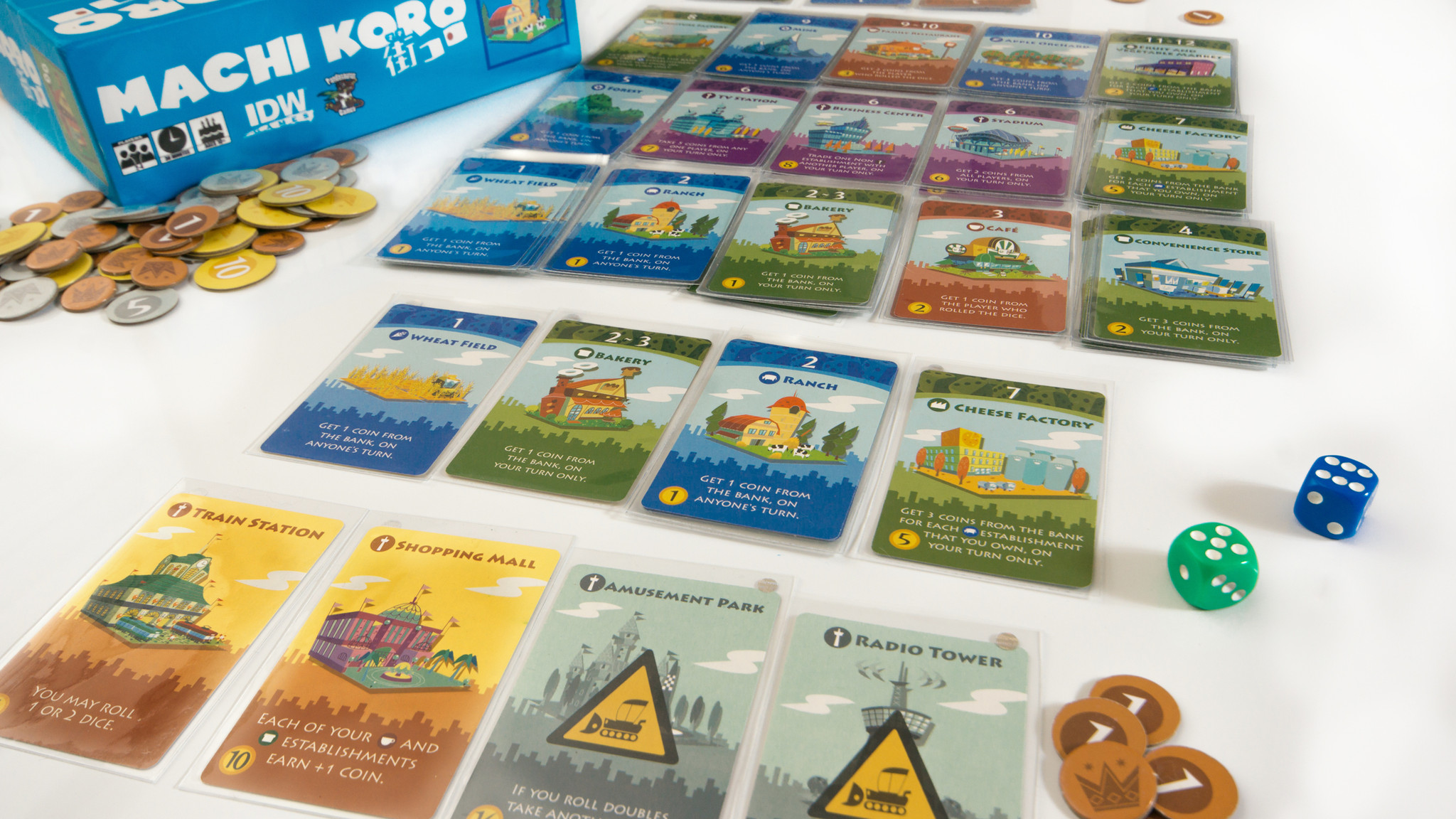
    This is a game for 2-4 players that has lots of strategy but also relies on dice rolls so there is an element of luck which can make it really fun. The basic premise is you are building a city. The first one to build a set of major landmarks wins. You can buy smaller buildings that have numbers on them from 1-12 along the way. When the number of your building is rolled by you or others depending on what type of building you have, you get money. You use that money to build more buildings until you can build the ones you need to win. Essentially you are trying to maximize the chance that your building’s numbers will be rolled by as many people as possible to get the most money. This one plays 2 well and has some great expansions that add a ton of depth to an already fun game (the harbor expansion is particular adds so much and many say they didn’t like it until they played with the harbor expansion, I am not one of those people) It’s $19.79 on Amazon right now and is also at Target.

    MK 1
    The Cover
    MK 2
    The buildings

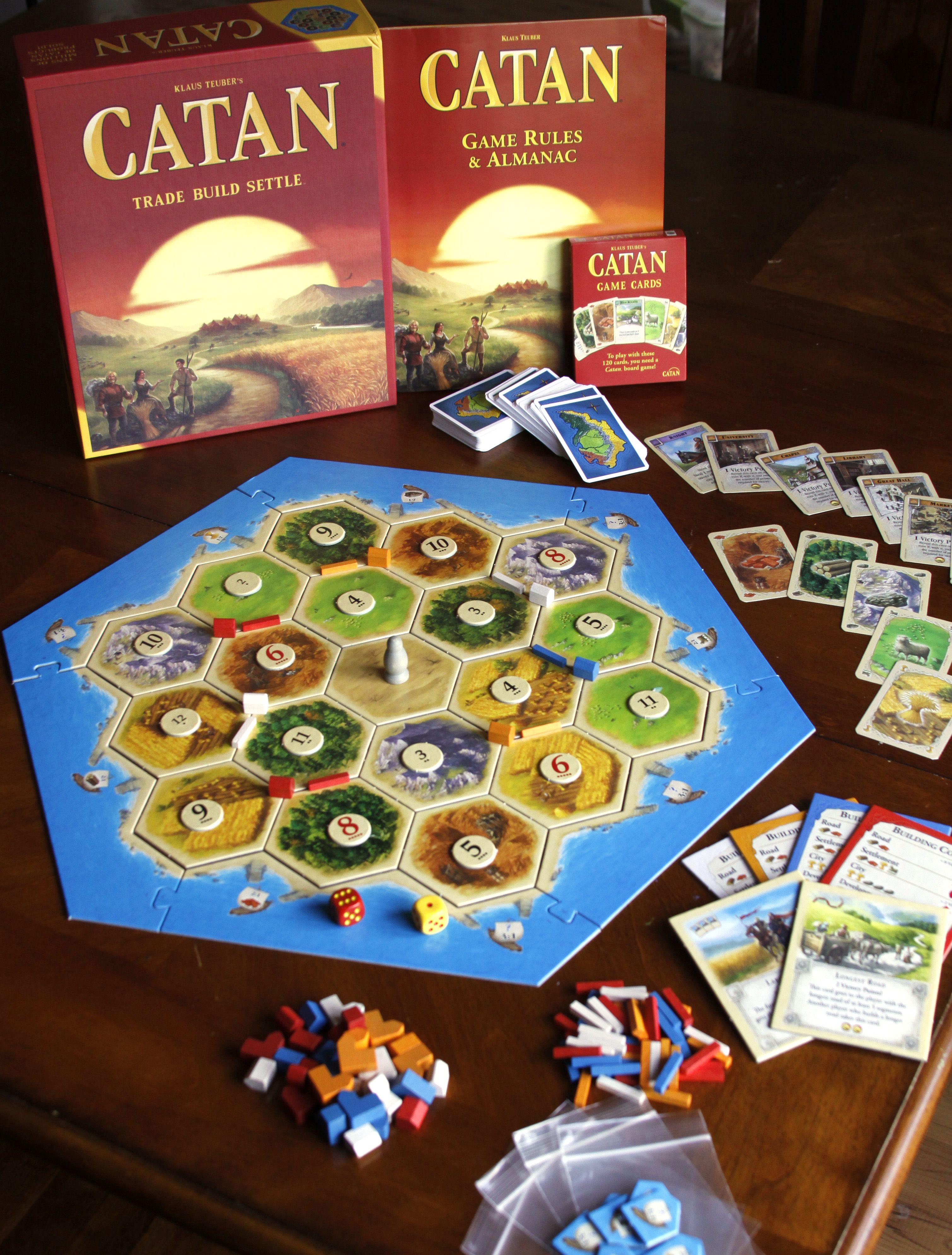
     3 – Catan (Hand Management, Route Building)

    This game is a classic and is a solid choice to start with as well. It plays 3-4 players (or 5-6 with an extension they sell) and is a great mix of strategy, resource management and civ building. You essentially roll dice that will activate certain tiles to give you resources if you are next to them on the board. You use those resources to build roads, towns, and cities. Those towns and cities will give you victory points (also having the longest road, biggest army etc will give you victory points) The first person to reach 10 VP wins. It’s a good one. They have it for $36.14 on Amazon and it is also available at Target.

    Catan 1

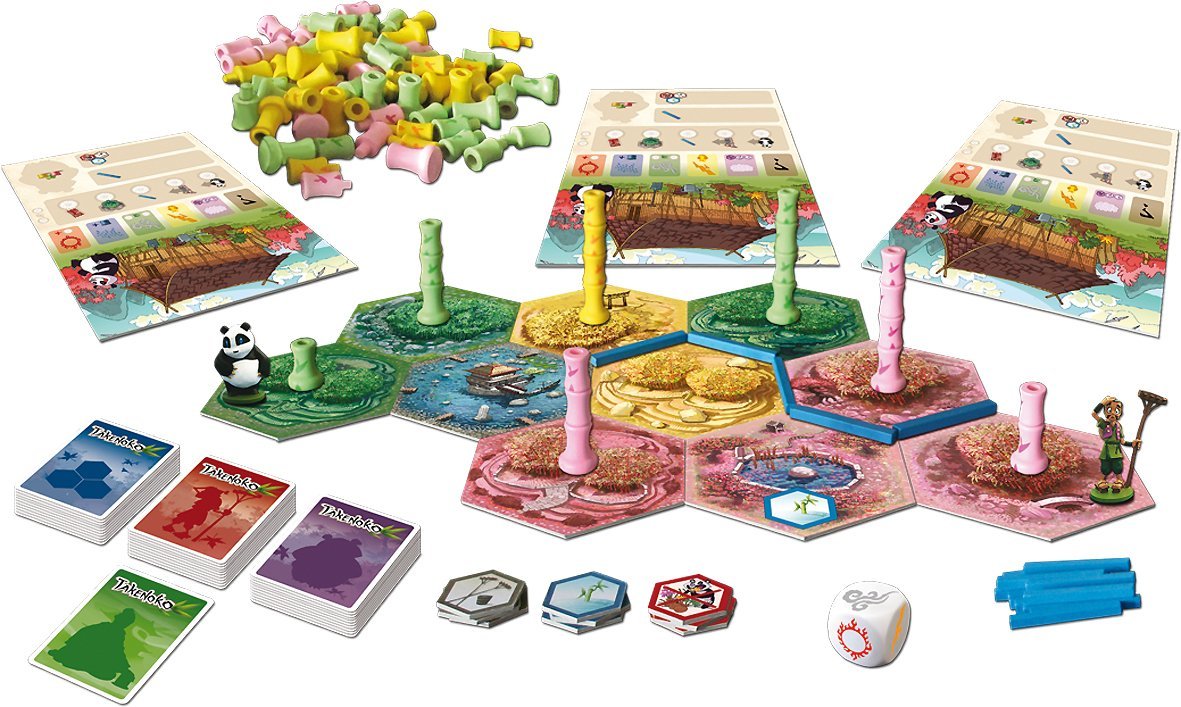
    4 – Takenoko (Tile Placement, Grid Movement)

    This a great game where you are trying to complete objective cards you have. The board will continue to grow as you lay down tiles. When you lay down tiles of a certain color bamboo of that color will “grow” on the board. The cards that you have are either telling you to lay down tiles in a certain way, grow bamboo in a certain way, or eat bamboo of a certain color with the panda figure. It’s a very family friendly 2-4 player game that actually has quite a bit of strategy involved and is fairly simple to pick up. It’s a cool theme for the game and is one that lots of people will enjoy. (Also the rule book has a comic strip telling an intro story, how great is that?!) It’s on Amazon right now for $31.02.

    Tak 1Tak 2

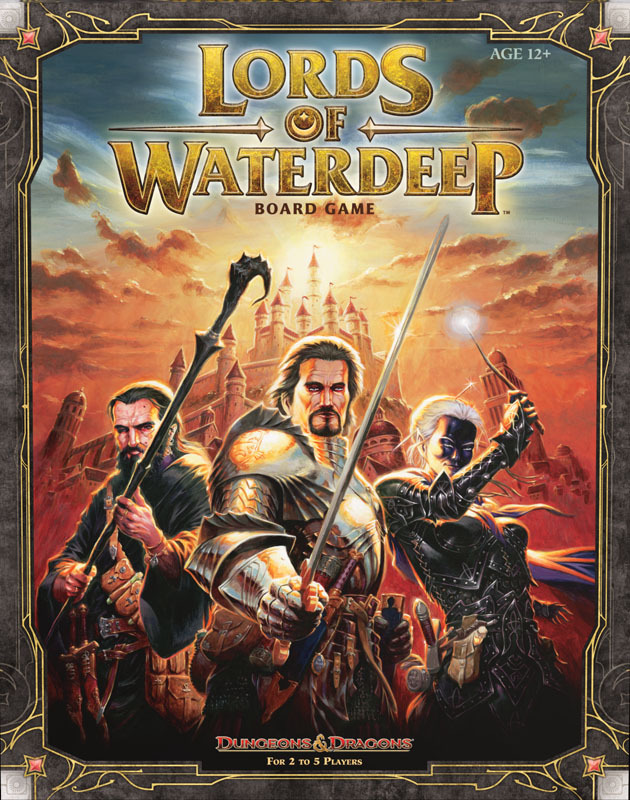
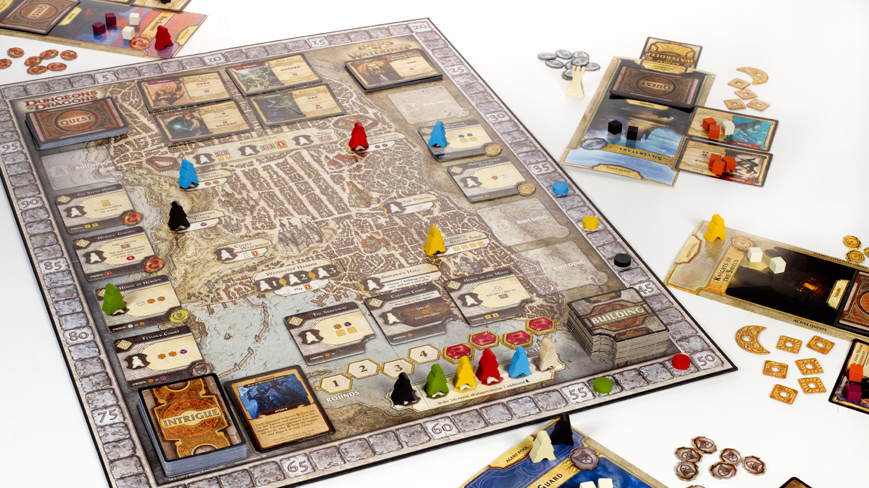
    5 – Lords of Waterdeep (Worker Placement, Resource Management)

    This one is the nerdiest on the list and one of the more involved to learn but it’s far and away my favorite game right now; my wife loves it too. This is a worker placement game. You have quests that you are trying to complete and a “Lord” that you are playing that will give you bonuses for certain types of quests (there are 4 types total). You have a certain number of agents that you can use per round (there are 8 rounds) and when you place an agent on a certain location you get “adventurers” (cubes). When you get the number of adventurers you need to complete a quest you can turn in the quest and get the points. There are also some other interesting places on the board that let you interact with other players but that is the basic concept of the game. There is a ton of strategy to this one and once again a fantastic expansion available that adds an incredible amount of depth to the game should you end up liking it. It’s on Amazon right now for $36.47.

    LOW 1LOW 2

    Cooperative Games

    So I also wanted to mention a couple of others because all of the games I put above are head to head games where you are trying to win against someone. These next 2 are cooperative games that you all win or lose together. This is personally my favorite type of game because there seems to be more interaction when you are working together and trying to accomplish a goal. The following games are easy to pick up, but once again provide plenty of depth and interesting choices that could effect the team in a number of different ways.

    1 – Pandemic (Coop Play, Variable Player Powers, Set Collection)

    This is a very cool game where you are agents from the CDC trying to prevent and cure diseases across the globe. You will play specific characters that have special abilities that will help in the game. Basically you will move around the globe “curing” disease cubes that will spawn on the board based on an infection deck that you draw cards from. You will also draw cards from a player deck after every turn that will give you cards displaying a city and a color on them. If you collect 5 cards of the same color, you can go to a CDC research station and cure the disease that matches a particular color (there are 4 diseases total, red, yellow, black and blue). You have to be careful because the player deck also contains epidemic cards that may cause an outbreak in a city, which could potentially cause a chain reaction. It’s $29.74 right now on Amazon. This game is also available at Target.

    Pan 1Pan 2

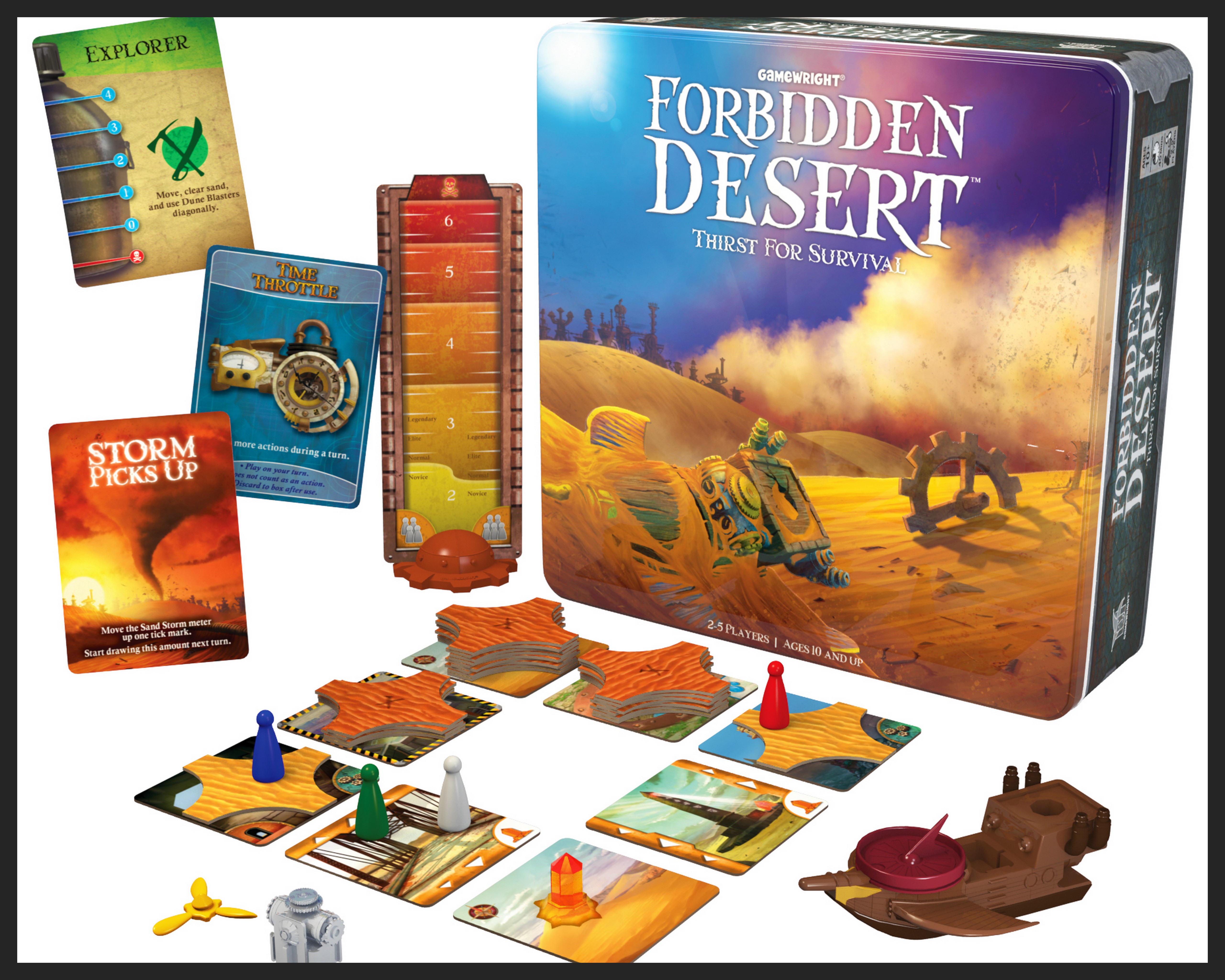
    2 – Forbidden Desert (Coop Play, Variable Player Powers)

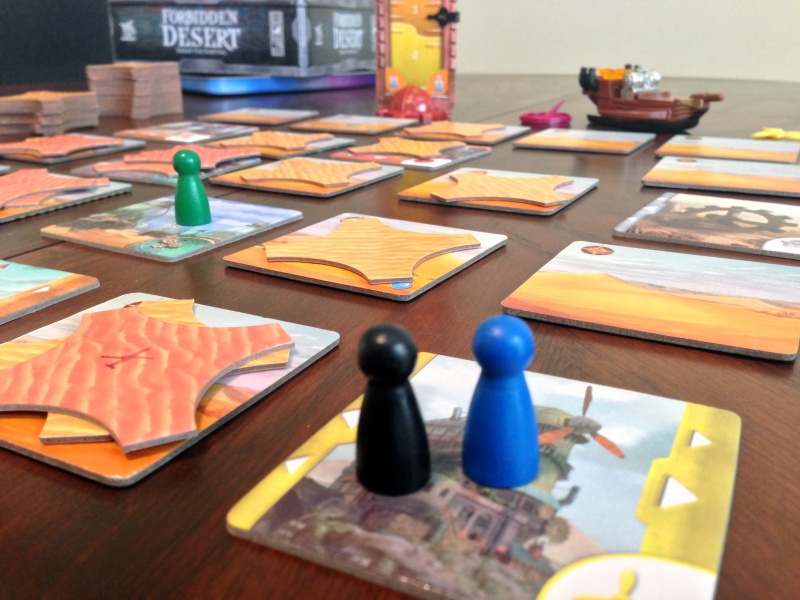
    This is a game where you as a group of adventurers have gotten stranded in the desert and must find the parts to a steampunk flying machine to escape. You have to fight sandstorms and the elements to survive and work together to find the parts you need to escape in the flying machine. Once again you will have characters that have special abilities and can help in certain ways. It’s about $17.00 on Amazon right now.

    FD 2FD 3

    More Complex Games That Are Very Good—

    So these games are going to be on the starter list but they are a bit more complex than the other games listed. These games could be used to start any collection and you would probably love them, they might just take a bit more effort to learn. The good news is there are tons of videos on YouTube showing how to play these games which is very helpful in most cases because not all rule books are crystal clear (I’m looking at you Mysterium). So if you are feeling adventurous and want a somewhat deeper gaming experience pick these up!

    Five Tribes (Area Control, Set Collection, Auction/Bidding)

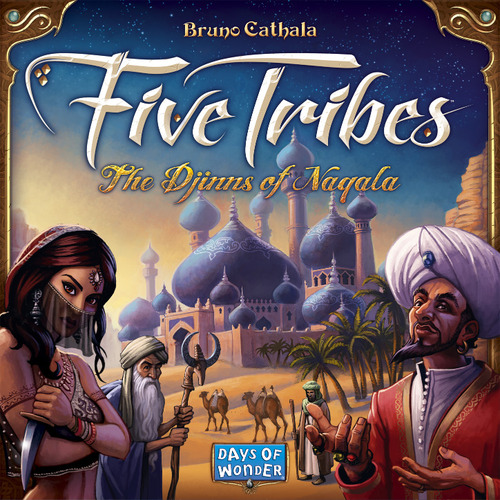
    This is a fantastic game by Days of Wonder (the company that makes Ticket to Ride. Notice a pattern? They make fantastic games).In this game you pick up a wooden person, move them to another tile and based on what tile you land on and what color person you move you get a bonus. These bonuses can include the ability to purchase a Djinn (genie) that will give you certain powers throughout the rest of the game; the ability to collect resource cards from a market that will give you gold etc. The person with the most points will win. This game involves quite a bit of strategy and is very engaging. Anything that Days of Wonder makes is a quality product but this game is one of their best. It’s $35.70 on Amazon.

    FT 1

    FT 2
    The wonderful tiles and components

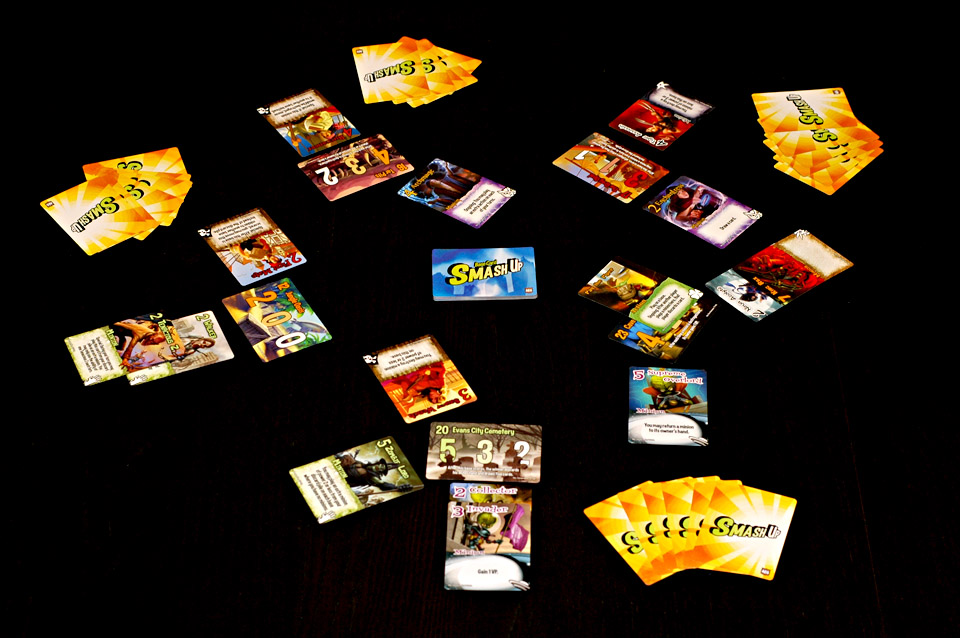
    Smash Up (Hand Management, Area Control, Variable Player Powers)

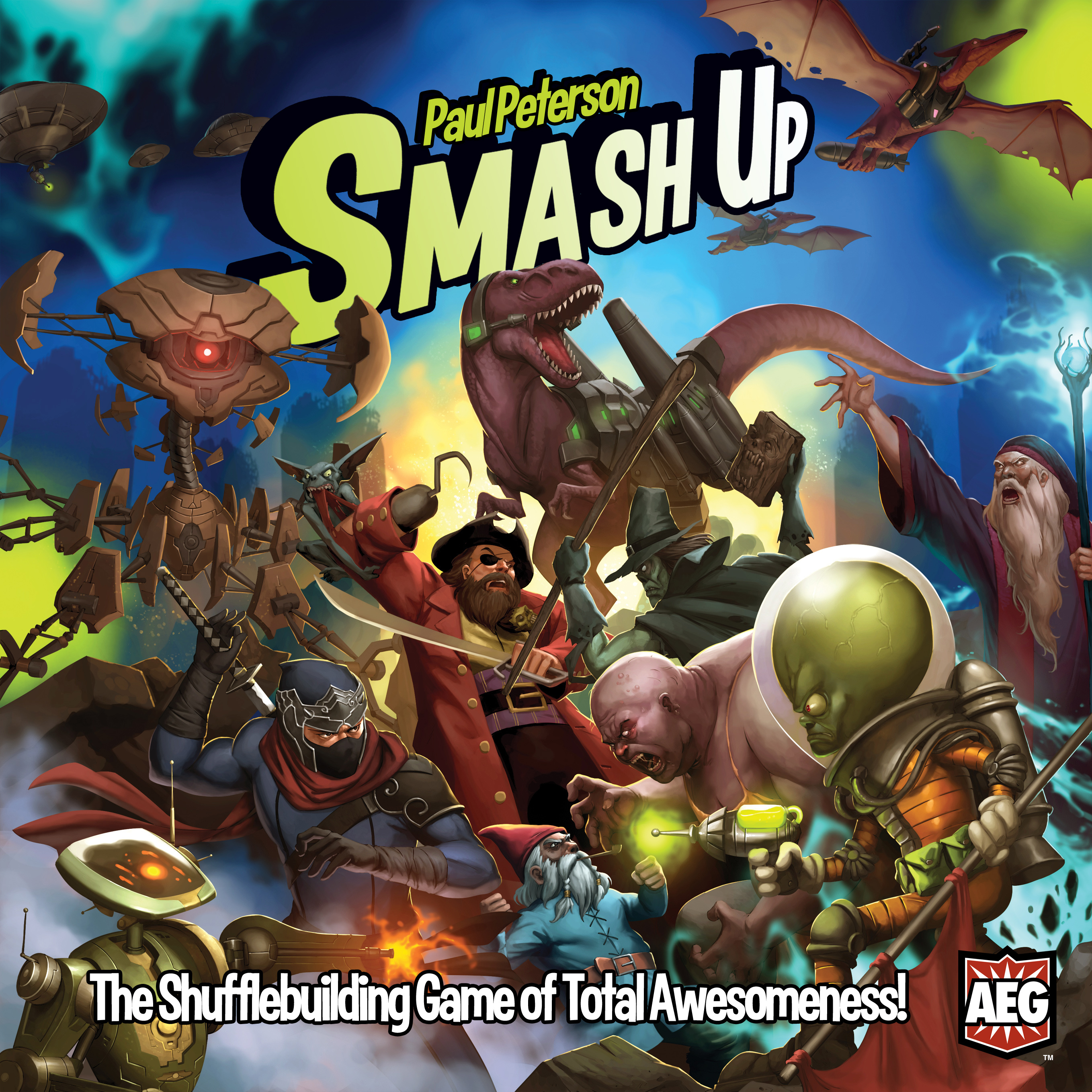
    This is a great card game. The basic premise is you have 8 different decks of cards that represent things like Ninjas, Pirates, Dinosaurs, Aliens etc, and you pick two of those groups and shuffle the decks together to create a “Smashed up” fighting force. You then play king of the hill with cards essentially and try to capture bases. You can have Pirate Dinosaurs or Robot Zombies and these combinations will give you different powers and abilities because each deck plays differently. It’s a great game for 2-4 players that can really become interesting with the strategy used. It’s on sale on Amazon for $19.99. (One cool side note for this game is that it has 5 or 6 expansions that can each play by themselves for 2 players. So if you want a little bit of a different experience you can buy an expansion and play head to head with someone without having to own the original game)

    SU 1SU 2

    Mysterium (Cooperative Play, Acting, Hand Management)

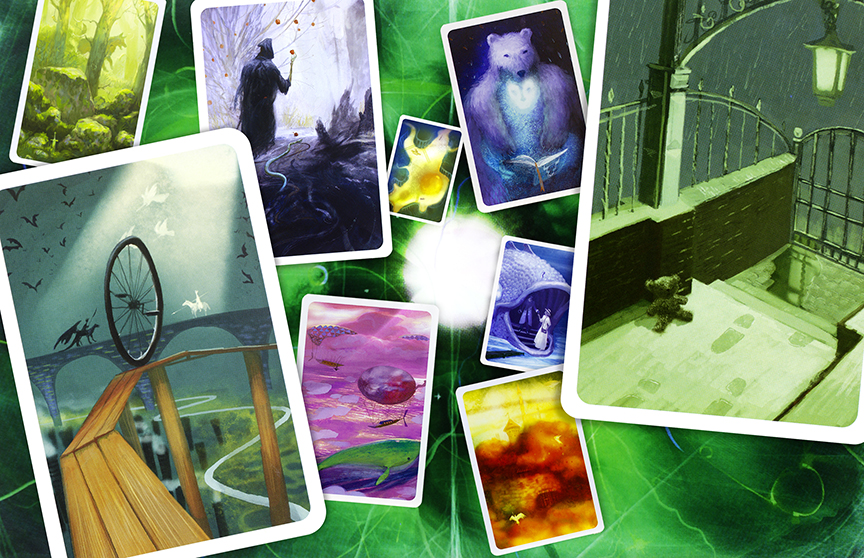
    This is a spooky game where up to 7 people can play to try and solve a mystery from the 1890’s in Scotland. It is now the 1920’s and a group of Psychic investigators have entered a haunted mansion to try and piece together the events that ended in the murder of a manservant. One person plays the ghost who was murdered years ago. This player cannot talk or make gestures. He/She can communicate to the (up to 6 other) psychics in the game with “Visions” in the form of cards. The psychics have to find clues in these vision cards that match a Person, Place, and Thing that will be on the table (think Clue). Once each person has successfully determined the items, places and people the ghost is trying to tell them, the ghost will lay down 3 vision cards that will match one of the player’s grouped cards. If a majority of players guess the correct group (Person, Place, Thing) based on the vision cards the ghost picks at the end everyone wins and the spirit is laid to rest. This is a great cooperative game that really requires some creative communication and is a ton of fun to play. This game is also one where you can really get into the theme and make it fun. There is a QR code in the rule book that allows you download background music that you can play while the game is going on. This makes it a fun spooky experience that everyone can really enjoy. It’s available on Amazon for $44.95.

    Mys 1Mys 2

    Mys 3
    Some of the fantastic artwork

    In Conclusion-

    Whether you like to build cities and amass resources, attack your opponent head on, plan chess like moves for 3 turns in advance or help your group survive a disaster of global proportions this list should give you a good place to start. I’m fairly new to the hobby as well and am still learning new things about the games I love and the styles that keep me coming back to the table, but these have all been winners as far as I’m concerned. Thanks for reading and if you have any questions or want to hear about a certain topic email me at thediceyreview@gmail.com.

    See you at the table!
    Paul