Category: Uncategorized

  • Nusfjord – Elders and Stocks

    Nusfjord – Elders and Stocks

    Imagine with me for a moment staring out over a bay. The breeze is biting and crisp as you watch the sunrise over the mountains that flank the water on both sides. The waves lap against the dock in rhythm like a brittle heartbeat. As you pull your coat up against the salty air you think to yourself “I wish I could crawl back in bed”. The cold and the sun pull you from your thoughts presently as the gulls begin to cry to each other overhead. Their shrill call like an alarm clock with no snooze button. Today there’s only one objective. Get out on the water and catch fish. Fish are the lifeblood of your community. Your quiet town has started to become busier over the past few years and you want to keep up. You have grand plans. You and your company are going to be remembered in the history books as the main influence in the development of Nusfjord, You’re going to make sure of it.

    Today I come to you from Hurst, Texas…a hot and humid place with little in the way of natural beauty. I’m a mountains and cold ocean guy living in a flatland and hot grassy home. I’m here because of good jobs and low cost of living but sometimes I dream of a crisp ocean breeze or a snowy walk. All I really ever see outside are hot days and some rain on occasion but the beautiful thing about the tabletop gaming hobby is that it can transport you to new places an hour at a time.

    I’m especially a fan of Uwe Rosenberg, if you’ve followed my channel for any amount of time you may be aware of that. I love Uwe’s games for a number of reasons, usually they feature little in the way of negative player interaction and they’re more like multiplayer solitaire in most ways. That’s not a bad thing for me, I love to have a shared experience where I don’t have to ruin someone’s plans to further my own. The other reason that I love Uwe’s games is that his themes are so peaceful and quaint. Uwe incorporates his past and his childhood into themes quite often and even when he’s not exploring his heritage he usually picks simple themes that portray a certain amount of serenity. I’m drawn to those serene settings. Maybe it’s because I long to live a fisherman’s simple life and escape my corporate business, or maybe it’s because Uwe’s themes expose me to a different style of life than I’ve ever seen. Either way when he releases a new title I take note. The game I want to talk about today however is one of his somewhat older titles and one that not many people talk about.

    I want to talk about the game Nusfjord from Mayfair Games (which is now asmodee). Now as I said this game is from tabletop designer of some note Uwe Rosenberg. Nusfjord is an interesting game to me in many ways and I want to try to tell the story of what makes this game interesting and also why I have fun with it. I’ll talk about some of the nuts and bolts of Nusfjord because that’s what you do in game reviews but I also want to discuss some of the thematic elements that I feel make the game richer. To talk about Nusfjord we have to go allll the way to the Lofoten Archepeligo in Norway, and in that archipelago lies a small fishing town called Nusfjord. As you can see from the beautiful stock footage this area of the world is picturesque to say the least. For that reason I find the theme of this game so appealing.

    Now discussing theme in a Euro game is always a bit of a risky proposition. The terms “pasted on” and “bland” are thrown around like fish at Pike’s Market. I think with tabletop games however the effectiveness and beauty of theme truly can be in the eye of the beholder. The tranquil and whimsical theme of a shipping company in a small Norweigan town trying to develop and produce economic growth is a draw for me. Once again I think it’s partially because right now I’m drawn to the simplistic and the calm things in life. There’s also an element in this game which feels special to me where you can invite elders to your table. The Elders provide you with their expertise and you feed them. The communal aspect of this element is wonderful and I love how it’s implemented.

    So that being said thematically this game is similar to many of Uwe’s other games. You are an owner of a small business trying to develop the landscape around you, make use of special buildings and actions to gain the most gold and victory points and be crowned the best fishing entrepreneur in a small Norweigan community.

    The way this happens mechanically is very straightforward. You have three workers or wooden discs that you can place on action spaces of a central board each round. Each time you place a worker you can take actions like clearing land and gaining wood or building ships to increase your fishing harvest. You can gain gold or even sell shares of your company with a simple but clean and interesting stock mechanism of the game.

    Now if you’re a tabletop gamer worth your salt you’re very familiar with worker placement as a mechanism in board gaming. Even if you’re a fairly new tabletopper you have probably played games that use a form of worker placement or at least were influenced by worker placement. Games like Carcassonne for instance use mechanisms that are similar to worker placement even though they are not true worker placement. Uwe Rosenberg is a fan of designing with worker placement. Almost all of his very popular games with the exception of Bohnanza and Patchwork use worker placement as one of their driving forces. 

    What Uwe always does very well in my opinion is bring one or two new and fresh ideas to a sometimes very old concept. Agricola was a wonderful worker placement game, that featured tons of occupation and achievement cards that would greatly change gameplay. In addition to the cards players were tasked with feeding their families with a very strict system that caused you to have to really consider the efficiency of each move. At the time this game was released these were novel concepts with worker placement. With A Feast for Odin Uwe introduced a Tetris like resource generating puzzle that players worked their way through while deciding which strategy they wanted to take in a vast sandbox of options. It feels to me that Uwe influences trends in game design. Worker placement really seemed to take off after Agricola. There were a rash of Polyomino games after Patchwork. I don’t think Nusfjord will create trends with some of the mechanisms introduced but there are two aspects of the game that I greatly enjoy. I love the stock aspect of the game for mechanical reasons, and I adore the elder cards in Nusfjord for thematic reasons. I should explain.

    First let’s discuss the elder cards. There is a worker placement space that will allow you to gain an elder card by feeding them and inviting them to your table. Each elder has a specialty that allows you to take a very powerful action. They become a worker placement space that only you can use. Mechanically this is a cool part of the game. You gain a powerful action that only you can take. Thematically, this is an amazing part of the game. I absolutely love the addition of the elder cards in Nusfjord for so many reasons. 

    As a business owner, or even as someone trying to make it through tough times in life, who are you most likely to lean on for advice? The people who have been there before. The idea of a citizen of a small town inviting a respected elder of the community to their home for dinner and meaningful conversation is a wonderful idea. I wish there was more of this in my town. I found myself day-dreaming about this as I played the game. I imagined an older gentleman or lady sitting across the table talking about their profession. I thought of this person telling you about how they used to do things, and learning from their specialties. You might be talking to a ship maker and learn from their stories how to cut costs on building your own ship by increasing efficiency or learning from a retired logger how to clear more of the forest with less labor. This was such a wonderful and comforting thought that you could gain an advantage in the game by being kind to the elderly in your village. 

    I also love this thematic element of the game because it emphasises the importance of quality time spent around a table talking with people and learning from their stories. I’ve found recently that many of the simple and mundane moments in my life spent with those I love or respect have created the most powerful and lasting memories for me. Time spent around a table playing a game or just talking with my friends over dinner. This thematic element is so powerful because I can draw ties between the type of memories that can be created while playing a game with friends and the elders at your table letting you in on some of their knowledge by telling their stories. This small aspect of the game made me so happy.

    The second aspect of Nusfjord that I greatly enjoy is the stock mechanism. Every player starts the game with 5 shares of their company. Two of these shares are issued and will pay out each round. Three of their shares are unissued shares. If a player doesn’t issue these shares before the end of the game they will be negative points. A player can go to a space on the action board and issue their shares, doing this will give them gold which is great. The only problem is other players can buy shares in your company. Once shares are purchased you have to pay dividends each round in the form of fish. You pay yourself for your issued shares that you have in front of you, but you also have to pay other people who have purchased your shares from the board. This is such a little aspect of the game but one that I think is neat and gives you a choice you have to make. Do I keep my shares and avoid potentially giving others fish at the cost of losing 3 points? Or do I grab the gold, sell my shares and help others with some extra fish each round? 

    While some aspects of Nusfjord may offer you a tough decision, none of the elements feel stressful to me. There is no feeding phase, there will never be a time when you have to starve your villagers or lose elements of your settlement, the entire setting just feels calm and peaceful. I also think that this is a less intimidating game than Agricola or A Feast For Odin. This will probably be my go-to suggestion for anyone looking to experience a true Uwe Rosenberg big box game that hasn’t ever tried his titles before. He also included the solo variant that was introduced in A Feast For Odin where you leave workers that you have placed from one round to the next so that you block yourself which creates a more interesting solo puzzle. I love this version of the solo worker placement game. It isn’t as nice as a full automa mode but is much better than previous versions. 

    For all of these reasons I enjoyed Nusfjord and think it’s worthy of your time. If you enjoy Uwe Rosenberg games I think it’s worthy of your money as well. It doesn’t do anything drastically new or stray far from what Uwe has done in the past with a few exceptions but it does some new things and simplifies some old things. It’s easier to pick up than A Feast for Odin, more streamlined than Agricola, has less complexity than Ora et Labora but still provides depth and decisions. I’m a big fan of Nusfjord and will keep it in my collection.

  • Gaming Family

    Gaming Family

    If you’ve read Harper Lee’s famous novel, “To Kill a Mockingbird” you may be familiar with the saying “you can choose your friends but you can’t choose your family”. Clever writing in literature or a memorable quote from films you love can influence you in strange ways or cause you to think about the world in a different way. This saying is so true and it causes me to draw comparisons to myself and the tabletop community. The quote goes on to say that your friends are still members of your family whether you choose to acknowledge them as such or not. I think many people feel strained relationships with family members or may not have the closest bond with all of their extended relatives. So we seek out the family that we are most drawn to…our best friends. 

    For the past year or so I’ve been thinking about our tabletop hobby in different ways. What are the driving factors behind what makes this hobby so special? Why have I been drawn into tabletop gaming in such an intense way? Many people would probably look at me and think I’m a fool for caring so much about essentially toys. For me however tabletop games are so much more than games, they are more than the colorful bits and pieces that come in the box. Tabletop games represent something. These games represent time spent together, relationships strengthened, new friends made, tabletop games can create a way of life that our world has lost in some part due to technology and how connected we are online. Due to our connection online we’ve forgotten in many ways how to connect offline. 

    Why read a book when you can watch the movie? Why read the book when you can read the Kindle, better yet why read at all when Audible can read for you? Technology has made our lives so much easier in so many ways and for many of us it’s made it so much harder. It’s less common to find people who prefer a physical connection with anything. I also find as a younger person who’s lived in the internet age it’s becoming harder and harder for people my age and younger to make a meaningful connection with another person in the analog world. It’s now estimated that 1 in 5 couples meet online. 

    I’ve also noticed that teenagers and pre-teens many times when standing in front of you will use meme’s or gifs as physical forms of communication. Instead of creating the narrative with another person, kids these days ( and you can picture me holding a cane as I say this) will dab in response to a question, or if there is a moment of silence will just floss in front of you. (It’s important to note that this is a dance not just good dental hygiene. It’s also important to note that dabbing isn’t cool anymore but this happened to me when it was.) So what’s a Millennial to do? Who will save us from our introverted and tech numbed reality and build a bridge to connect us with our elders and the other generations? In my life, my knight in shining armor has been tabletop gaming.

    You see, tabletop gaming is special for many reasons and I think I’m beginning to understand some of them. One reason that the tabletop world is special is that it works the connection muscle that for many in younger generations has atrophied. Growing up playing video games and watching loads of movies and shows I learned that in the digital world conversation is easy and requires no effort from you. Younger adults and teenagers for hours on end live in worlds where the narrative is pre-fabricated and you converse with another person by pressing A, or clicking on a text option. No thought is required, and the story tells itself. In the real world conversation can be hard. You have to write the script on the go and if you’re unkind to someone they show hurt, and it’s real. So as a younger person who had somewhat lost my ability to connect with people, instead of just diving into society headfirst and meeting people I would often just withdraw. I never really met and connected with people other than coworkers and family for years. 

    When the tabletop gaming community came into my life however I made friends, lots of friends. In fact I’ve met more people and made more friends since the tabletop community has entered my life than my first 25 years of life combined. Why is this? Why is this hobby so conducive to connection? As I’ve discussed before I think it’s because tabletop games create a situation where you have to sit next to and across someone but no one’s focus is on each other. The focus is on a shared communal experience and for an introvert like me the pressure is off. I don’t have to make small talk or try and ask the right questions to make someone feel at ease…everyone already feels at ease. In this type of situation, most people are having fun and you can slowly get to know someone in a low stress way without having to try so hard. I will be the first to tell you that as an introvert, house parties can be a nightmare, team building events are torture and holiday gatherings can stress me out. With a game night or convention, the social pressure is off. No one is expecting me to be anything, or more importantly I won’t FEEL like anyone is expecting anything of me. Everyone is just hanging out, and looking to have fun. 

    For these reasons tabletop games create an atmosphere where you get to practice your possibly lacking social skills without any pressure at all. What happens often because of this is you make friends that you would have possibly not made had you not sat down at the table. I have friends from work and from other countries that I will consider lifelong friends thanks to gaming, and I don’t think I would have ever met them or known them in the same way were it not for tabletop games. 

    The other special thing about tabletop games is that they create family. Let me explain. Many people may not have family. Many people have family but for one silly reason or the other they don’t get along. Some people have family that they just can’t relate to. You will always be connected to your family but many times, your best friends feel more like family to you than your extended relations. It’s natural, you see them more, you probably have more in common with them, and you have a great time when you’re together. I think Harper Lee’s quote was poetic and true in so many ways. You choose your friends and they’re just as much family to you as your related family whether you want to admit it or not.

    What I realized over this past year is that what I’ve been doing while getting to know some of these people that I play games with and setting up game nights and exploring D&D worlds is creating a gaming family. I’ve experienced life with people around a table. They were there when I was having rough times, they were there when I experienced great joy and some of them have talked me through life struggles. These people have become my family. I’m still very close to my brothers and sister and all of my family by blood, but I’ve extended that family by a sizable amount with the people I’ve come to know in this hobby. The reason that is so special to me is that it makes me so excited for others to experience this type of connection. If you have no family, or you have lost those that were closest to you, there are wonderful people that you can connect with in the tabletop gaming hobby. There are groups of wonderful people that meet up weekly at your friendly local game store and can be your support group, your closest ally, your best friend, the possibilities are endless and tabletop games can be the catalyst.

    Now obviously my experience may be different than yours, but I submit that tabletop games create an atmosphere of acceptance and connection and that’s a special thing. So my piece of unsolicited advice for today is play a game, create your gaming family, you may not realize just how much your life could change.

    Paul

  • Our Trip to Origins 2019

    Our Trip to Origins 2019

    The great American road trip is a thing of legend. America is a land of possibility in so many ways and one of the greatest unknown possibilities is the open road. Few countries have as much space to explore as the US and over the last few years I’ve slowly developed a deep desire to explore. Maybe it was sitting in a cubicle for 5 years or discovering a love for photography and videography, but whatever the reason I want to see new and beautiful things. 

    The Dallas Fort Worth Metroplex has a lot to offer, but abundant natural beauty isn’t on the list. Also thrown into the mix is my love of tabletop gaming and the community around the hobby so because of this I decided that I wanted to take a Great American Board Game and Videography/Photography road trip. Rolls off the tongue doesn’t it? I don’t know why but the idea of driving to a big board game convention that I had never visited in a state that I had never seen sounded like a grand adventure. 

    So I had a trip in mind, I just needed a destination. Of all the big board game conventions around the country either PAX Unplugged or Origins sounded like the ones for me. I go to BGG Con both in the spring and fall every year and have made some wonderful friends, but I wanted to experience the big con…with lots going on and lots to see. 

    So I decided to plan it and do the research and book the rooms. I decided to go to origins in Columbus Ohio. I wanted this to be a trip of firsts, and I didn’t want to go alone so I asked my brother Matt to come with me. We were both really excited for the trip. I was only going to visit cities I had never seen and we had no set schedule whatsoever. The only timelines we had to stick to were getting to our rooms in time for check-in. Since this was a trip of firsts I decided to book rooms using only Airbnb and VRBO; something I’d also never done. 

    So Matt got his car detailed, and pulled up in front of my house a little after lunch on a Tuesday afternoon and we set off and drove north east. As suburbs slowly blended into grassland, and grassland morphed into pine trees my brother and I had great conversations about life and what had been going on in a way that only being in a car together for close to six hours can produce. Our destination for the first night was little rock Arkansas, and even though we were in the confined space of a Mazda hatchback, the endless parade of forest on both sides like a repeating cartoon landscape gave the feeling of nature and open spaces. As we drove and saw things in such contrast to my cubicle walls I thought to myself this is exactly what I needed. 

    A view from the back of the bus at the civil rights museum in Memphis…

    For many people a disruption in their routine can upend their life in the worst possible way, but for myself I felt that if I didn’t upend my routine for a few days I might go crazy. So we disrupted our routine, we were hitting the road and being spontaneous and it felt wonderful. We drove this way through Arkansas, and Tennessee and Kentucky and Ohio. We tried world famous barbecue and Thai food that wasn’t even city famous. We visited civil rights museums and spent a whole day doing street photography. We visited more loves truck stops then I can remember and tried Tim Hortons and Whitecastle for the first time, (spoiler alert both were a bit of a disappointment) but they were new and that was the goal. 

    Our world famous Memphis BBQ visit…

    In my mind when I started this trip a big part of the experience would be going to the origins game fair, I had a YouTube channel and a podcast which before this I haven’t posted on in almost a year and going to conventions like this are what people with YouTube channels and podcasts are supposed to do in the boardgame community.

    A time lapse in Nashville…

    I left my house with the thought that the highlight of my trip would be walking the halls of the Origins convention. Being at Origins was great and I had fun exploring and seeing some old friends and making new friends. As I walked through the halls and saw rows and rows of people with very exciting products and crowds of people looking to buy those products I started to feel overwhelmed, and eventually even though it makes no sense to say it a bit lonely.

    More Nashville Street Photography…

    It makes no sense to say that unless you know a bit about me, I’m very introverted and social interaction while enjoyable can drain me emotionally. Even though my brother was with me, I began to feel as though we didn’t really have a place to be calm. I started to feel lost in the crowd and the experience that I’d imagined in my head was in stark contrast to the hectic and bustling reality. I was experiencing essentially a trade show where a large focus is exhibitors trying to sell products. Not to say that you can’t have a wonderful time at origins with your friends; it’s very possible I’m simply saying that I didn’t have that experience. 

    This place was great…

    I’ve been in the board game hobby for probably about three or four years and I’m just now really starting to understand what my personal tastes are and how important that is in considering an ideal game night or convention experience for me. Gaming tastes and personalities are an entirely different subject that I want to explore in great detail in future podcast and blog articles. What I’ll say about it now is that I think my desire to go to a big convention and have this type of experience was driven by the excitement of other people’s experiences.

    I follow many people in the boardgaming hobby on social media and watch the youtube channels of people who go to conventions and talk about the experiences that they have at shows.When you watch these videos or listen to podcasts you see the highlights of what happens at these conventions with people who many times are good friends. So what you hear about are awesome get togethers and intimate moments shared over a table that create inside jokes and fond memories. 

    My brother Matt who is infinitely cooler than me…

    As an introvert who has to really try to engage new people socially I didn’t have any of those moments and what I realized is that I was trying to recreate someone else’s experience to hopefully share in some of that convention magic that I had heard so much about on podcasts and twitter. I think maybe I was looking to boardgames and a convention by itself to take me outside of my life and stresses for a bit. What I ended up finding however was that the most refreshing part of my trip was sitting in a car, seeing new things, and having meaningful conversations with my brother. The trip was amazing but not for the reasons I thought it was going to be. 

    Nightlife in Memphis…

    To me this just further illustrates the fact that board games are tools that allow people to connect. I think board games are the most effective way for me right now to connect with my friends and family in a way that is meaningful and memorable. Games create fun and present challenges and strengthen teamwork skills and allow our brain to work out great puzzles. The real magic of games however is that they create a fun excuse to be around the people that you love. I get to spend quality time each and every week with my Daughter and my Wife in a way that has us both laughing and strengthening our relationship. 

    All of this to say, it helps to understand your needs and wants when it comes to the tabletop hobby. This hobby is filled with some of the most passionate, kind, caring and wonderful people I have ever met. There are lots of times when you can go and meet new people and make new friends and start lifelong relationships at conventions. You need to approach it the right way for you though. For myself, I had a bit of FOMO (fear of missing out) when it came to the “convention experience” and found myself feeling overwhelmed and lost. Origins was a great learning experience. I know now that I mainly want to go to smaller conventions that are focused on playing and less on selling. I also always want to try and invite my friends and family to come along. I can make new friends and meet new people but I have to take that a bit at a time because it drains me emotionally to have to make small talk and try to be outgoing. So having my group of one or two people that I can just know and recharge with is such a boost to my convention experience.

    I think at the end of the day what I’m learning is that you should definitely learn from other people’s opinions and take into account what lots of people think is good or fun. What’s even better is taking other people’s opinions into account and comparing them against what you know you love. For instance for me the convention experience is amazing, but it has to be the right convention. When I walk into the Hyatt Regency for BGG con I feel exhilarated because there are lots of people there and there’s excitement in the air, but I can also find a spot to breathe and just be quiet for a minute if I need it. I’m excited because I know there’s a library of thousands of games waiting for me to explore. I have friends that come to the con with me, but there is also a great system in place should I want to demo a game or find someone to round out the player count of something I want to play. That’s the type of experience I love. 

    So here’s my two cents worth of unsolicited advice (this is of course advice that you can hear but it may not be the best path for you to follow). Listen to all the podcasts you want to and watch lots of media creators that talk about their fun convention experiences and try to get a feel for which convention seems like it would be the best fit for you. Try to learn when someone is excited by the experience because it’s just something that’s awesome and anyone would enjoy it, or they’re excited because the experience that they are talking about is in line with their tastes. There are lots of personalities and many different ways to enjoy our hobby. For me I need a smaller experience that feels less overwhelming and more intimate. For you, you may need to be in the big halls seeing only the newest of the new. 

    Personal tastes in gaming and the tabletop hobby is such an interesting topic to me. It affects everything from what games you want to play, to the type of people you want to play them with. I’m learning more and more about my personal tastes and want to pass on what I’m thinking about in more articles and podcasts. Hopefully this was an interesting first step. More to come.

    Paul

  • New Directions

    New Directions

    Hello friends!

    It’s been a little while hasn’t it? The last time I posted an article was almost a year ago. There are lots of reasons that my focus has shifted away from written articles and heading up podcast planning. Over the past year the amount of how to play work and requested video content from our channel has grown drastically which is wonderful. This has kept me very busy. In addition to working more life has just been harder. I’m currently the parent of a beautiful and energetic threenager that loves to play and also push all of our buttons. This takes up much more of my energy and attention than it did last year or the year before that and that means that I’m TIRED. All the time I’m tired. On top of all of that I think a slow shift in my priorities happened as well as far as the type of content I want to create.

    We started our podcast and blog with the intent of trying out some creative reviews (and I will still explore how and when I want to give opinions on games) and the podcast which would focus on news and current events and topics with some interesting points of discussion. That is fun for myself and my brothers. I also want to make sure however that anything that we produce is interesting and engaging for our readers and listeners and is providing value that isn’t being provided elsewhere. There are lots of podcasts that discuss news, current events, and give their opinions on what they’ve been playing that week. There are lots of podcasts that do that much better than we do and I’m not sure that our input in that landscape is as valuable as it could be in other ways.

    Something else that has happened to me over the past year is that my interests in videography and editing and telling a story in a creative way have grown in ways that I couldn’t have foreseen. I’ve started exploring the types of video that I can capture and the ways that I can utilize that to tell a deeper story about how our wonderful hobby is changing relationships and changing lives. I’m actively working on ways to increase the creativity that I use when producing tabletop content.

    When thinking about what type of content I want to create and what type of impact I want to make on the hobby I’ve been thinking about why tabletop games mean so much to me. What I keep coming back to over and over is that the tabletop gaming hobby and community have changed my life. Saying something like that sounds silly and flippant but I want to clearly state the fact and drive home the point that I’m not joking or being sarcastic in any way. Over the past 3 years my life, relationships, passions and goals have changed.

    Some of this change has come about because I’m a dad now and life is different when you have a little one to love and care about. Some of this change has come about because I’m getting older and things that used to be important don’t seem to be as important as they used to. The rest of this change however is due to the relationships I have strengthened and created through my involvement in tabletop gaming. I know it sounds silly to say that sitting around a table and rolling dice or trying to earn the most money from a camel race or creating the best farm can create meaningful change in your life, but looking at tabletop gaming with that lens is in my opinion a bit myopic.

    Tabletop games are just an activity and some may see them as childish. What I think makes this particular hobby so unique however is its nostalgia and simplicity. Tabletop gaming is dynamic in the sense that it is NOT dynamic and everything else in today’s culture is. Our modern culture connects us more easily and in more ways than ever before. Technology and advances in travel mean that we are all neighbors. What seems to have happened with all this connection however is we withdraw from each other and revert to our devices to communicate. I’m an introvert and it’s never been easier to be an introvert. People can work from home, order their groceries online, do their Christmas shopping from their couch, and workout in their living room. The thought of interacting socially can sometimes feel like an overwhelmingly draining and dreaded task for someone like me.

    When I think about playing a game however, I become very excited at the prospect. When I play a game, I have to sit around a table and interact with my friends or family. I have to use and develop my social skills and get to know others. In a business meeting or in a social situation without any structure or guidance I have the tendency to shut down or lose steam after I run through the short list of approved and age old categories of small talk. Games however have structure and an objective. Games can require teamwork, they have a set time of completion, and they provide a common topic or theme that everyone can focus on. So in the course of game play you can very naturally and organically interact with and get to know your fellow players without much effort on your part. The reason that tabletop games are superior to other types of games in my opinion is that once again, you have to sit across a table from other people and talk. You don’t tweet, poke, snap, swipe or hashtag your way to friendship. You play a game, and have an experience with other humans in the same room.

    One of the other reasons that I’m so passionate about tabletop games is that they have changed my marriage. For the first year of my marriage I was an extension of myself in college. I was a 22 year old selfish person who wanted to play video games and have lots of “alone” time. Once again as an introvert this was very natural to me. Even though I would hop in an Xbox live party with my brothers or friends I didn’t feel like I was having to expend any social energy because we were just playing a game and focusing on getting the baddies. What this meant for my wife however, was that I was focused on my insular hobby and she was left to fend for herself. When I tried to include her in my hobby she didn’t quite have the same amount of enthusiasm because she didn’t really enjoy Call of Duty and even when we did play we never interacted or communicated in a meaningful way.

    Then I slowly discovered tabletop games. What we found was that we could find games that we both enjoyed. We started spending more time together and doing something that we both genuinely enjoyed. While we played we talked, and grew closer together. What I realized is that while I enjoyed my game night online with my brothers, I also enjoyed spending time together around a table, and the people in my life who were being neglected enjoyed it too. It felt old-fashioned in such a wonderful way. It’s like someone who grew up on digital music hearing a record play for the first time. There’s such a warmth to tabletop games.

    So where does that place me? I’m a 30 year old man who because of tabletop games has learned to spend more time with my family, and develop an interest in photography and videography. Through those relationships and new interests I’ve developed the desire to be outside more and travel as well. So when I say at the start of this article that tabletop games have changed my life, as you can see I’m not joking.

    When I ask myself why I think this hobby has created this kind of change in my life I think the answer is simple. Tabletop games forced me to connect with people, both inside of my house and outside of it. Not online but in real life situations. The natural progression of these relationships lead to deep and meaningful conversations that have changed my worldview and caused me to be a better person. I’ve been exposed to new cultural backgrounds and perspectives from all walks of life that cause me to see the world in a different and I would argue better way.

    I’ve learned that when you interact with people (whether that’s uncomfortable for you as and introvert, or very natural to you as an extrovert) you are changed. People inspire you, people challenge you, their stories cause you to look at your own life and question your motives.  The amazing and wonderful people in this hobby have done all of those things for me. The hobby itself has caused me to look at my life and evaluate how I was interacting with others and if that was as good as it could be. Through all of this my story has developed and my story has changed.

    At the end of the day I think that has caused me to re-evaluate and dig into our channel, website and podcast content to think about how I want to proceed. Games have changed my story. Games are telling stories and changing lives all over the world and I want to explore those stories. I want to focus more on why games matter. I want to also talk about games because at the end of the day they’re still all I really think about, but I also want to tell stories that encourage others like I’ve been encouraged. I want to discuss topics on the podcast that cause you to think about why we game and what’s important about gaming. So that’s what I’m going to do. Sometimes it may be just me and hopefully more often than not it will be with my brothers. I also want to say that I don’t think I’m going to absolutely turn the podcast or website on their heads. I still want to discuss what we’ve been playing and what we’re excited about but I want to be more cognizant of our hobby’s influence. Sorry for making a long story long. I want to get back into this and try it a different way, and I wanted you to know why.

    Thanks,

    Paul


    P.S. I’ve posted a vlog I did from a recent day at the park and game night that I had with my wife and daughter below.

  • Tavern of Heroes: “House of Unending Shadow”

    Tavern of Heroes: “House of Unending Shadow”

    Growing up I spent countless hours exploring outside. I was raised in a time when going outside was still something kids did. We built forts or played with army men, tramped through the woods and fished or rode bikes. We made clubs where only our friends were allowed (no one wanted to be in our silly club but it made us feel exclusive and special to pretend like someone might want to join). When it was too dark or rainy outside I was one of the nerdy few exploring fantasy worlds through book and video game. I was part of one of the lucky generations that got to experience video games in the true console era. I broke my teeth on the NES, Gameboy, Sega Genesis, Playstation and N64. I love my time in history because I had the best of both worlds. I consumed literature and art in a way that caused me to imagine and dream, but I also explored nature and walked to the beat of my own drum.

    There are many different generations that are categorized using letters or codenames. This article will mainly be speaking to Generation X, Xennials (which can I just rabbit trail here and say that I have no idea what a Xennial is but it sounds like something that would attack you in a Ridley Scott movie) Gen Y, and Millenials of which I am sadly one. If you were born in these time frames from 1965 to late 1980’s you probably remember sitting mere feet away from a glowing tube screen like me hacking and slashing your way through countless 8-bit fiends in some sort of an RPG adventure. Maybe Gauntlet was your jam or Castlevania buttered your bread, either way the podcast I’m writing about today may be just your speed.

    I was contacted recently by Michael Stagliano who along with his brother Stephen Stagliano are starting a very entertaining podcasting project called Tavern of Heroes. Michael and Stephen take you through a deep and immersive adventure in two episode, bite sized increments. Tavern of Heroes is set in a universe that was completely created and curated by the show’s founders. The world is known as Elderon, a magical place inhabited by humans and some magical creatures. The capital city of Arronhall houses an organization known as the Tavern of Heroes. This organization is employed by the king from time to time, and the tavern is filled with powerful warriors who step in when the city guard won’t cut mustard.

    One thing that I loved right off the bat when listening to the first episode of this show is that the paragraph above is about the actual amount of intro you have to sit through before hearing the flavor of the adventure. The show’s hosts take you straight into the action and introduce one guest. I haven’t had a chance to listen to any future episodes (but don’t worry friends, when it releases I will) but I like the idea that this is how the podcast will flow. A quick pick up from where you leave off, introduce guests and then step right into your adventurin’ pants.

    This is fantastic because you know what’s always great about a Role-Playing Game? Experiencing a wonderful and compelling narrative. You know what’s not always great about a Role Playing Game? Spending days and days learning a game system so that you can assign stats and stress over character creation. Tavern of Heroes takes care of that for you. The heroes are ready, the stories are prepared and it’s up to the talented and entertaining guests of the show to drive the experience.

    The first episode I listened to features Michael, Stephen and a guest Christine Lakin who you may know from many popular TV shows and video games. One thing that sets the Tavern of Heroes apart for me is the level of talent behind the voices you hear. Michael allowed me to read through the list of cast members for the planned episodes and I will say that there are many professional actors and voice actors on the show and from the first episode you can tell. Characters are created by the hosts that draw you into the adventure and help you imagine you are exploring the decrepit mansion with our brave and somewhat timid adventurers.

    From the very beginning Michael and crew aren’t afraid to let themselves fall into the story and what ends up happening is you as a listener are drawn in with them. The cautious, wordy, pastry loving Tormund that tells the adventurers about a problem in his neighborhood (Fresh Prince much?) has a character all his own, and I found out wanting to know more about him. A character known as Malar has a gruff exterior but gives you the feel of someone who cares about his fellow man at heart. Each character feels somewhat pre-developed and complete from the beginning and leaves you wanting more.

    As a player of role playing games another thing I can say is it’s a wonderful thing when your GM can do a variety of accents and allows the players to explore a bit. I’ve heard many a tale from RPG players where every character they encountered was “some form of British”. The first episode from the Tavern of Heroes has a very laid back feel and each character has a different accent and personality. This gives texture to the story and keeps the listener engaged. I found myself wanting to be part of the group and I think that’s a sign of a well led RPG session.

    The chip tune music chosen for transition points during the show and the narrative of the adventure brought me back to my console hack and slash/rpg adventure game days. The 8-bit audio and mysterious and sinister antagonist of the House of Unending Shadow give you the same feel of dropping into a story, knowing there’s a big bad, and knowing that you and your team have to defeat it. I love this simplicity of the narrative arch. This base level created by the show is easy to build upon and gives the actors room to explore and I think that will work to the benefit of the creators in the long run.

    I like the idea of the show following a quest system in an MMORPG. You meet a patron with a problem (our nervous pastry loving Tormund), you are given a location to explore, you meet many a tough opponent to defeat, and you have a boss to encounter. I think this style of writing can be flexible because each adventure can be all its own but also blend into a campaign setting. This has me very excited about the future of Tavern of Heroes because the canvas is somewhat blank at this point, and there’s room to explore.

    At the end of the day the Tavern of Heroes is an excellently prepared and presented form of entertainment and I humbly suggest that you give it a listen. I haven’t heard anything past episode one but my subscribe finger is ready to act when the show releases. If you’re looking for a new podcast to accompany you through your day at work or your drive home the Tavern of Heroes would serve you well.


    Paul


    P.S. I’ve attached a trailer of the show below so you can get a taste of what the stories will be like!

  • A New Year and A Giveaway

    A New Year and A Giveaway

    Hello Friends,

    Well it’s been a hot minute no? A hot minute since I’ve written and there are all sorts of viable excuses for that but really it all just boils down to I (and the collective Dicey Review Crew) have been very busy for many reasons. I’ve been very active on the YouTube side due to our awesome agreement with Stronghold that we mentioned in the show (Stephen has lived up to his promise to keep us very busy) and that commitment among other real life commitments has taken away my time to write articles.

    What I will say however is that a brand new year is approaching and we as a channel and site and podcast have many plans and directions that we are wanting to explore. One of the many plans is to post more actual reviews. We’ve done a few this year yes but it’s been mostly games that we are making explanations for to keep up with some publisher requests. The crazy thing is that there are gobs, yes actual quantitative gobs of games we want to discuss because our BGG trip delivered with many of the games we were excited to try out. You would have heard about our upcoming excitement on a podcast that we tried to record and had to scrap due to audio issues.

    This Essen and BGG con season have produced wonderful games that lived up to my expectations like Clans of Caledonia and Altiplano, and many surprises that came out of nowhere for me like Rajas of the Ganges and Ex Libris. Some of the games that I really wanted to try and didn’t get to may still excite me and live up to the lofty goals that I have given them. Games such as Charterstone, Nusfjord, Santa Maria, Gloomhaven and Fallout have yet to hit my table. I’m actively learning Fallout and Gloomhaven so hopefully that will change soon.

    We’re also working on an idea for a completely new format of podcast in addition to the episodes that we don’t release now. Something that to our minds sounds wonderful and different and new and hopefully doable by three middle aged men that have little spare time between diaper changes and commutes to our relative means of employ. We are exploring a completely new way to look at board game podcasts where we look at a game and dig into why it is, what it is, the experience it creates and most importantly the stories it tells. I’m very excited by this and what it could mean for tabletop media but also for us as a podcast because it’s kind of what we’ve all wanted to create without realizing it fully.

    On top of all these new changes I’m working my very darndest at becoming a more holistic video producer, editor, creator and media person. I feel like I can do better than I’ve been doing and finally have the computer and software to do quality work. So hopefully what you will see from all of this is number one us actually following through with it, because our lives are crazy but we all just really love board games and want to do something awesome in gaming. Number two we hope that you see a reason to engage with us, to grow with us and a reason to care about what we say and do.

    We want to be relevant in the space and we want to provide a service to gamers that is useful, that isn’t about making money and that hopefully generates a creative new way to engage and think about tabletop gaming.

    So all of this to really say…we want to do a give away. Why? Well because why not? Answer me that! Also, while we’ve been not putting out podcasts and not writing articles for our website we did something that I’m personally very stoked about and humbled by; we got 1,000 subscribers on YouTube. Now I know that this is probably something that’s not a big deal to many people and really probably shouldn’t be a big deal to me but darn it I’m proud of our little channel and what we’re doing. I really enjoy making content, learning and teaching games and talking about them for hours when we can on a podcast.

    Apparently 1,000 other people on this planet like what we’re doing enough on YouTube to hit a button that says “yes I want to know when you do new things” and for me that’s exciting and kind of scary. What it also says is that 1,000 other people on this planet took the time out of their day to watch something that we produce. I know more than anyone that time is by far the most precious resource we have so the fact that 1,000 other humans (and maybe some hyper-intelligent pets…who knows I mean it’s practically 2018) gave their most precious resource to spend some time with us makes me very happy. I hope that we earned those clicks with hard work and have become a resource that you can trust to learn games and hear what’s good about them or not (in our humble opinion).

    So thank you so much if you’re reading this, if you subscribe to our YouTube channel, if you listen to our podcast if you’ve ever interacted with us on our BGG guild (here’s to you Douglas) we are so happy that you’re here. We love to bring new people into the hobby and hopefully create more experiences where people can make friends and strengthen relationships. That’s what tabletop gaming has really done for us and we want as many people to be a part of it as possible. So in the spirit of bringing new folks into the hobby we will be doing a Gateway Giveaway.

    We talked a bit about this on the podcast but I’ve finally had the time to purchase three games that I consider to be excellent games for newer gamers and experienced gamers alike. Games that if you don’t have them yet you will enjoy learning and playing I think. If you do already have them (becasue they are fairly popular) then we would be so pleased if you gave them to friends, family, people at work that you’ve gotten to play Trivial Pursuit with, strangers that you meet on the bus (you get the idea). Whatever you decide to do with these games, it’s up to you but we want to give you the chance to get them for no money (In the U.S. we call that free). So which three games can you win?

    The games I’ve purchased are Codenames, Kingdomino, and Patchwork. These games will fit any size group even if it’s just two of you playing all the way up to twenty. The three titles that we’re giving away also should be fairly approachable to any age and gender and that is exciting to me as well. So what do you have to do to win? Simple: email us at thediceyreview@gmail.com with “gateway giveaway” in the title and tell us what your favorite gateway game is. I do hate to have to do this because I love all of our viewers and listeners outside of the U.S. but I have to keep this contest inside the continental U.S. because shipping a large box to another continent is a bit more than I can afford. So if you live in the U.S. I’m so excited to bring you this contest and if you aren’t in the U.S. I’m so terribly sorry and I will try to think of something cool to do for you all. When is the contest running? Well throughout the month of January. So if you send us an email entry anytime between January 1st and 31st 2018 (and let’s be honest if you send me one in December I’ll still count it) we will put you in the running. I will also be making a video and talking about this contest on a solo podcast I plan to do very soon because good grief it’s been too long. If you’re still reading thanks so much, you mean very much to us and we’re glad you’re still around to read, listen and watch what we have to say.


    Thanks,


    Paul

  • Moving and Shaking

    Moving and Shaking

    There has been a lot going on at The Dicey Review lately, and we wanted to take a moment and share with you guys some of the things we are working on, and touch base with all of you about how things are shaping up. Don’t worry, this will be a quick update, and we will get back to the games!

    If you follow us on YouTube, (If you don’t check out the channel for more walk-throughs and reviews!)  you’ve probably noticed some changes with what we have been doing lately.  Also, if you watch the channel, you’ve probably seen the video that has most of this information, but we are going to include some behind the scenes photos at the end if you want to see those! One of the things that we have really been striving for, is an improvement in quality. So through some partnerships that we have, we were able to secure a space that gave us access to near production-quality equipment, including microphones, cameras, recording equipment, lighting, and editing software. We were really pleased with the results, and we were sure everyone else would be as well.

    Needless to say, we were a bit confused when we started getting some feedback that people weren’t really liking the new format. After carefully considering all of the feedback, we realized where we had gone wrong. In our excitement to use all of the new things we had access to, we forgot one really important aspect of what brought all of you to The Dicey Review for video content in the first place; us making sure the games are the star of the show.

    All of us here at The Dicey Review are passionate and excited about games and gaming, and we want to share that passion with all of you! But we realize, particularly with some of the most popular video content we have created, namely walk-through and how to play videos, that we need to work our hardest to make sure that you can see what we are talking about first and foremost.

    With that in mind, we’ve changed it up, and we are doing videos a little differently now and so far we think that it is really going to be a lot better. We still have improvements to make, and we really love to hear all of your thoughts on how we can be better, but we think that we are getting there.

    One thing that we have heard from you as well, is that you’d like to see more of the review side of things. We would love to share our opinions with you! We have some more of the review aspect of things here on the website and in our podcast, but we know that some people really like to watch videos.

    One aspect of that we would really like to address is that we have an agreement of sorts with Mr. Stephen Buonocore at Stronghold Games to make how to play videos for his games in return for a little bit of exposure. If you follow Mr. Buonocore on Twitter, you might have noticed some of his tweets about our recent videos. That being said, we probably won’t be giving reviews on the Stronghold Games videos, but we will talk about them in articles and on the podcast if we get a chance to play them enough. In some of our other videos, we would love to start sharing our thoughts with you.

    At The Dicey Review, we really strive to make content that you find valuable and entertaining. We also want to make content we are proud of. We will continue striving to do that, and we will be listening to all of your feedback. Let us know what you think! We look forward to trying to get a lot more content out there for you to enjoy.

    If you want a brief look into how we make our videos, We have a couple of pictures  of the new set-up:


    Thanks so much for reading, and we will see you at the table!

  • Scythe: Elegant Depth

    Scythe: Elegant Depth

    I have a copy of Scythe on pre-order, but I probably won’t be getting it until October. When my friend Guy told me that his Kickstarter deluxe edition had showed up, I couldn’t over there fast enough to play it. Both because I love hanging out with Guy and his wife April, and because Scythe! It took me approximately 10 minutes into playing Scythe to realize that I would love this game.

    It starts when you open the box. From the get-go the artwork is amazing on the cover of the box, and as you unpack the contents it just, gets, better. Each of the components are high quality and beautiful… but wait; I don’t want to spend too much time talking about the amazing components because this is a collector’s edition and you won’t be able to get these super high quality upgraded components. Except that you can. Because the metal coins and larger board and realistic resource tokens and extra faction specific combat power dials and extra encounter cards will all be available from Stonemaier Games store or the BGG marketplace. So if you missed out on the collector’s edition you can still get all of the amazing, beautiful upgraded components.

    But enough about bits, onto the game. Because there is plenty to talk about when it comes to this game. In Scythe you are playing the leader of one of five factions in an alternate reality 1920’s Eastern Europa. Your goal is to make your faction the richest and most powerful faction by conquering territories, enlisting new troops, building buildings, upgrading your production and constructing huge mechs for combat. This may sound like a pretty straightforward 4x game, and in a way it is. But it’s also so much more.

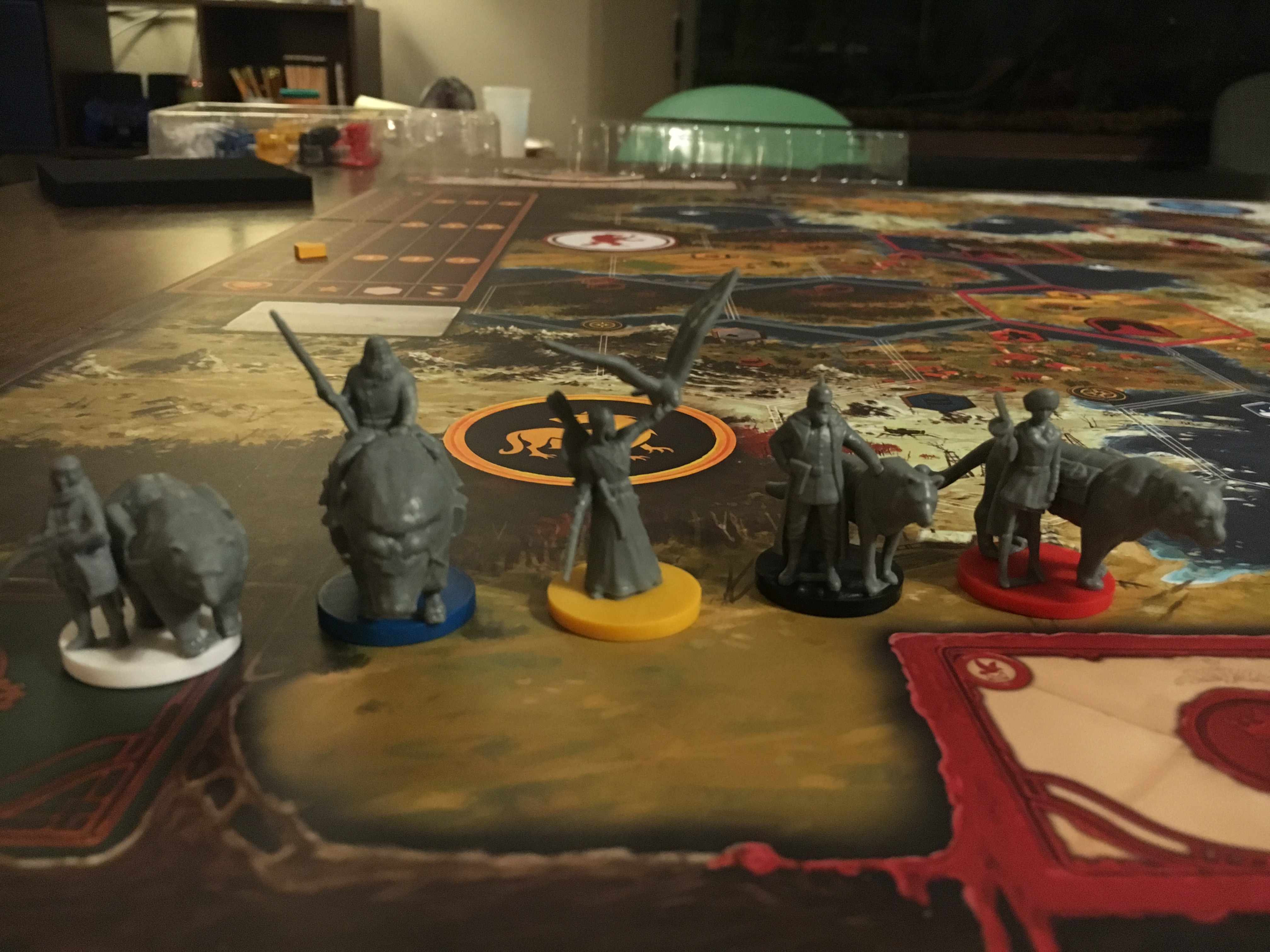
    You start off at your faction’s home base with your awesome faction specific character mini with your awesome animal companion. They are awesome in case you were wondering. The minis really add some flair to your faction, and they look great.

    File_000 (1)

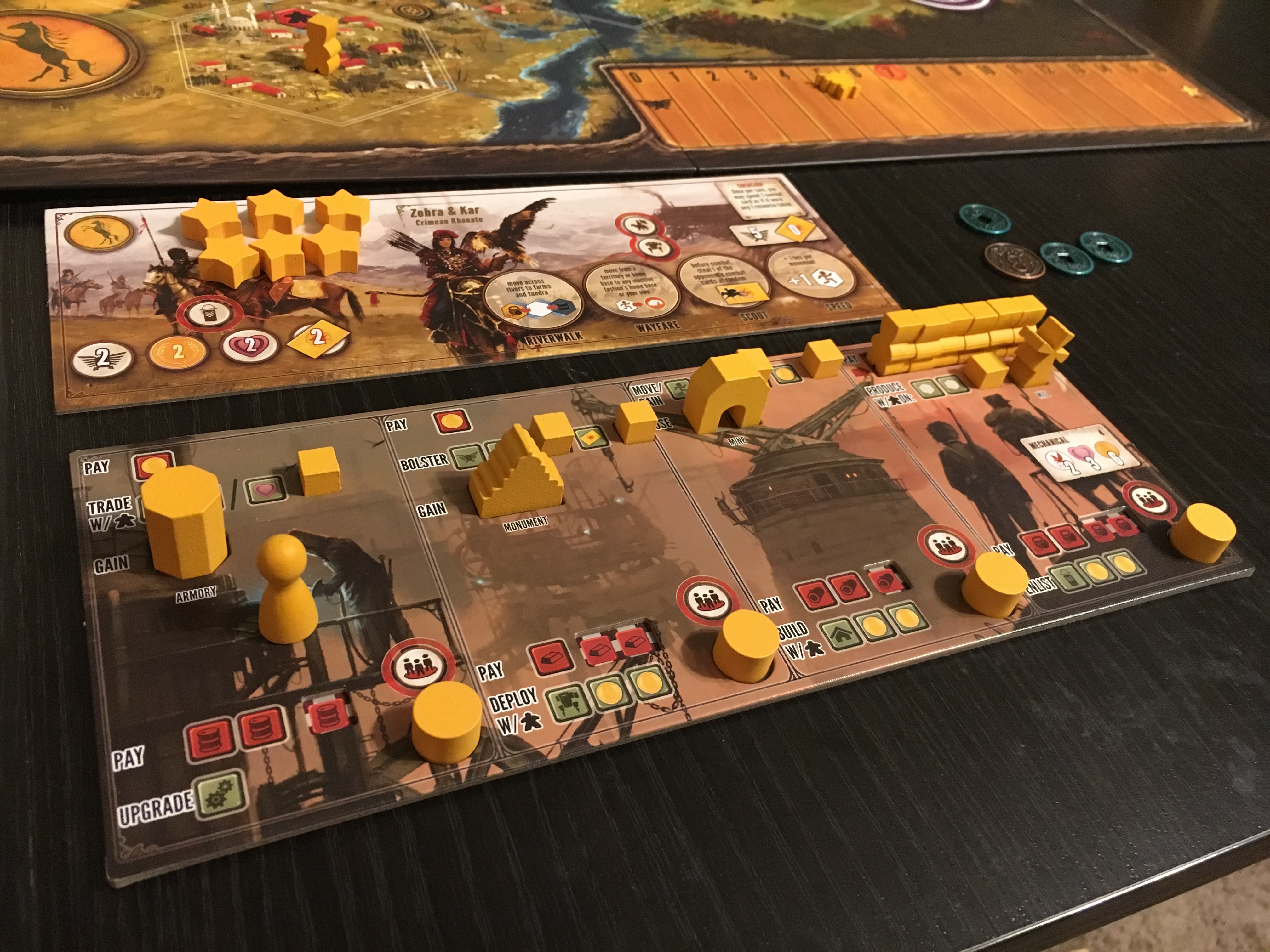
    Each player gets a randomly selected faction board which determines your starting military strength and the abilities your mechs can give you. You also start with a randomly selected player board which determines your starting popularity and money, and it also randomizes which of your top row and bottom row abilities are paired together and what the cost and reward is for some of those abilities.

    File_008

    Let me explain: On your turn you choose one of four sections on your player board. Each section has an ability at the top and the bottom. You can do one or both of these abilities, depending on if you can afford it. The abilities on the top row are generally free or cost a small amount of money and let you move or gather resources or power. The actions on the bottom row of the card cost resources that you have to generate or trade for and let you upgrade your faction or your production.

    As you take these bottom row actions, you move the wooden bits around on your player or faction boards and you start to quickly see the genius, and for me the extremely satisfying design of some of the components of this game. The top row actions you can take are; move (move your guys), bolster (gain combat power or money), produce (produce resources), or trade (trade gold for resources). The bottom row actions are; upgrade (upgrade two of your possible actions), build (build one of your four buildings), deploy (deploy one of your four mechs), or enlist (enlist one of the four soldiers you have access to). When you take your bottom row actions you take your wooden bits from the custom recessed spots they are in on your player board and move them around, revealing extra bonuses or abilities that you now have. In the instance of upgrading, you increase the output of one of the top row actions of your choice and reduce the cost of one of the bottom row actions of your choice. It is perfect. You get to get an instant and real time indication of how your little engine is upgrading as you make your choices.

    So while this is a game where you might not be able to afford what you want to do every time, or you may not be able to select the action you want, (you can not choose the same section on your player board two turns in a row) you do get to see how you are growing your faction with every successful action. You always feel like you are working to become more powerful and more effective. And in addition to that you can see it as your abilities get better with so many of your actions.

    From the moment I started moving upgrade cubes around and I was seeing how this made me better at the things I really wanted to do, I knew I was going to be very into this system.  That gives you a basic idea of what kind of things you have access to on your turn, but let’s talk about the things that make those things hard and require strategy to overcome. When you start, you can’t cross rivers or lakes, and your workers can only get the resource that is produced on the hex space on the board that they happen to be standing on. Since you only start with two workers on the board, and you only have access to three spaces that aren’t blocked by rivers or lakes at the beginning, you have to get strategic about getting the resources you need to go about doing what you want to do.

    The game gives you multiple options to spread out across the board and add more workers to the field, but it’s important that you are strategic about how you go about this. Why, you ask? Well, I am glad you asked! Because this is a great opportunity for me to explain one of the elements that adds the most balance to this game.

    File_004 (2)

    There is a hard stop to this game, and that is when any faction places all six of their faction stars on the board. As soon as any faction places its sixth star, the game is over and end of game scoring commences. The great thing about this though, is that there are at least ten ways to earn stars in the game. So if you try to do everything well, you will inevitably fail in this game. You have to decide early on what six things you want to accomplish and hope that you can get to those six things before someone else gets their six stars out. Being the first to get your six stars doesn’t guarantee victory, but it sure helps, because stars out is the highest scoring category at the end of the game.

    The 10 ways of getting to put you stars out are; building all four of your buildings, enlisting all four of your troops, placing all eight of your workers on the board, upgrading all six of your action upgrades, winning combat (two stars max), completing an objective (one star max), deploying all four of your mechs, reaching the top of the combat power tack, or reaching the top of the popularity track.

    All of this means that as you are craftily plotting your domination or Europe, your opponent may be setting all the ducks in a row in order to get three stars on the last turn and suddenly the game is over and your next four planned moves are pointless. Game over, man. You have to be aware of how quickly this game can ramp to ending after a calculated and cautious build up toward a strategic victory.

    So how does one go about trying to get out there and get the resources needed to establish dominance and build the economic, industrial, agricultural, militaristic superpower they desire? Well, that’s simple. You just balance your placement on the board with your particular faction and economy type to craft the custom strategy you will need to be successful in each different application of this game.

    File_000 (4)

    What I mean by that is that is that it is so different every time that you won’t know precisely the strategy that your setup will require. It’s brilliant. Here are the five different faction abilities: You may select the same action two turns in a row, your workers can cross rivers, you may choose two rewards in encounters, you may gain unlimited stars from combat or encounters, or once per turn you may use any one combat card as any resource. So you can see that the faction abilities completely ignore or reverse certain rules. As the developer points out in the instructions, this also serves as a way to help remind the players of the rules, because you are remembering how your faction’s ability and the abilities of the other factions contradict the rules.

    So depending on your faction and player board, you might have to formulate a completely different strategy that you used last time you played this faction. The game can also dictate you needing to adopt a different strategy. If a certain player is making a bee-line for the factory and spreading wide across the board early on, you may have to focus on limited production and gaining might and popularity, eschewing enlisting or building your buildings.  If the players to your right and left are bolstering power and popularity early on, you may want to focus on enlisting to take advantage of the bonuses you’ll get when they build, deploy, enlist, or upgrade. There are so many ways to take advantage of your position and to get stars on the board.

    Add to all of this the fact that if your opponent chooses to, they can move a fighting unit into one of your zones with workers and the resources they have produced, and kick the workers out and take your resources, effectively drastically changing your strategy for the next few moves. But you have to be careful. For every helpless worker you kick back to the home base you lose popularity. Your popularity level also determines by how much your points are modified for stars, zones controlled, and resources left on the board when the game ends. So you really have to think twice before attacking another player’s workers.

    File_001 (1)

    If you happen to have a mech or your character figure guarding your resources, then you can fight back if someone decides they want to plunder your sacks of grain or your iron ingots. Then both players take their combat wheel and decide how much combat power they are willing and able to spend, and for each fighting unit involved in the combat they can choose to add to their power with a combat card. Whoever has the highest number wins, and takes control of that space on the board and any resources that happen to have been there. Plus, you can place up to two of your six stars by winning combat, even if you were attacked. But combat can be costly. Using up all of your power might leave you defenseless when it counts most. Building up combat power can take a while. And if there are any workers on the space that are forced to retreat to home base, you still lose that sweet, sweet popularity.

    This all means that the threat of combat is ever present, but it doesn’t happen all that much in my experience. I love how the game gets that so right. War is costly, and it won’t earn you any friends, but sometimes it is necessary to get what you want or to cement your place of power in the world. It feels like the perfect balance of conflict.

    “Then why even deploy your mechs?” You may be asking yourself. I’ll tell you why. Because the mechs each give you an ability. This lets any mech you construct and your player character take advantage of this new technology you’ve built for your faction. Every faction can build a mech that makes you move faster and lets you cross rivers, but each faction also has two mech that give you faction specific abilities. These range from things like letting you move into lakes and teleport to other lakes, to removing the popularity penalty for kicking workers off their spaces, to being able to add combat cards to your combat power for workers as well as fighting units, to being able to steal a combat card from a foe at random before combat begins. Suffice it to say, that building some of these mech can drastically change the way you approach the game, and these abilities really add another level of strategy to the game. Plus you get a star for deploying all four mechs, so it is definitely a strong strategy.  

    This game can seem daunting at first, and some of the iconography and terminology might be intimidating to some players. If you aren’t familiar with 4x games you might spend the first half of the game wondering what in the heck you’re supposed to be doing. But as you learn it and get more familiar with it you will realize that is one of the things about the game that makes it so great.

    You have so many options, and at the same time, you have to optimize them in order to be competitive at the end of the game. I love the push and pull. I love the depth and the balance of this game. When my brother and I were sitting down at our local game store to play with a couple of friends, a guy walked by noticing that we were setting up to play Scythe and we offered him the fifth spot. He quickly accepted and we started the game. We had gone around the turn order a couple of times and he remarked,

    “It’s so elegant. You don’t often see such elegance with such depth.”

    It is a perfect description of this game . Elegance and depth. Add to this the beauty and artistry of all of the components and you have an overall, completely enjoyable experience from the time you sit down, to the time you finish tallying the points at the end of the game. And as you sit contemplating how you could have been more efficient, and what you could have done better to maximize your faction ability and move your popularity into the third tier, you will realize that not only will you be playing this game again and again, but you are already planning it out. Just know that it won’t quite go exactly as you planned, unless it does. And that moment will be so gratifying.

    If you want a more in-depth tutorial, I will be uploading a how to play video soon.

    My sincere thanks to Jamey Stegmaier and Stonemaier Games for this amazing game. All images are used with permission of Stonemaier games and are the work of the incredibly talented Jakub Rozalski.

  • Why I Play Pokemon Go

    Why I Play Pokemon Go

    Such a great perspective on parents and their kids interests.

    Just Stephanie's avatarDaily Walking

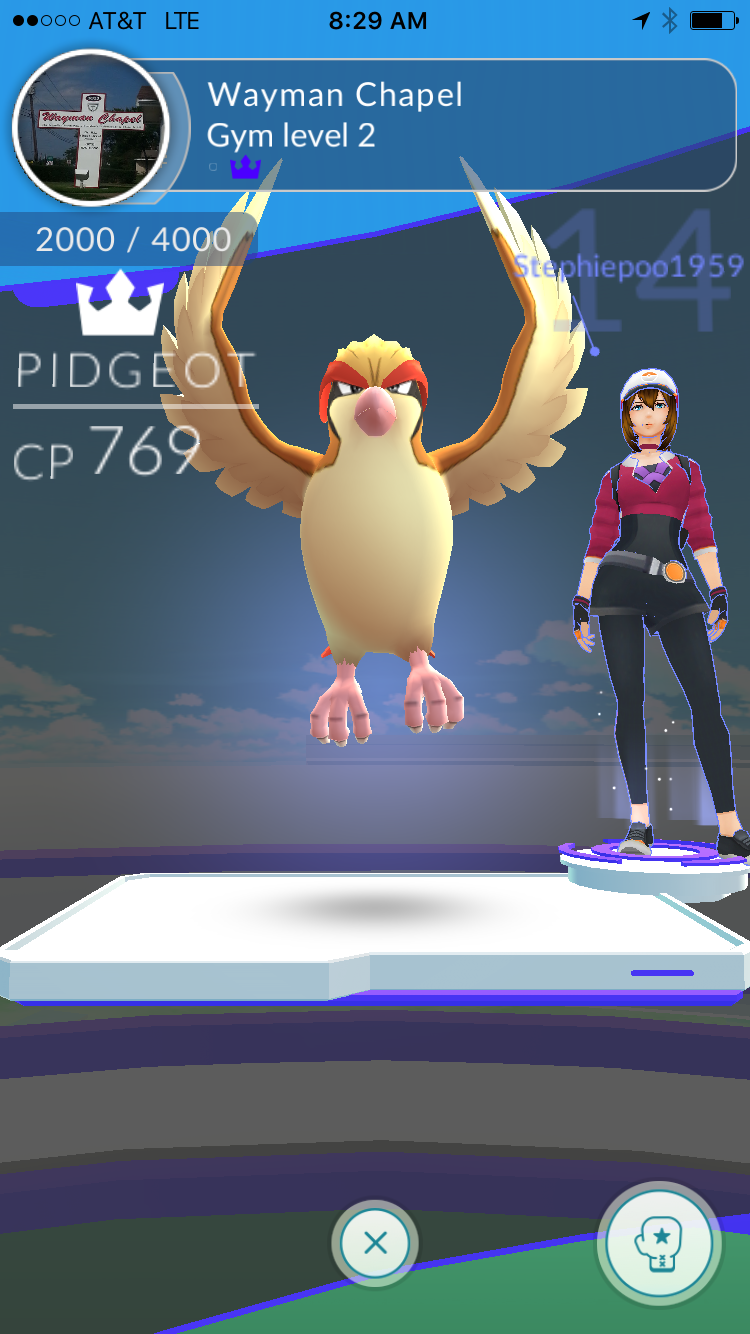
    I am not a millennial, to say the least, nor am I in the other age group that loves Pokemon Go (children). My 57th birthday is this October, and I’ve never really gamed before, so if you’re wondering why I play the new game that’s taking over the world, this post is for you.

    img_0161

    It all started innocently. My 18-year-old son likes to keep me abreast of what’s going on. I’m grateful.

    Here is how the original Pokemon Go convo went down:

    Son:  Have you heard of Pokemon Go?

    Me:  Nope.

    Son: Nintendo’s stock is already up 10%, and it’s only been out a week. It’s done more in that week for youth fitness than Michelle Obama’s fitness initiative did in two presidential terms. You should play.

    Me:  Why would I do that?

    Son: Because it’s fun, Mom.

    Now, when he said the word “fun,” he was speaking my love language…

    View original post 333 more words