Category: How to Play

  • Treasure Hunter: The Hidden Gem

    Treasure Hunter: The Hidden Gem

    When I was in college I remember the phenomenon of the hidden gem. That band that no one had ever heard of that had that sound that everyone needed to hear. The movie that was hilarious that was special because only you and your two friends knew all the punchlines to your inside joke. The funny thing about this trend for me was that the music and movies and video games that I found were cool until everyone else thought they were cool, and then I became jaded with them because they were too mainstream. Oh the mindset of our younger selves…it’s enough to drive one crazy.

    A few things have changed since I was in college about 5 years ago, including my taste in music. (By the way have you heard of a band called Lord Huron? Man they’re great you should check them out.) I’ve also gotten married, had a daughter and discovered an addiction that borders on the need for an intervention known as tabletop gaming. Hook line and sinker I have gotten involved in playing, collecting, researching, discussing, and reviewing tabletop games. The funny thing is, I’m still looking for the hidden gems. I hear plenty about the award winning games that top the geek lists but I’m still searching for those games that might have flown a bit under the radar or never really garnered the attention I think they deserve.

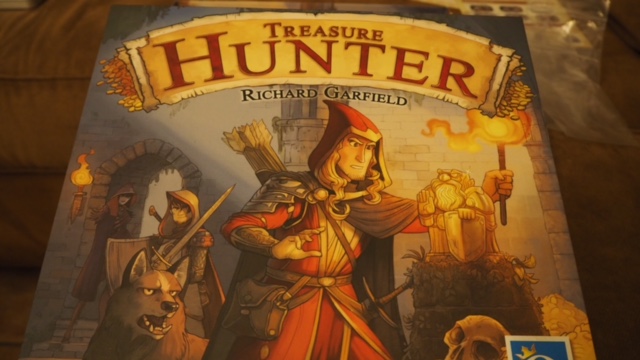
    I’ve discussed a few games recently that I think are really fantastic and not discussed enough due to the heavy hitters, but today I want to feature one in particular. The game is called Treasure Hunter. I played Treasure Hunter for the first time at BGG Spring in Dallas and absolutely fell in love with the game from the first hand of cards. This game is rated right under a 7 on BGG and I feel it should be a bit higher. The designer is Richard Garfield of Magic the Gathering fame. Treasure Hunter is a drafting game and if there’s one game designer who knows how to do card drafting it’s Richard Garfield. The artwork is fantastic, the component quality is very good, the gameplay is light but strategically interesting, and the playtime is usually under an hour even with six players.

    In Treasure Hunter you will have three phases in the game followed by a fight with some Goblins. Over five rounds players will draft cards from a hand of nine. (Drafting a card means you look at a hand of cards you receive, pick one to keep, and then pass the rest to your opponents. You then take the cards given to you by your opponent, and repeat the process until the cards have all been picked.) You will compete with other players over a minimum and maximum treasure in a Blue, Green and Red landscape, and then try to escape with your treasures through a cave of waiting Goblins. The treasures that you are competing for can be worth either positive or negative points. Whoever has the most money at the end of the game wins! This game is easy enough to explain but has enough depth of play to make it very interesting, especially at higher player counts.
    OLYMPUS DIGITAL CAMERA

    What is it that I like about this game so much? I really enjoy drafting games. I’ve enjoyed 7 Wonders and Magic drafting previously but it’s hard to get other people in my family to engage in those two gaming experiences. Treasure Hunter has an approachable light hearted feel that doesn’t scare my family away, but is an engaging strategic drafting experience that provides me with the type of play I love. There is also a clear cut goal in this game. Get the most money.

    OLYMPUS DIGITAL CAMERA

    Now this is an interesting goal because of the different strategies you can employ. In each area there will be two options for treasure; potentially good or potentially bad. This in itself creates an interesting strategic problem to solve. Blue for instance may have a minimum treasure worth twelve points and a maximum treasure that will give you negative four points. This means that you might try to draft cards that keep your overall number in blue very low. You have to be careful though because if other players draft shrewdly, you may be passed a blue ten, or eleven as your last card. The last card handed to you has to be kept. Now there are cards that can cancel out bad cards that are handed to you so there is a way to draft defensively to prepare for the ram rodding that you are bound to receive. All of this thought goes into a seemingly simple game if you want to be strategic, or you can simply try for the highest treasure.

    OLYMPUS DIGITAL CAMERA

    You can also try to collect just money cards. In each hand of nine cards there may be a card that is worth a dollar or two or three. If you draft nothing but these cards you may miss out on the treasures that other players fight over, but over the course of the round you might have collected 10 to 20 points from money alone. You can also collect treasures that provide a one time use bonus. So for instance you may win a treasure tile that increases your dollar payout by one or two times once per game. You could collect that tile, draft nothing but money and then cash in a 30 or 40 point round.

    OLYMPUS DIGITAL CAMERA

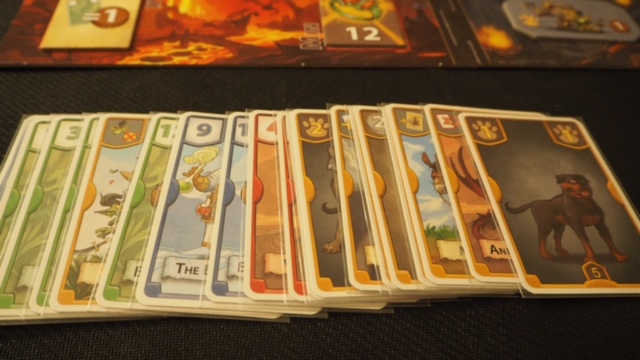
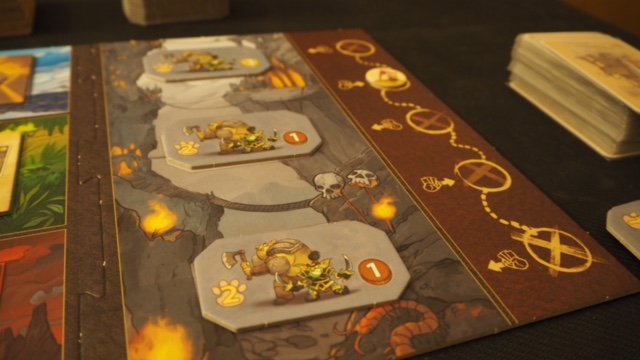
    You could also try and collect nothing but dog cards. After all players have tried to collect treasures, there are goblins that will try to steal some of your money. If you collect dog cards, they will defend you from these goblins. Each goblin has a strength of one or two or three (sometimes higher with expansions). If you collect dog cards with the strength that matches the goblin cards, you will pass by them without having to pay any money. If you don’t have dog cards that provide enough strength you have to pay the goblins the amount listed on their tile. The cool part is, whoever has the highest strength of dog cards will collect all of the goblin tiles, and any money that has been paid to them. So one round if the treasures are very attractive, players may forget about drafting dogs. You could then swoop in, collect all the dogs and collect all of the money the players have to pay out. Pretty neat move huh?
    OLYMPUS DIGITAL CAMERA

    There are also special cards that you can draft to provide bonuses and change your power in each color etc. I’ll spare the details on those to try and keep this from getting too boring! All of this is to say that for a game that is rated as a 1.8 out of 5 in complexity on board game geek, this game provides plenty of depth. Whatever approach you might take to the drafting mechanic this game will work wonderfully with your playstyle. Now I know that drafting games aren’t for everyone but this one has been a hit with most everyone that I’ve introduced it to. Some of my friends are pretty picky when it comes to tabletop games as well so that’s saying something. The arguments that I have heard against this game are:

    1. The game can be repetitive – My response to this is that some of the highest rated game of all time are very repetitive in their mechanics, but if the mechanics and gameplay are solid this isn’t a problem but a benefit. This game has very good mechanics that I haven’t gotten tired of yet after over twenty plays.
    2. The other criticism I heard from one of my friends was that “there’s not any strategy to this game”- my response to this is that it’s absolutely false. There is randomness to the game based on what cards are dealt to each player, but reacting to that and adjusting is the strategy. This creates such tension for the player and trying to determine if a bad card will be dealt to you and managing that risk is supremely strategic in my mind.
    3. Some people say the game can be too long – My response is that if 45 minutes is too much time for a board game that plays up to six then you aren’t going to like many board games.

    OLYMPUS DIGITAL CAMERA

    At the end of the day this is going to be one of my go to games for a quick, fun play that can accommodate a larger group and provide plenty of player interaction. This game hasn’t lost its luster after a good amount of plays for me, and I don’t see it happening soon. I would highly recommend picking up Treasure Hunter if you are a fan of fantastic designs. I’ve included a how to play video at the bottom of this post so you can see how the game flows and looks on the table. With any questions please email thediceyreview@gmail.com and until next time I’ll see you at the table!

    Paul
  • Tiny Epic Western – A “Walkthrough Review”

    Tiny Epic Western – A “Walkthrough Review”

    It’s high noon. Some of a rival posse’s thugs are hanging around your waterin’ hole. Looks like it’s time to teach them a lesson they won’t soon forget. You step down main-street determined to leave the saloon dead or alive. Your foot falls in time with the beating of your heart, leaving a cloud of dust with every thud. A tumbleweed dances across the road leaving a snake-like trail behind and everything slows to a crawl. Your ears ring as the sun beats down on your brow, a drop of sweat slowly crawling its way down your left temple. From the front door of the saloon a lean, middle-aged gaunt man steps out and turns to face you. He knew you were coming. In his eyes you see nothing but the cold, calculating stare of a man sizing up a target. You can tell he’s done this before. “That’s alright” you think to yourself…I’ve given the same look to many a man. Two souls….hands outstretched stiff like a board next to their side…one person breathing his last few breaths. As quick as lighting both hands reach for their holsters and pull out their trusty….DICE?!

    OLYMPUS DIGITAL CAMERA

    That’s right everyone it’s time for another feature review of a new game that I’m very excited about: Tiny Epic Western! Tiny Epic Western is a dice rolling, worker placement, poker playing, rip’ roaring good time for 1-4 players that takes about 30-45 minutes to play.

    If you’ve never heard of the Tiny Epic Series you are missing out. Gamelyn Games approaches different mechanics in unique ways to create rich gaming experiences focusing on certain gameplay aspects. Mechanics like Area Control, Dice Rolling, Co-op play, Action Selection and Variable Player Powers are all approached in a wonderfully concise and portable way. All Tiny Epic games come in a small box for a reasonable price but provide surprisingly deep play for the size of the package.

    OLYMPUS DIGITAL CAMERA

    The newest installment: Tiny Epic Western is Gamelyn Games’ shot (pun intended) at Worker Placement. Worker Placement is my favorite mechanic and so my ears always perk up when I hear a new idea involving it. Tiny Epic Western really made me sit up and say “oooo” because they have combined worker placement with poker. When I saw the Kickstarter page listing this I thought that thematically this was a very cool choice, and that the choice to include poker was a good decision because it also creates a sense of chance. This makes a seemingly simpler mechanic like worker placement seem much more interesting because you aren’t always simply benefiting right away from a spot when your worker is placed, sometimes you’re gambling for it.

    OLYMPUS DIGITAL CAMERA

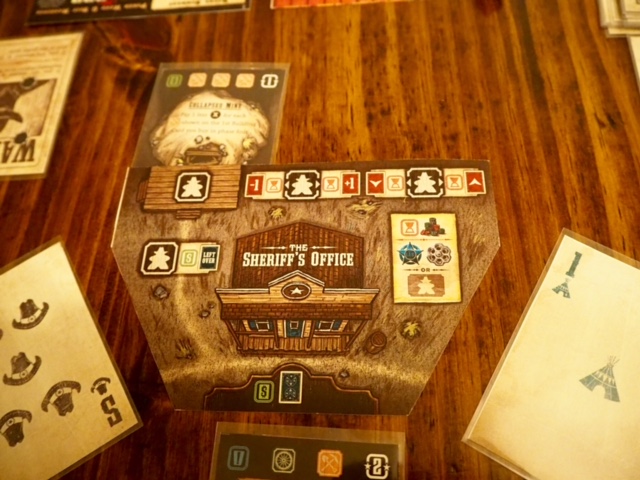
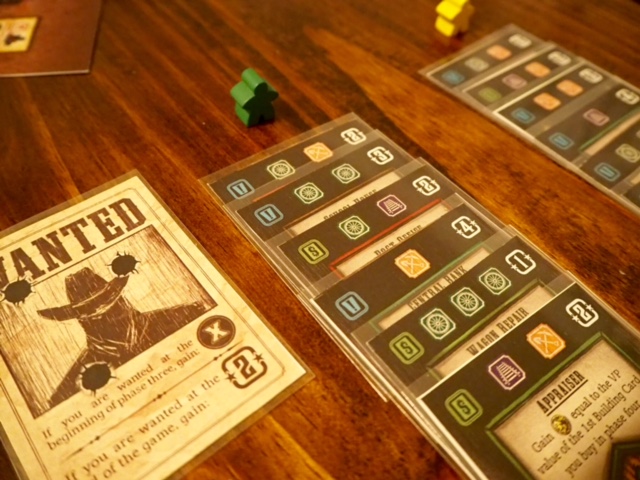
    Although this is a worker placement game it doesn’t utilize one of the most common worker placement traditions where you can block a spot by assigning there. Quite the opposite, you are encouraged to go to locations where other players already reside. When you want to place a worker on a location where an opponent’s worker has been placed, you start a duel that will end in one person becoming wounded and the other person becoming the winning posse member at this location. When you win a duel you get the “Wanted” card. This card will benefit you with influence (the game’s form of currency) and victory points at the end of the game.

    OLYMPUS DIGITAL CAMERA

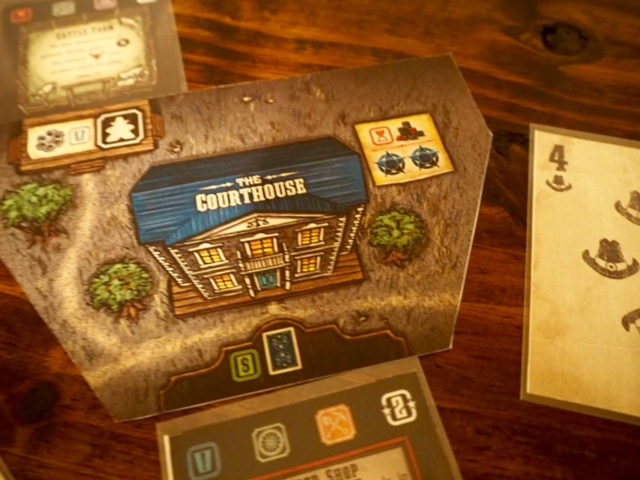
    Tiny Epic Western pits players as leaders of posse’s that roam a western town increasing influence and gaining reputation as they duel and gamble their way through the different locations around the map. Players will begin the game by choosing a character that will give each person a special ability that will be helpful throughout the game. You will pick a color and this color will give you a location within the town that is associated with you. The goal of the game is to have the most victory points and they are acquired through buildings that you can buy as well as shares in an industry track that you can manipulate throughout the six rounds of play.

    OLYMPUS DIGITAL CAMERA

    This game has so much interaction because of the dueling mechanic and the locations that players will come to that you have purchased. Even when it’s not your turn you are always engaged and I find this to be hard to achieve and a goal that many tabletop games fall short of.

    Overall this game is hard to beat. It’s a Tiny Epic game which means a couple of things. First, it will be in a box that can easily fit in a purse, backpack, briefcase, or if you are a person who wears cargo shorts, your pockets. Second, it will be reasonably priced (usually around $25) so the game won’t break the bank. Due to the size of the box and price point of the game many game stores will put this game with their filler section and micro games but please don’t be fooled by this categorization. There is no filler in this box. This is a deep strategic experience filled with player interaction and “take that”. I love a good western theme and the mechanics that were designed into this experience fit perfectly and help achieve a gunslinging good time.

    OLYMPUS DIGITAL CAMERAOLYMPUS DIGITAL CAMERAOLYMPUS DIGITAL CAMERAOLYMPUS DIGITAL CAMERAOLYMPUS DIGITAL CAMERA

    I backed this game on Kickstarter because I loved the idea of what the designer and publisher were going for. I backed the game at the deluxe level which will get me a more polished product and I’m very excited about that. I was able to access a premium print and play file because of my backing status so I have been able to play the game early and I am loving that option. I can’t speak to the quality of the final components because I am using my print and play files but if previous Tiny Epic games are any indication the quality of the bits and cardboard in the box will be excellent.  The artwork is incredible and creates a wonderful old west feel in the players around the table.

    Overall this game is a wonderful experience and one you should look for at your friendly local gaming store when it releases later this year around October. You can also pledge late to the Kickstarter by going here: https://gamelyn.pledgemanager.com/projects/tiny-epic-western/join/.

    I’m amazed by the work that Gamelyn Games is doing and think you should support this game and any other Tiny Epic games you can find in stock. Also be on the lookout for Heroes of Land, Air and Sea which will Kickstart some time early 2017. I’m very excited about what’s in the works for this company and you should be too. If you want more in-depth knowledge about how the game plays and looks on the table I have posted a how to play video at the bottom of this article. I hope you enjoy the video and until next time I’ll see you at the table.

    Paul   

  • The Voyages of Marco Polo: A Walkthrough Review

    The Voyages of Marco Polo: A Walkthrough Review

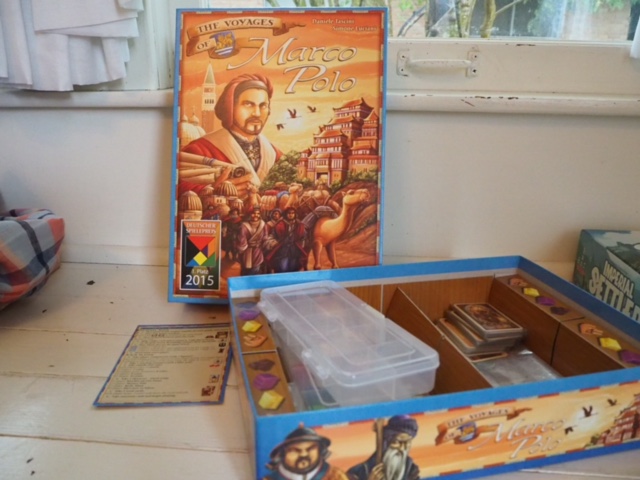
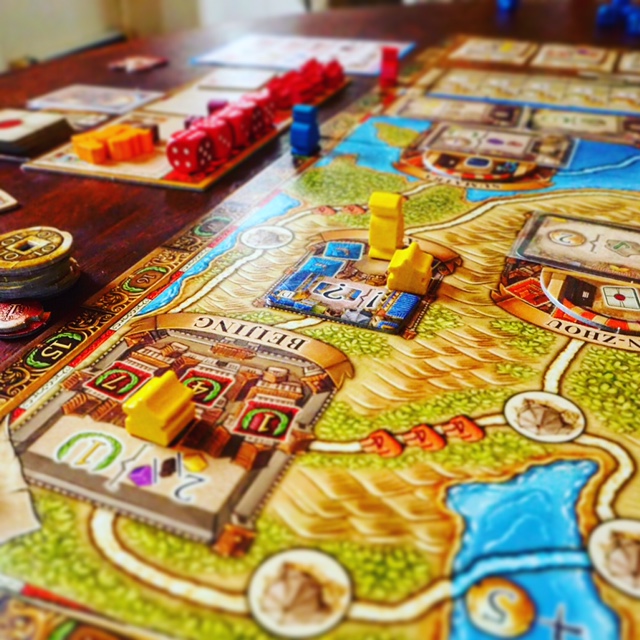
    Have you ever played a game that was so interesting and in-depth that it kept you up thinking about what you could have done differently? To me that’s the sign of a great game that creates a rich experience. I want to introduce you to a game called The Voyages of Marco Polo.

    FullSizeRender.jpg

    Let me tell you a story. A few weeks ago my family and I were in the middle of what has become a fairly regular tradition as of late; Sunday night games. The game that had hit the table was our current feature The Voyages of Marco Polo. Myself, my wife and her parents were playing the game and it was apparent from very early on that my wife and her father were going to win this encounter. The real competition was finding out which of the two were going to emerge victorious.

    IMG_0351.JPG

    More and more points were scored, the two meeples raced around the board and the end of the game drew close. After the dust had settled my wife was ahead of her father by 4 points and claimed a sweet, sweet victory. One thing I forgot to mention is that certain players if they achieve the goal of making it to Beijing (you travel through Asia during play) you can get victory points for leftover resources. Not all players have this ability and my wife had not reached Beijing. My father in law had. After we had brushed our teeth and laid in bed we heard a gentle knock on our bedroom door (this was almost 15 minutes after the game had ended and everyone had gone to bed) “Yes?” my wife called. We heard the soft voice of her Father in Law utter “I…I think I won. Don’t I get bonus victory points for my resources at the end of the game?” I immediately jumped out of bed and ran to the still set up board. “You sure do!” I said gleefully hoping to be able to spoil the victory (and minutes of bragging) of my wife that night. After the total tally my Father in Law still lost by one point but it illustrated an important point about this game…it’s a great play.

    IMG_0367.JPG

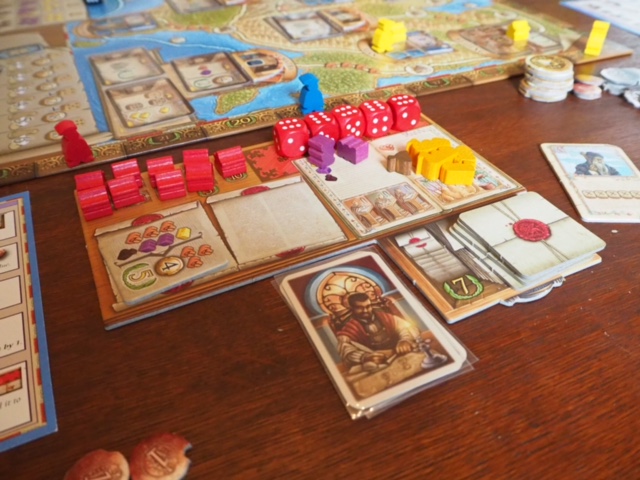
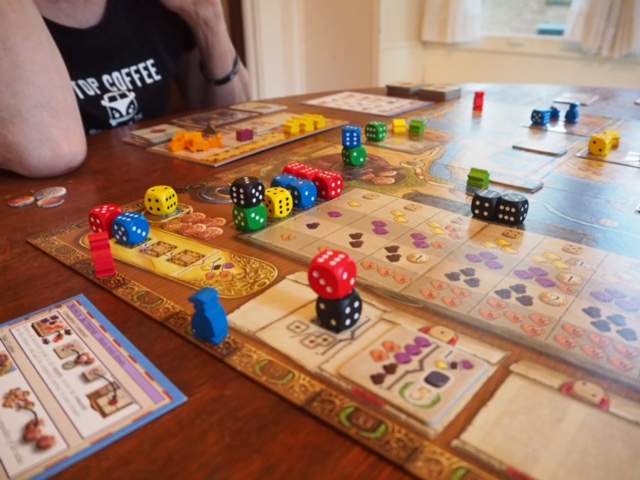
    The Voyages of Marco Polo is a resource management, action selection, worker placement game that uses player’s personal supply of dice as the workers. You start off with a player board, a contract to complete that will give you victory points and a character that will give you certain special abilities. You can play as Matteo Polo, Kublai Khan and a host of other notable names.

    IMG_0361.JPG

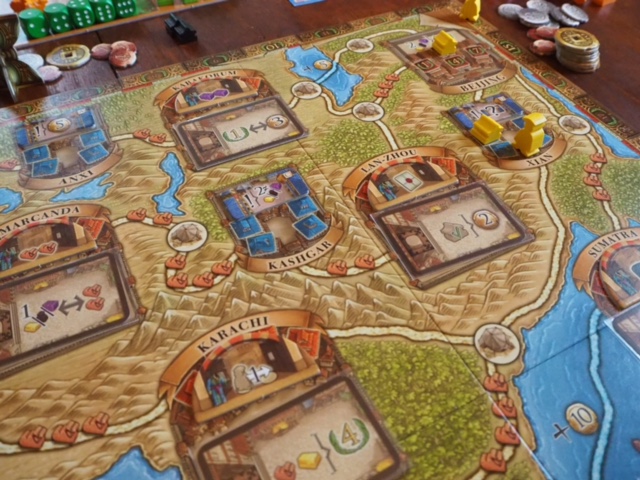
    You will place your dice on certain spots around the board to collect (surprise, surprise) victory points. You will travel across Asia and complete contracts and try to collect as many points as possible. There are many different avenues to victory. Each time you enter a city you unlock new actions to take and new possibilities for winning.

    IMG_0353.JPG

    One of the tricky parts of this game is learning to be efficient. You only have 5 rounds to travel to different locations and complete enough contracts to win. This puzzle and race to the finish will create a much deeper experience and gameplay. (So deep that your Father in Law may knock your door in demand a recount!) IMG_0344.JPG

    This game is a brain burner that will keep you coming back for more time and time again. The difficulty to master this game is a big draw for me. As far as components go the game is absolutely gorgeous. The design was very well done, and Z-Man games gets to add another winner to their catalog of all star performers.

    OLYMPUS DIGITAL CAMERA

    This game is said to have some elements of Ticket to Ride which on a smaller scale is very true, and elements of Lords of Waterdeep which I feel is less accurate. I will say however that this game is a bit more advanced than the games on my “Start your collecion” article. So if you’ve played some starting games and are ready for a more difficult challenge the game offers a fantastic option.

    OLYMPUS DIGITAL CAMERA

    If you can find a copy and are looking for a great family experience that all will love I believe this game is a good one for you. The theme is very cool, and the game is just fun to play. I’ve posted a how to play vide0 to help clarify some rules. If you have any questions or concerns you can email me at thediceyreview@gmail.com. Thanks so much for taking the time to read my article and until next time we’ll see you at the table!

    Paul

  • Camel Up: Place Your Bets!

    Camel Up: Place Your Bets!

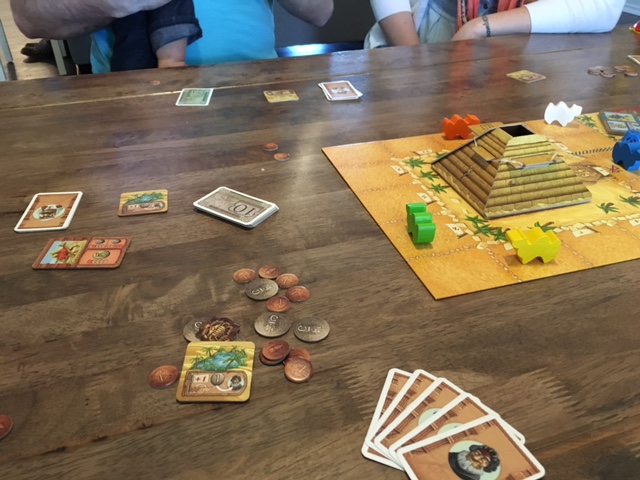
    It’s the middle of the afternoon. The sun warms your face as you strain to see the track. The crowd is roaring and urging the racers on. As the animals pound around the curve you see sand flying in every direction as jockeys strain to lean forward past the racer on their left and right. You shift forward in your seat and cheer as you feel your heart pound with every thud of the Camel’s feet as they ra….wait….CAMELS?!

    IMG_0216

    That’s right! Camel up is a betting, action selection, push your luck game about an epic Camel race for up to 8 players. The theme is very cute, the gameplay is surprisingly deep for how simple it is on the surface, and the game has been a winner with every group I have played it with. So let’s put on some sunscreen, find a wide brimmed hat, and head to the sands of Egypt to take a look at Camel Up.

    IMG_0215

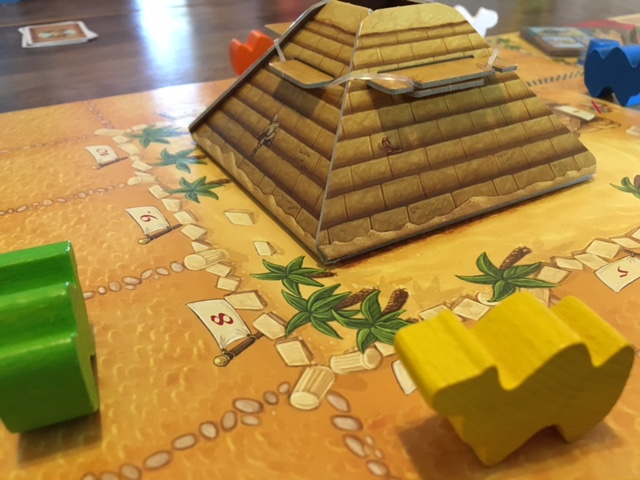
    The basic premise of Camel Up is very simple. You will see five Camels on a track on the board that each have their own particular color. The track is around a wonderful cardboard pyramid that comes with the game and holds 5 colored dice. These dice are numbered from 1 to 3 and will be used to determine the Camel movement.

    IMG_0210

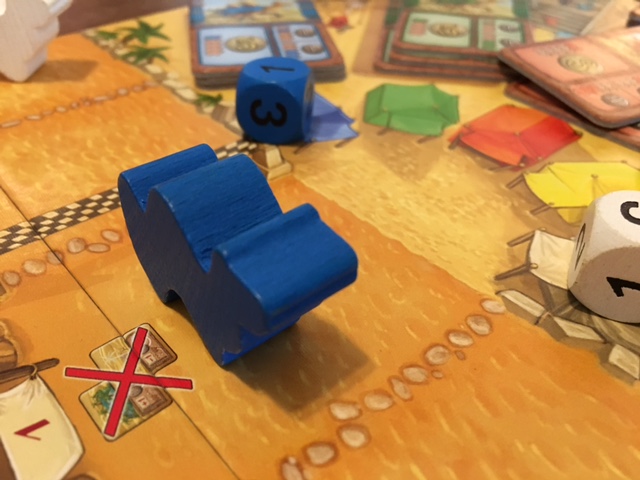
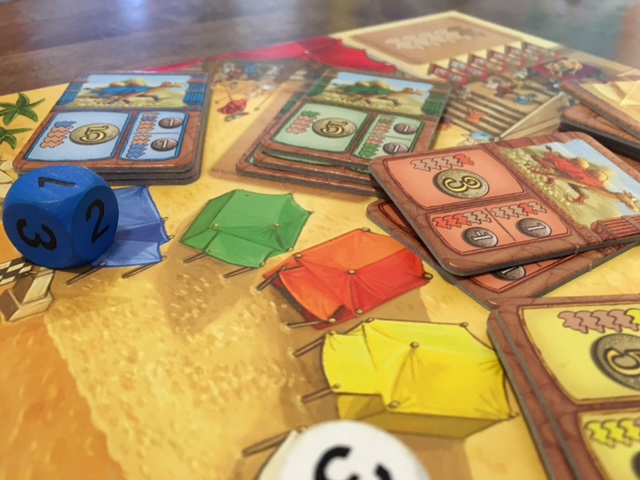
    You can take one of four actions in the game. You can bet on a Camel to win the leg (which is when all five dice are rolled once), you can roll one of the dice (this will move the Camel matching the color of the dice rolled) you can place your Desert/Oasis tile on the track to try and effect the other camels racing, and you can bet on an overall winner or loser of the race.

    IMG_0212IMG_0214

    The race will continue until one camel crosses the finish line. You then get to count up all of the money collected and the winner is the one with the most cash! The game has been a winner with my family and with larger groups in particular. If you’re looking for a game that can play party game type numbers but still feel like a legitimate board game with great mechanics, this one might be for you.

    IMG_0211

    I know a lot of people give this game some hate and I’m not sure why. It has a roll to move mechanic which is unpopular by and large but I think in this game it works very well and creates the tension that one might feel at an actual race with money on the line. It’s 30-40 dollars depending on where you buy it and I would absolutely say buy it. This is a great game to play with new or experienced gamers young to old. If you want a fairly brief synopsis of how to play the game along with some thoughts about the play I’ve put a link to my YouTube “Walkthrough Review” below. Thanks so much for reading and until next time we’ll see you at the table!


    Paul


  • Orléans: A Mixed Bag

    There are many games on the market right now that will advertise themselves as Deck Builders. “A deckbuiding game of combat and exploration” etc. The deckbuilding genre is one that is extremely popular due to the amount of flexibility that can be created with new cards, the low cost of production, and the possibility for tweaking and creativity.

    There is another type of building mechanic out there that I find very interesting that not as many games have taken advantage of, and that is “Bag Building”. There are a few games out that can say that they have a “Bag Building” element to them, which is similar to deck building but with some slight differences. Today’s feature review is one of those games. The game that I’m referring to is Orléans, a worker placement, action selection, victory point salad romp that will absolutely keep you coming to the table again and again. I’m a fan of the way Orléans implements the bag mechanic and think that it creates a very interesting element of luck and planning. So how is this game played and what’s it about? Let’s take a look.

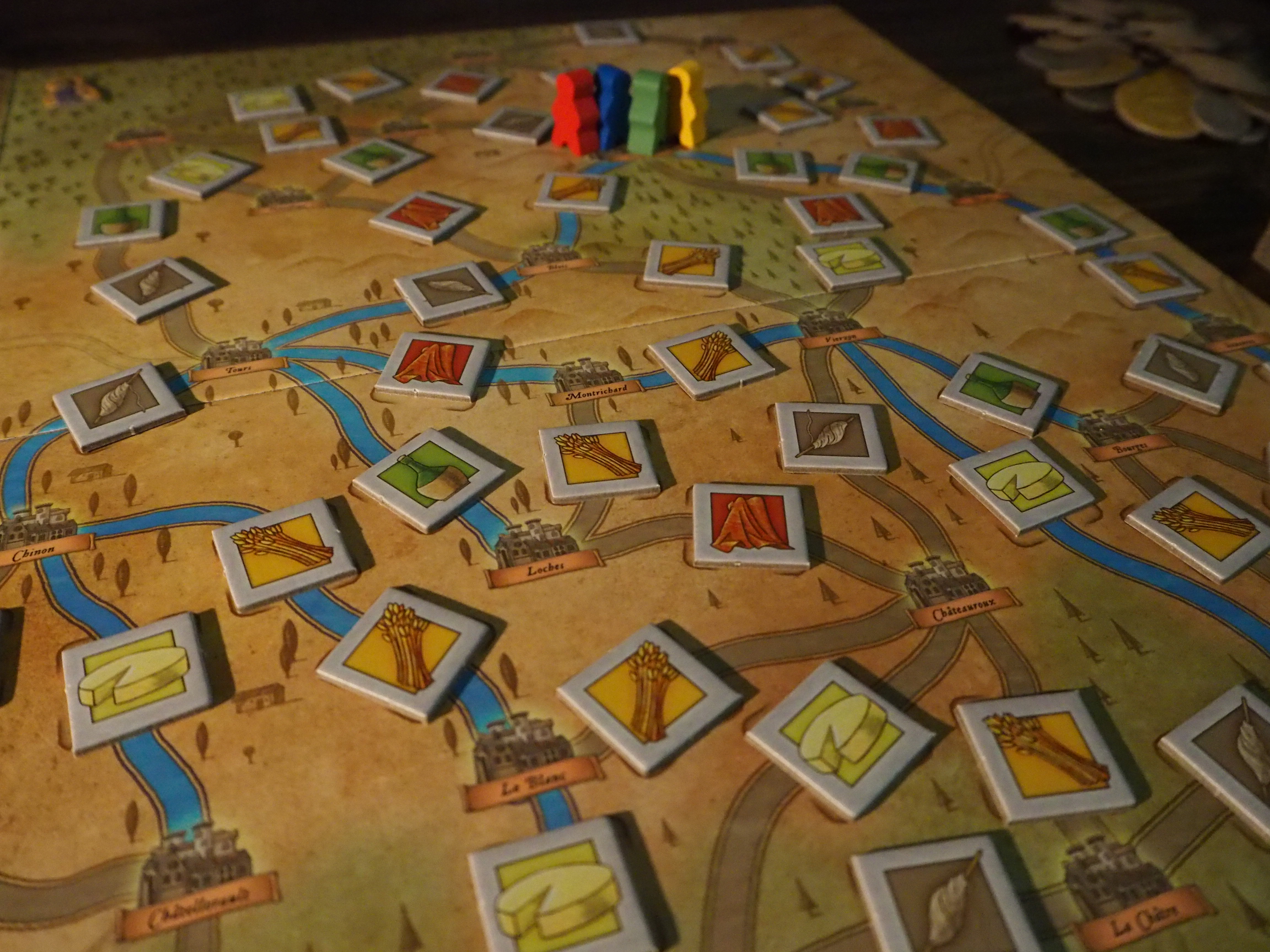
    Each player will start off by selecting a color and taking the corresponding player board, starting workers, player meeple, track cubes and buildings. You will then need to set up the board and I will say right off the bat, if this game has a downside it’s setup. There are a lot of resource tokens and worker tokens and they need to be set up in a particular way. That being said I will also say that the game would lose some of its appeal to me if it wasn’t set up the way it was. It’s absolutely gorgeous and once the board is out with the resources and workers I get really into the experience and want to dig into the game play. Just know that the first time or two that you play it may slow you down a bit. After the setup you’re ready to turn over the hourglass tile for the round and begin action selection!

    OLYMPUS DIGITAL CAMERA

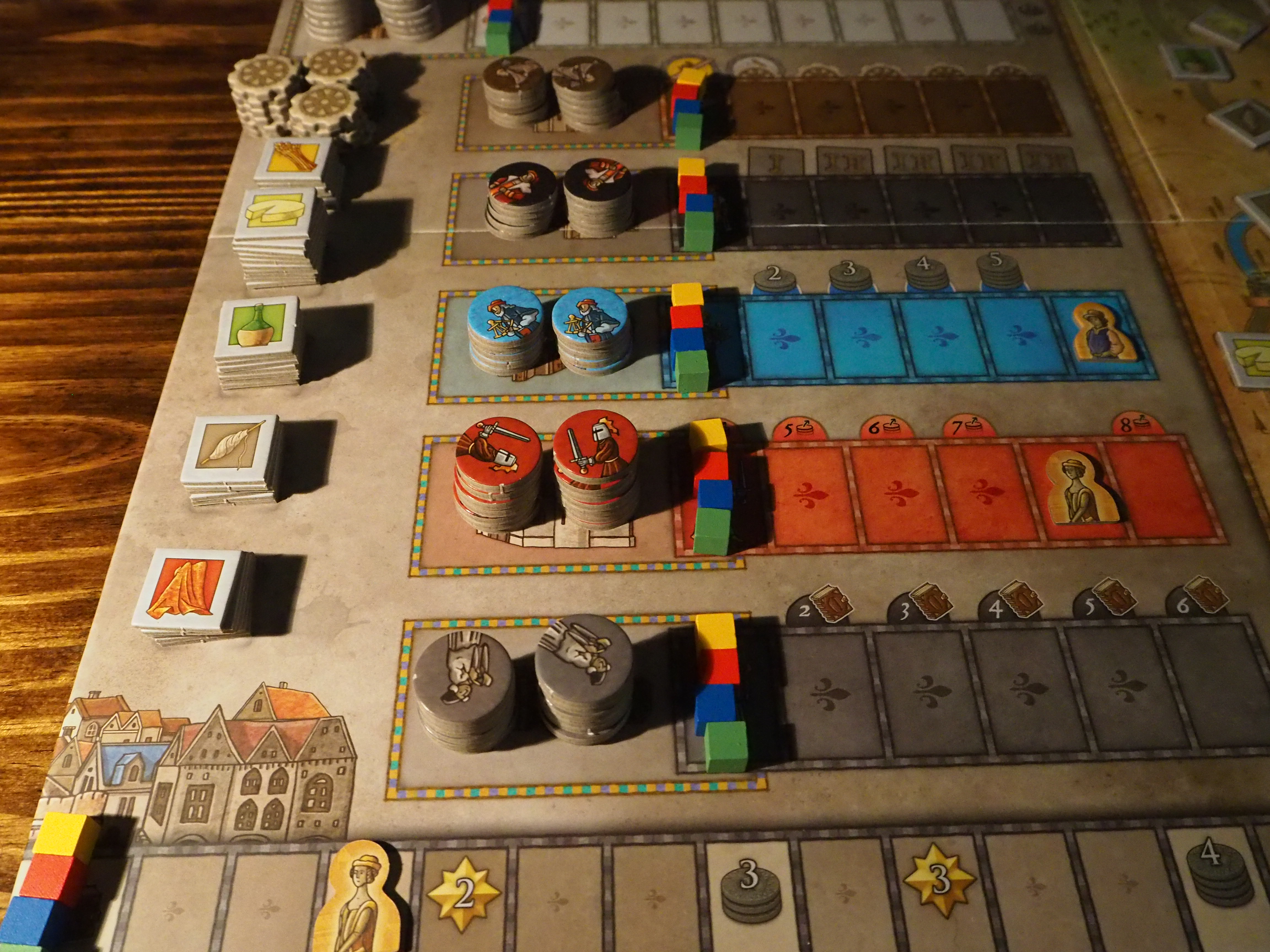
    The above picture is a close view of the player board. This game can look a bit complicated but in reality the mechanics are very straightforward. On the player board above you will see empty spaces with spots for certain workers to be placed. To take these actions you simply fill in the empty spaces with workers that you draw from your bag and once everyone can no longer take actions the round is over and you begin the whole process again after resolving the hourglass tile for the round (this tile can be good for all players or potentially bad which creates some variability round by round).

    OLYMPUS DIGITAL CAMERA

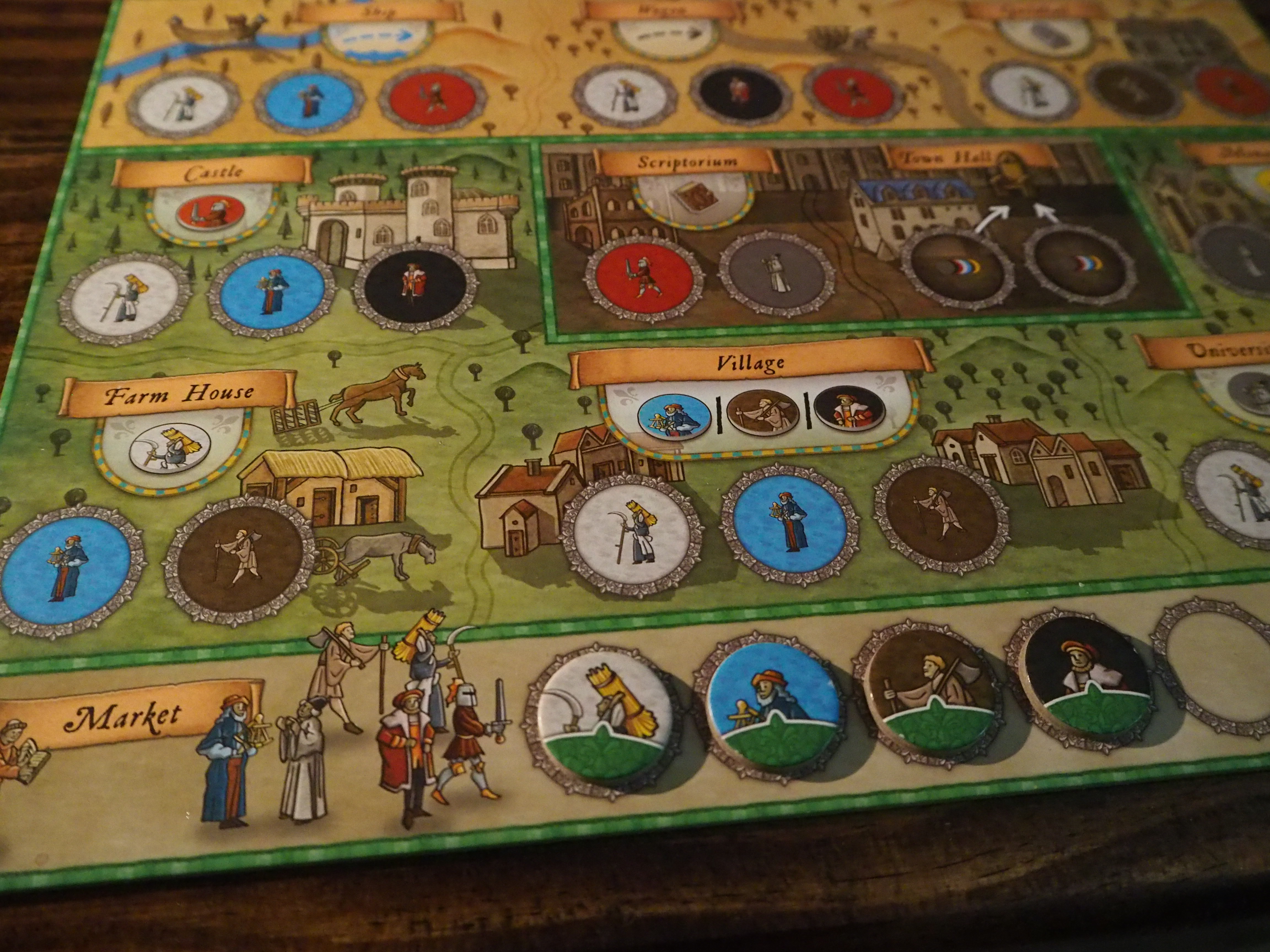
    Each action that you might select in this game will either allow you to gain a new worker, money, knowledge, a new building, or a movement on the right side of the board. This is where the “Bag Building” element comes into play. When you look at the board above you will see cubes and available workers next to certain colors. Some of the actions that you select will allow you to take one of the available workers, move along that worker’s track and gain bonuses based on what type of action or worker you pick. For instance if you select the red knight, you will move up on the track that allows you to draw more worker tiles from your bag at the start of the round. This gives you more options and allows you to take more actions later in the round. If you select the Black Trader tile you can draw a building tile to expand your player board that will give you bonus abilities and more options to select. This will allow you to pursue a different strategy or follow a strategy more diligently. This is a large portion of the game and this section alone creates so many choices the player has to make and so many viable strategy that could lead to victory that it makes you want to try the game 10 different times just to experiment on worker recruitment strategies.

    OLYMPUS DIGITAL CAMERA

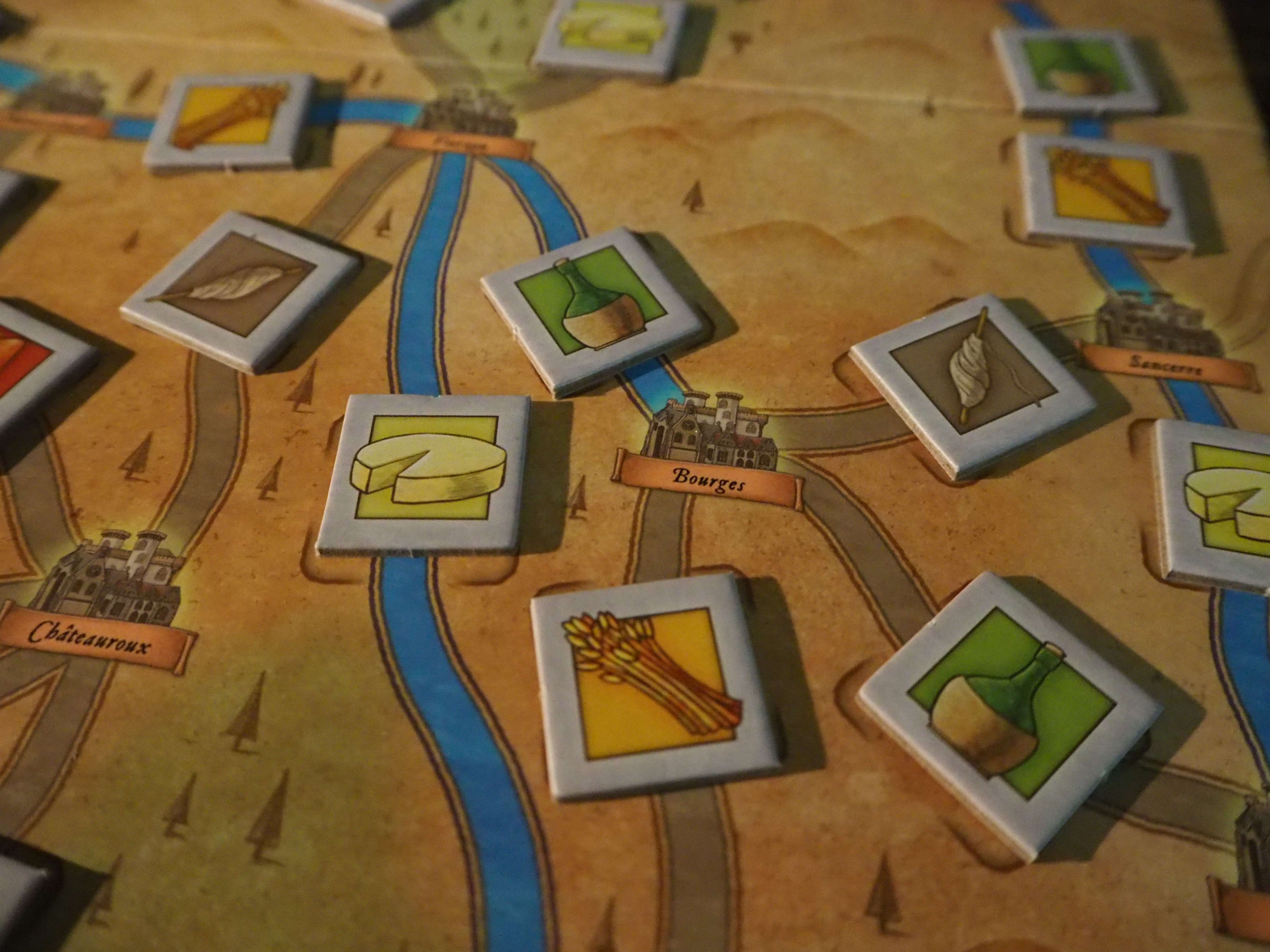
    You also have character meeples on the right side of the board in the starting city of Orléans that incorporate another significant aspect of the game. On the right half of the board is a map with roadways, waterways, and cities. Three of the actions on your starting player board will allow you to move along these roadways and waterways, and build “Guildhalls” in the cities. (Provided no one already did that). When you pass goods on the road while traveling between cities you get to keep that good. The items you collect will be worth victory points at the end of the game and the buildings you construct will also be worth points.

    OLYMPUS DIGITAL CAMERA

    OLYMPUS DIGITAL CAMERA

    This side of the board also provides a viable potential strategy that my wife and mother in law often use to beat me.

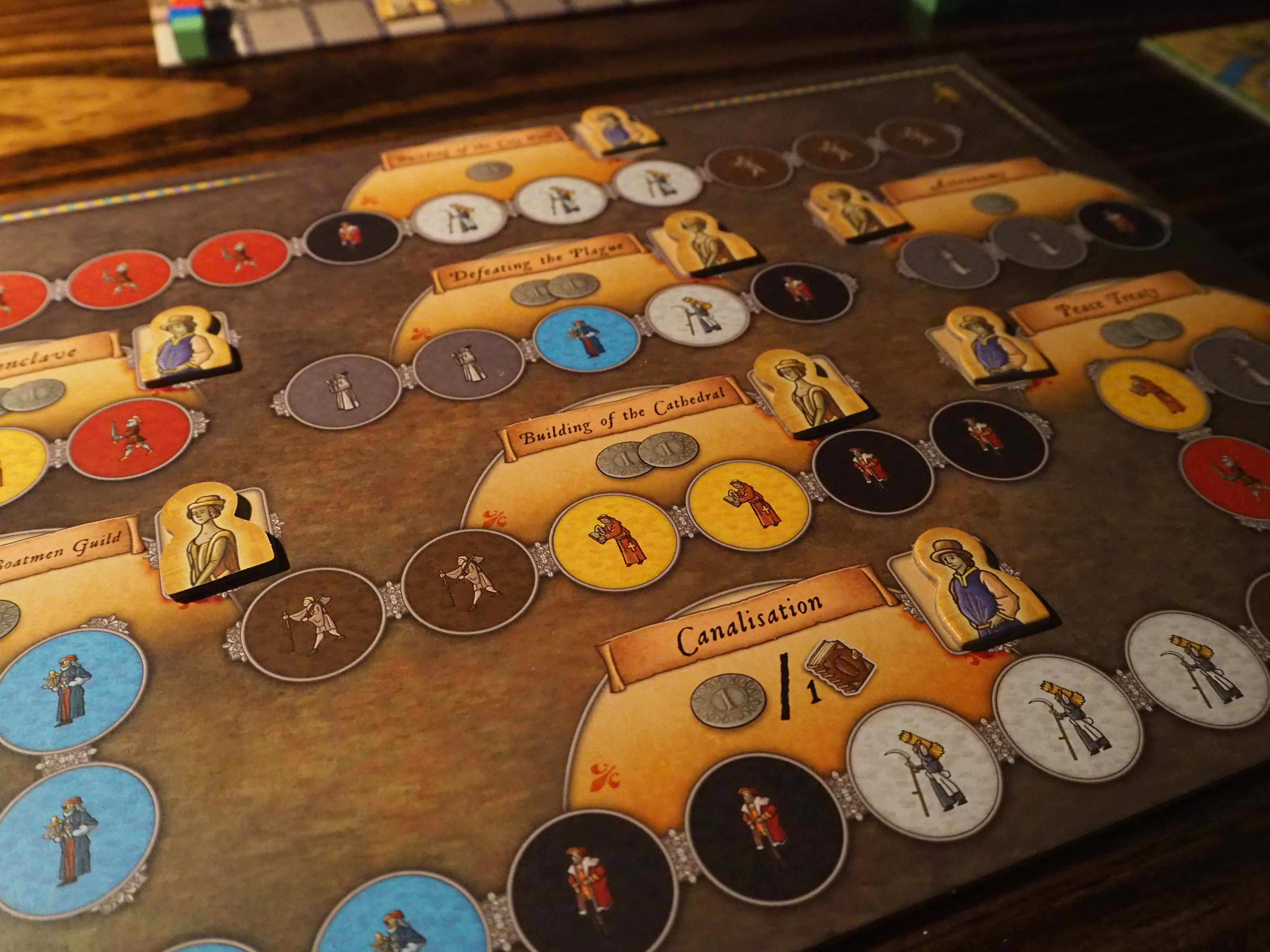
    The last board to talk about is the “Beneficial Deeds” board. There is another board that you can send workers to that will give you bonuses in the form of knowledge or money and allow you to collect Citizen tiles that will be worth points at the end of the game as well.

    OLYMPUS DIGITAL CAMERA

    Above is a picture of the “Beneficial Deeds” board. This action can be completed by going to the “Town Hall” action space on your player board. The last person to put a worker in the empty space on this board gains the citizen token and the end game points. You have to be careful though because the workers placed here are lost for the remainder of the game.
    Are you beginning to see a pattern? There are a lot of ways to win this game. On the flip side of that coin there are a lot of ways to lose this game (as I can personally attest to). One thing I will say is that no matter whether you win or lose you will want to play again. The design of Orléans is fantastic and creates an atmosphere of tension and strategy that I have seen with few others. The more I play it the more I am loving the experience. From the first moment this game hit the table I knew I loved the art and the theme. As you can see from the pictures the renaissance style is so pleasing and well done. The gameplay is engaging and the strategies are practically endless. I ranked this game as an 8.5 on boardgamegeek and it has crawled its way onto my top 10 of all time. I’m fairly new to the hobby but of the games I have played this is very high on the list. There is a ton of depth and a good bit of complexity with this title so know going in there will be a learning curve. Absolutely pick this game up though. If you have the chance buy it and play it I don’t think you’ll be sorry. This is Orléans by Tasty Minstrel Games. I’ve posted a how to play video below just in case you don’t want to slog through a rule book. If you have any questions please email me at thediceyreview@gmail.com. You can also follow me on twitter at thediceyreview1. I hope you enjoy the video and until next time I’ll see you at the table!


  • Splendor: Finding The Tipping Point

    You know those moments, when you finish a game, and you are still running the little things you could have done differently through your head, and all you want to do is reset right away and try again because you were just loving it? That was Splendor. All three times I’ve had the chance to play so far have been the same. I have lost three times, and loved every minute of it, thinking that I was just one or two little missteps away from winning. It is quick, easy to learn, and the components are nice. But most of all it is deceptively simple, with some real strategy. Or at least it feels like real strategy, so much so that it may not matter just how deep it is, because it is fun and compelling. Let’s talk about Splendor.

    Splendor Home Screen

    Splendor is a card-drafting, resource collecting game designed by Marc Andre and published by Space Cowboys. It plays with 2-4 players and is suggested for 10 and up, although I think 7-8 year old kids could play and enjoy, but the strategy would suffer a tiny bit. In Splendor you are a merchant of the Renaissance trying to build your gem-selling empire.

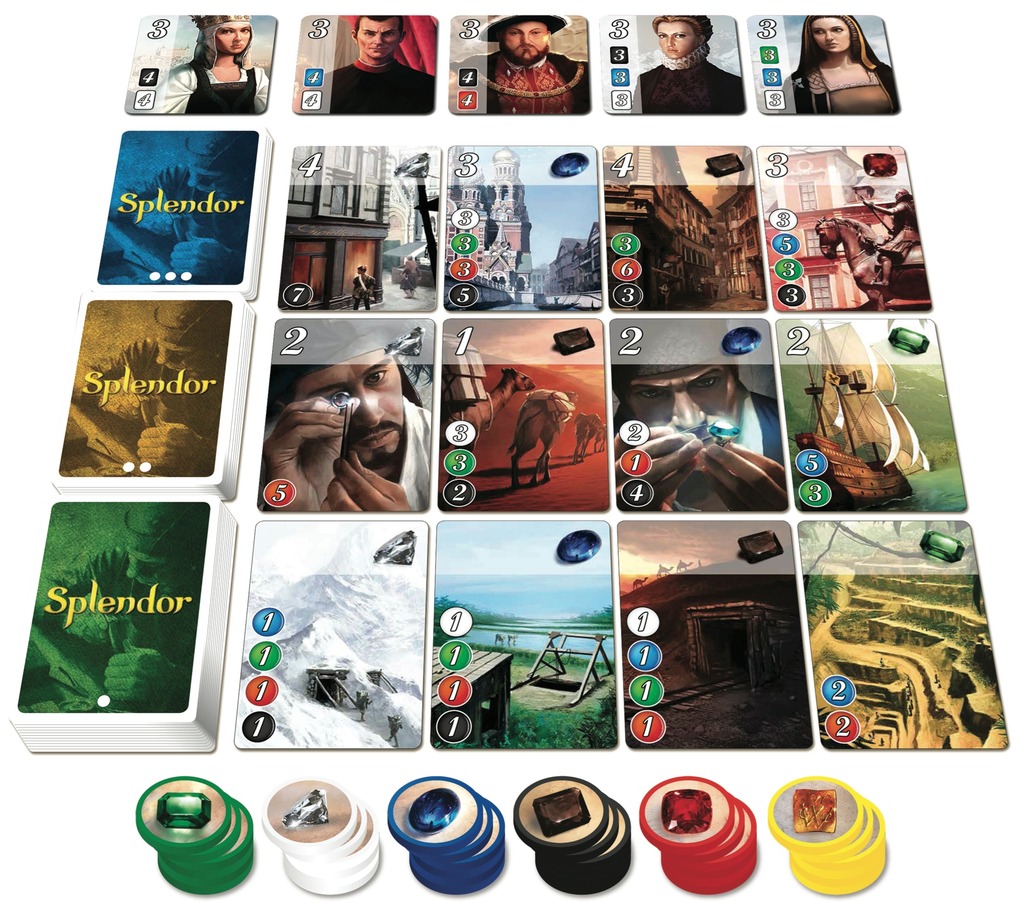
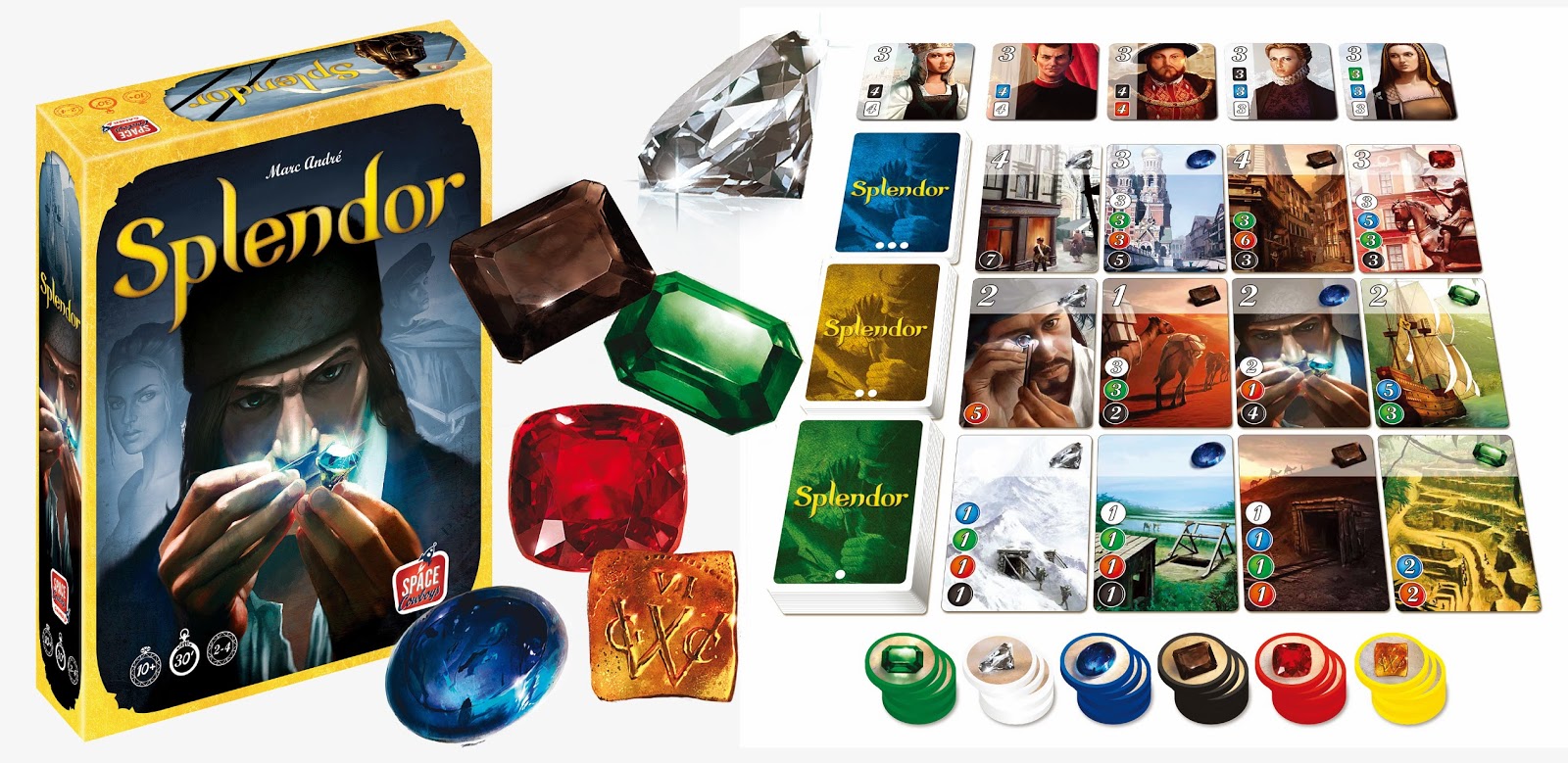
    There are six currencies represented by fantastic, hefty poker chip-type markers with their respective currency beautifully illustrated on them. There are rubies, sapphires, diamonds, onyx, emeralds, and gold which is used as a wild card. Gold can only be acquired by reserving a card, but more on that later.

    Gems

    There are three decks of cards that represent merchants, mines, caravans and the like that can be bought to give you prestige points, but also add to your resources to purchase more cards. Tier one cards are relatively inexpensive, but are usually worth zero prestige points, but occasionally they are worth one point. They are all a currency type that is added to your pool. Tier two cards are more expensive, and will likely require having a few tier one cards to afford them, but they will earn you a few prestige points as well as giving you another resource to use for purchasing other resources. The third tier of cards are expensive, you won’t be getting these bad boys without having a good number of other cards purchased, but they are worth a lot of prestige points.

    splendor2

    Once your little empire is impressive enough, one of the nobles might pay you a visit. There are noble tiles on the table that have a resource requirement. Once you have the cards to meet their requirement, that noble comes to visit you, and they give you prestige points. Once a player gets 15 prestige points, that starts the final round. When play comes back around to that player, the game is over and points are tallied.

    Noble

    On your turn you choose from one of three actions. You can take chips, purchase a card, or reserve a card. Taking chips means you can take one each of three of the five gemstones, or two of any one type of gemstone. You can only take two of a kind if there are four or more of that gemstone available. Keep in mind that the number of gems is limited based on the number of players, so grabbing resources gets to be very strategic as supplies start to dwindle. It bears to mention that players can only have ten total chips at a time.

    To purchase a card, you may choose a card that they possess enough resources to purchase and place that card face up in front of them. You now have the resource depicted on that card permanently in your resource pool, and you get any prestige points printed on the card. The resources used to buy that card return to the bank. You’re building up that little empire, keep at it!

    To reserve a card, a you may choose any face up card and put it face down in front of you for later purchase. When you reserve a card you also take one gold piece from the bank that you may use as any type of gemstone. You might want to do this if there is a card you know you might need later for a strategy to get a certain noble to visit you or to be able to afford a certain third tier card. You might also choose to do this just to be tricky and keep one of your opponents from getting a card you know they need. Every time a card is removed it is replaced with another card from its deck.

    That is it. That is the whole game. It is very simple to understand, and the mechanic is straight-forward. So why do I love this game so much? What is it about this simple little card-drafting, resource management game that is so compelling? Is it really all that good?

    Splendor-Board-Game-Components

    In a word, yes. It certainly is, and how. There are elements of pushing your luck, and there is a sublime tipping point in this game that makes it seem like you are always just about to break away and make it to your win strategy. Then one of your opponents comes along and buys the card you needed, or woos the noble you had your eye on and you have to scramble and come up with another plan. But that is okay! Because there is another strategy right in front of you, and you just shift to that one. You never feel out of the game, and you are always getting new shiny things!

    This game is light, but it is somehow deceptively so. Because about 15 minutes into this light little filler, you’ll find yourself analyzing every possibility for the next three or four possible moves. And then the board changes and you do it all over. It is still light, but it feels hefty in the moment. The theme is almost irrelevant. The artwork is really nice, and the gemstones are cool, but the paintings don’t even have to be on the cards, and the gemstones could have easily been different types of produce, or coins, or raw resources, or anything. But gemstones work, and like I said, it doesn’t even matter. It doesn’t take away from the charm of the game.

    But that tipping point. You want to buy new resources every round, but you have to decide how many of the cheap ones you should buy before saving up for the expensive cards that give you points. At the end of the day, this is a pretty simple little math game with amazing components, and great balance that feels like it is on the tip of a pin. That is the key to winning, finding the tipping point. But let’s say you misjudge. No biggie, just wipe the board and reset. You’ll want to anyway. And besides, it only takes 30 minutes. So grab Splendor and play a round or 10. You won’t be sorry.

  • Imperial Settlers: A Supreme Design

    Do you have a go to game? A game that you can play with anyone at any time that you will always enjoy and want to bring out again and again? My favorite game of all time is Imperial Settlers and it continues to grow in my estimation. For me this game takes me back to the type of game I used to play growing up on the PC. Sid Meier’s Civilization, Age of Empires and other games like it were such a draw for me and continued to draw me in for years of game play. Imperial Settlers has the feel of this epic civilization building game transferred to the tabletop.

    photo 1 (2)

    The goal of Imperial Settlers is to build the largest civilization and obtain the most victory points. You will do this by taking a number of available actions in turn with up to 3 other players. On your turn you can build locations, make deals, raze opponents locations or your own hand of cards, send workers to gain resources and activate action locations. The depth and complexity of this game is figuring out the most efficient way to continue to grow your empire and gain points while making your resources last and work for you. There truly is genius in this design. You will pick one of four factions (or civilizations) to play.

    OLYMPUS DIGITAL CAMERA

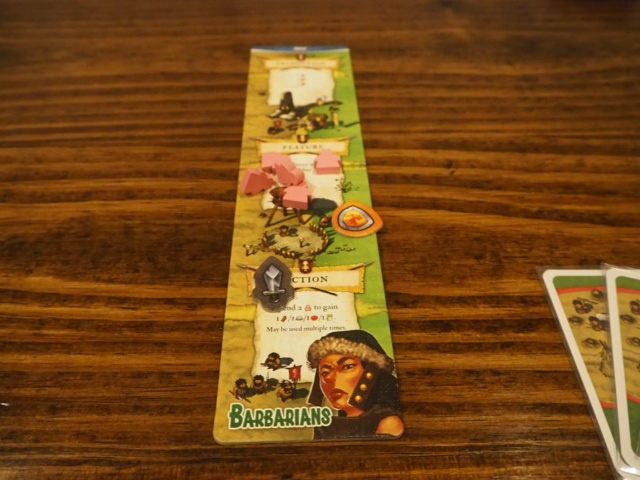
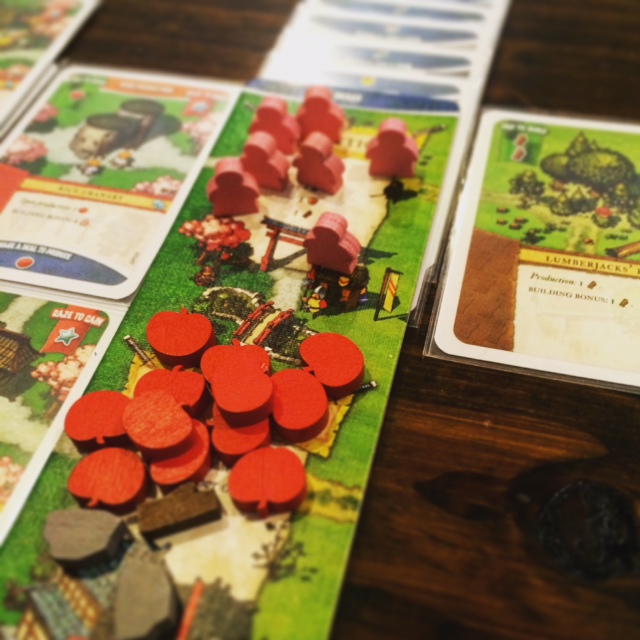
    You can choose to play the Barbarians, Romans, Egyptians, or Japanese civilizations (if you want to buy the expansion you can also play as the Atlanteans) Each civilization has a special ability to carry certain resources over from round to round. This can be very powerful depending on what strategy you are using. You will play for 5 rounds in total and the rounds get more and more intense because of the engines that people have built and the resources that people have at their disposal to attack you and grow their own interests.

    photo 2 (2)

    All of the above set aside this game just hits a sweet spot for me. I love civilization building, this has it. I love resource management, this has it. I love card drafting, this has it. The theme is perfect for me and the artwork and graphic design make me so happy every time I pick up the box. The feel is lighthearted but the depth of the game will keep you coming back for more. Each civilization that you play will feel different and require you to make different decisions. There is a deck building aspect as well that creates tons of variability and replay value.

    OLYMPUS DIGITAL CAMERA

    Imperial Settlers also has the best solo variant of any tabletop game I have ever played. The solo mode keeps the same feel of the game play and allows you to perfect the strategies of each civilization without having to round up a group to play. There is an “AI” deck so to speak included with the game and separate rules for the incredible solo version of the game. There is also a wonderful free campaign mode released online by this game’s incredible designer Ignacy Trzewiczek that you can download and print to create even more depth and replay value to the solo mode. This game is a masterpiece in my opinion and one that I will never get rid of. I believe in this game and I believe in this company. Portal games makes quality products and because they are not a major corporation with hundreds of employees they take personal care and attention to the details of their games and the passion shows. So if you have a chance, go out and buy Imperial Settlers. I don’t think you will regret it. If you can’t find Imperial Settlers, then buy any other Portal game you can find, they’re all good! I’ve rated this game as a 10 on board game geek and I wouldn’t change that rating for anything, this game deserves it. Below I have included a link to my how to play video for the game. It should be enough to get you started and if you have any questions please feel free to email me at thediceyreview@gmail.com. Until next time I’ll see you at the table!

  • Patchwork by Uwe Rosenberg

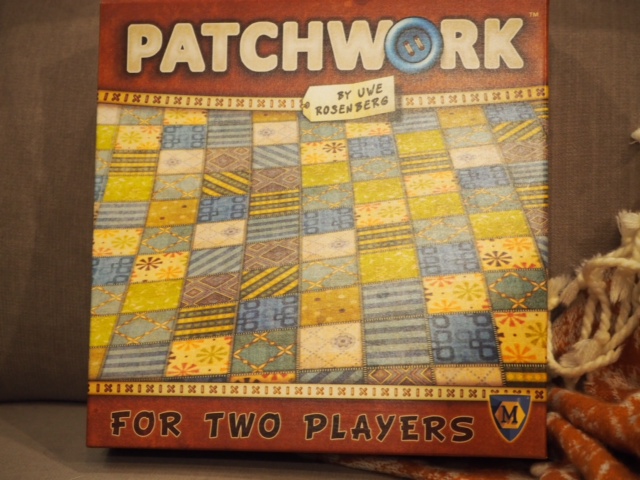
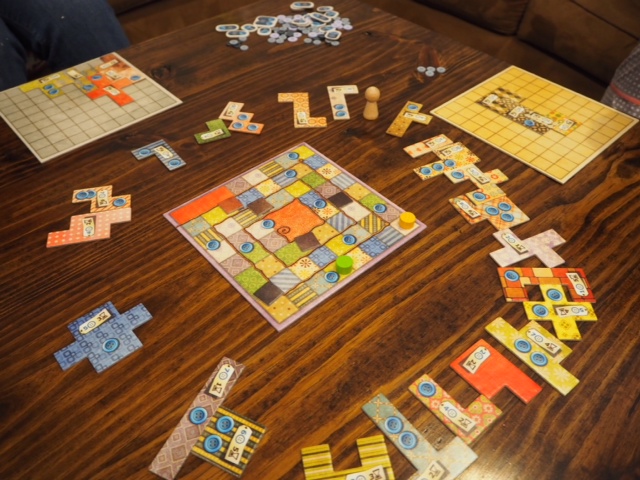
    Recently while talking to many of my couple friends I have been asked the question, “what’s a good game for 2 players?”. This isn’t always an easy question to answer. When telling people a good game to get them into the hobby I will usually go with Catan or Machi Koro; something light that takes a bit of strategy to master. What I’ve realized however is that many people are looking for a fun game to share with their significant other or kids that can be taken to a coffee shop or a restaurant and enjoyed in the midst of a busy lifestyle. The game that I’m featuring today hits on all cylinders for a couple’s game on the go. Patchwork by Uwe Rosenberg is one of Mayfair game’s two player line that is extremely simple to teach, straightforward to learn but very difficult to master. You are essentially playing a version of tabletop Tetris but the object of this game is to find the right quilt patch to fill up a player board and get the most buttons. If this game sounds like the cutest, most lighthearted experience you can imagine you would be absolutely right. This game feels like the tabletop equivalent of Little Big Planet for video games. At first whenever I saw the cover I found myself thinking “I’m going to have a hard time enjoying a game about quilting”…I couldn’t have been more wrong. This is my favorite two player tabletop game right now and the more I play it the more I’m liking the strategy and interaction.

    OLYMPUS DIGITAL CAMERA
    The Cover

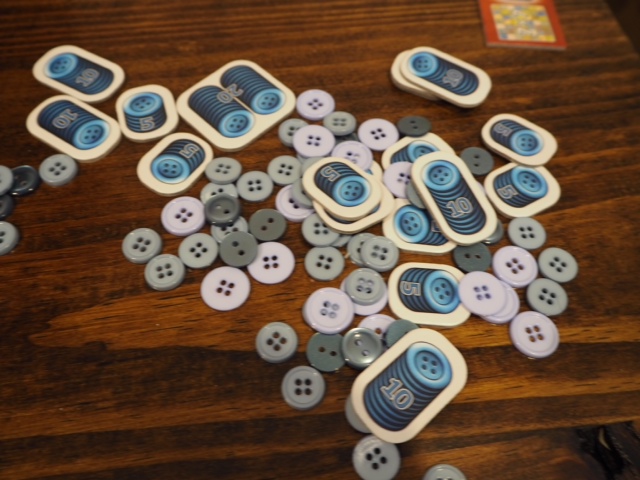
    To start the game each player will take a player board, a player marker (either yellow or green but who are we kidding, you’re going to want to take green) and five buttons. Besides making this game the most adorable thing you’ve ever played in your life buttons are used as the currency in the game. Whoever has the most wins.

    OLYMPUS DIGITAL CAMERA
    Sweet, sweet button cash…

    After taking your starting buttons the player who most recently handled a needle and thread will go first. The patch board in the middle will be surrounded by quilt patches that can be purchased with buttons that the players will be looking to buy.

    OLYMPUS DIGITAL CAMERA
    The Patch Board with patches surrounding it.
    OLYMPUS DIGITAL CAMERA
    A closer look at some of the patches available to buy…

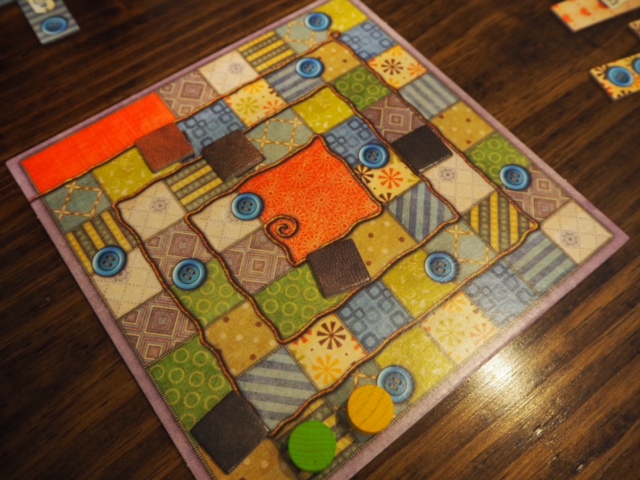
    The players will take turns buying patches and filling up their player boards until both players reach the end of the Patch Board Track and then players will count up their scores. First players will need to subtract 2 points for every empty space on their player boards at the end of the game, and then whoever has the most buttons wins…hooray!

    OLYMPUS DIGITAL CAMERA
    A closer look at the patch board in the middle of the table…
    OLYMPUS DIGITAL CAMERA
    A look at how ones player board might develop throughout the game…

    Patchwork takes about 5 minutes to setup and about 20 minutes to play. This is a game that you will want to play again and again and one that will stay in your collection permanently if you are anything like me. Uwe Rosenberg has typically designed much heavier more in depth games in the past. To see Mr. Rosenberg design such a lighthearted, quick playing game for 2 players is a refreshing break from some of what he is best known for. I love his heavier designs as well but this is an approachable game that could very well be used as a gateway game for those looking to get into the hobby for the first time, and that is a beautiful thing. This game is about 22 to 25 dollars online and at your friendly local game store and is worth every penny. I rated this game an 8.5 on Board Game Geek and almost rated it higher than that. The game is that good, and for two players only I’m not sure that there are many out that are better. The reason that this game is so approachable is that it will include a large audience appeal whereas other popular two player titles like Magic The Gathering and Dice Masters will not necessarily appeal to everyone in the family like Patchwork will. This game is one that I would feel comfortable playing with my Grandma and Grandpa. It might be a bit tougher to get some of my family excited about piloting a Goblin Aggro deck from Magic The Gathering to victory. There is beauty in the simplicity of this game but there is also such strategic depth that it will draw in new gamers and seasoned tabletop players alike. I’ve posted a how to play video below and I hope you enjoy the video and if you get the chance pick this game up you won’t regret it! I hope you enjoy the article and the video and until next time I’ll see you at the table!


  • Mysterium: Abstract Deduction

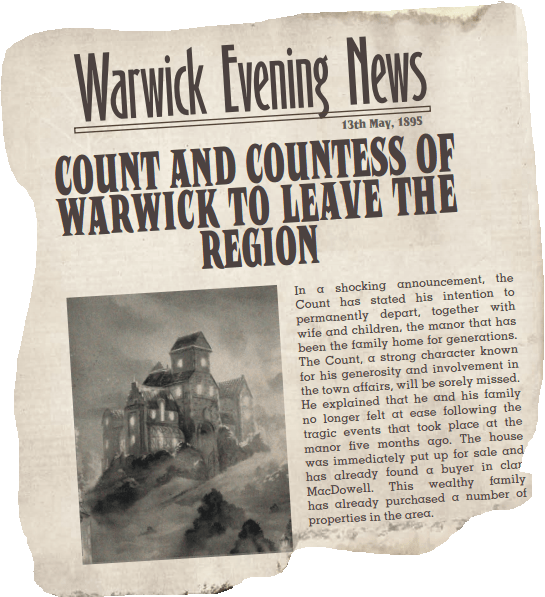
    In the year 1894 in Warwick Manor a man died unexpectedly under cover of night. The case was shrouded in mystery and month after month passed with no clear direction or suspect to apprehend. No witness would come forward and no one would provide evidence of any kind leading police to search for clues without any leads or direction. The death was eventually ruled an accident and police wrapped up investigations. As months dragged by the Count of Warwick manor felt a growing sense of unease at the events that had taken place that fateful night. The Count announced that he was leaving the mansion and moving his family elsewhere to the dismay of residents in the surrounding areas. 

    Warwick

    After The Count left the mansion the Clan MacDowell purchased the residence and it passed to Conrad MacDowell; a wealthy nobleman from the family who began to notice strange happenings within the house that lead him to believe that the spirit of the deceased servant was not at rest. There was also evidence that this case was hastily closed and loose ends were left in the investigation. Conrad noticed early on that he had a gift of paranormal communication and has sent a call out to his friends of the trade to come to the house for a seance on All Hallow’s Eve to communicate with the spirit to see if any foul play was afoot and lay the spirit to rest.

    This is the story of Mysterium, a social deduction game where 2-7 players can gather around a table to try and solve the murder of an innocent man-servant. This is a cooperative game meaning that all of the players will be working together to solve the mystery. The tricky bit with this game is that one player has to play the “ghost” who cannot talk, gesture, or hint at any suspect. The ghost is simply able to hand the “Psychic” players vision cards that suggest certain suspects, places and items using the abstract art on the card. This game is so thematic and so innovative that I truly think it will be in my collection permanently and will be my go to Halloween play. This game is a fantastic thematic experience because it is spooky but still family friendly. I put this game on my “Games to Start Your Collection” list and have listed it as an 8.1 on Board Game Geek because of its accessibility to new players, and its deep thematic game play. The player that plays the “ghost” will need to have some gaming experience and preferably some experience with Mysterium, but the “psychics” that surround the table can be new to the game and new to gaming in general with little to no issue. I’ve linked a how to play video at the end of this article. With any questions please email thediceyreview@gmail.com and until next time I’ll see you at the table.


    For a link to the full background music track follow this link:

    https://www.dropbox.com/s/ac7ofaphnd9sopi/Mysterium%20Background%20Long.m4a?dl=0